The State Department has a legal obligation to help American citizens in distress abroad. It has an entire consular corps trained to do exactly that — locate stranded nationals, coordinate emergency evacuations, liaise with foreign governments under fire. That infrastructure took decades to build. According to foreign service officers who spoke to The Intercept, it no longer functions as designed. The people who operated it were fired.
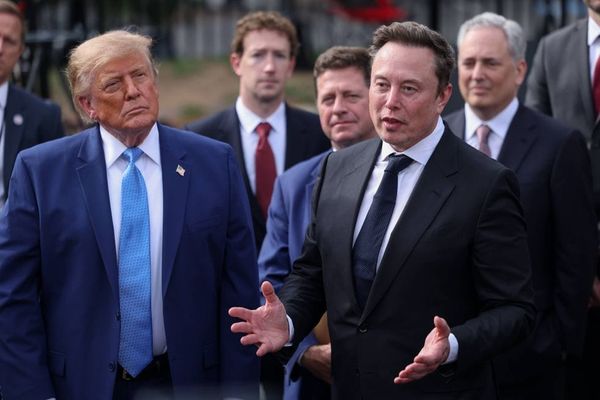
This is the part of the DOGE workforce purge that was not in the press releases. When Elon Musk's efficiency operation tore through federal agencies earlier this year, the public debate centered on headcounts, budget lines, and the abstract question of government bloat. What it did not center — what it almost never centers — is the specific, trained human capacity that disappears when you fire the people who hold it. Consular officers are not interchangeable bureaucrats. They speak the languages. They know the local contacts. They have the relationships with foreign interior ministries that make emergency operations possible. You cannot replace them with a spreadsheet or a chatbot, and you cannot rebuild them in a week when a war breaks out.
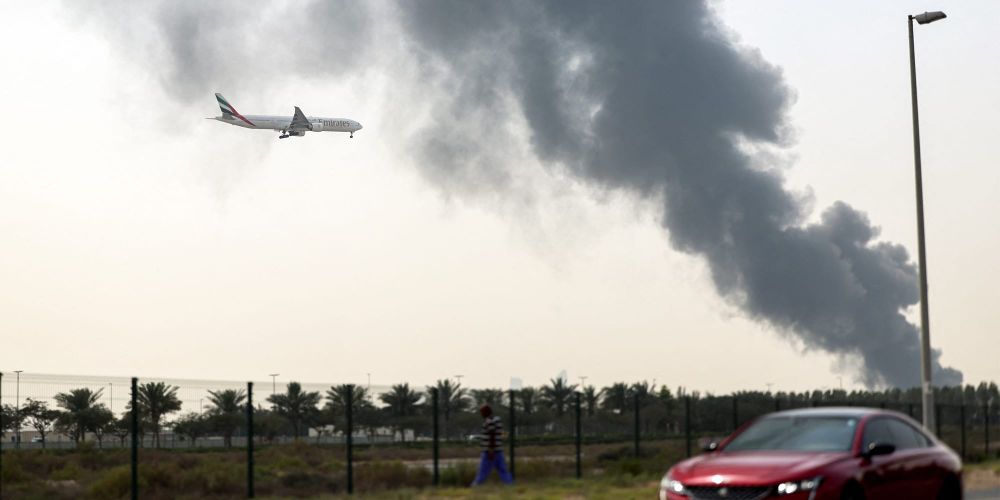
A war has broken out. Americans are in the region. And the State Department, according to its own former officers, cannot do what the moment requires.
The accountability question here is not complicated. Decisions have names. The DOGE workforce purge was not a natural disaster or an unforeseen consequence — it was a deliberate policy executed by identifiable people with identifiable authority. Elon Musk ran the operation. The Trump administration authorized it. The State Department's leadership complied. Every foreign service officer who was handed a termination notice represented a specific capability that the U.S. government chose to eliminate. The officers now warning that Americans cannot be helped are not speaking in hypotheticals. They are describing a gap between legal obligation and operational reality that their own firing created.
There is a pattern here that goes beyond this single crisis, and it connects to a broader logic of the current administration's approach to the federal workforce. As we documented in our reporting on DOGE's access to Social Security records, the purge was never really about efficiency — it was about control. Agencies stripped of experienced career staff become dependent on political appointees. Institutional knowledge walks out the door. What remains is a structure that can be pointed in whatever direction the executive wants, because the people who would push back, who would say "that is not how this works" or "that will get someone killed," are gone.
Consular services are an unglamorous corner of American foreign policy. They process visas. They notarize documents. They help tourists who lose their passports. In peacetime, this work is invisible enough that cutting it sounds like a reasonable efficiency measure to anyone who has never needed it. In wartime — in an active conflict zone where Americans are trying to get out — consular capacity is the difference between a government that functions and one that watches its citizens from a distance and issues statements.
The Iran conflict has already exposed multiple layers of institutional unpreparedness. We have reported on how the decision to go to war was made — impulsively, without coherent strategy, over the objections of officials who understood the regional consequences. The same administration that went to war without a plan for winning it also fired the people responsible for protecting Americans caught in the aftermath. These are not separate failures. They are the same failure expressed in two different registers: the failure of a government that treats institutional expertise as an obstacle rather than a resource.
What the fired foreign service officers are describing to The Intercept is not a staffing shortage. It is a structural collapse. Consular operations require not just warm bodies but cleared personnel with country-specific knowledge, active relationships with local officials, and the legal authority to act on behalf of American citizens. That combination cannot be improvised. When the person who knew the right contact at the Iranian Interior Ministry was fired in February, that contact did not transfer to their replacement — because there was no replacement.
The power and money analysis of the DOGE cuts has mostly focused on domestic programs: food assistance, medical research, education funding. The foreign policy consequences have received less scrutiny, in part because they are harder to quantify and in part because Americans stranded abroad are a diffuse constituency with no organized political voice. But the logic is identical. A government that eliminates the capacity to perform a function has, in any meaningful sense, eliminated the function. The State Department's legal obligation to assist Americans in distress did not disappear when the consular officers were fired. The ability to meet that obligation did.
There is a specific cruelty in this particular failure that deserves to be named. The Americans now stranded in the Iran war zone are not abstractions. They are people who trusted that their government would be there if things went wrong — people who perhaps traveled for business, for family, for any of the ordinary reasons people move through the world. The promise embedded in an American passport is not just a travel document. It is a claim that a government stands behind you. That promise has been hollowed out, not by accident, not by budget constraints beyond anyone's control, but by a deliberate decision to fire the people whose job it was to keep it.
The administration has not acknowledged the gap. It has not explained how consular functions will be performed with a depleted workforce. It has not named who is responsible for the failure or what remediation looks like. This is consistent with how the DOGE cuts have been handled across agencies: the damage is done quietly, the consequences emerge slowly, and by the time the failure is visible, the political moment for accountability has usually passed.

It has not passed yet. The war is active. Americans are in the region. The officers who could help them are unemployed. And the official who authorized their firing is the world's wealthiest man, operating a government efficiency project with no legal mandate, no congressional authorization, and no apparent mechanism for answering to the people whose government he restructured. As we have covered in our analysis of the Iran war's total absence of congressional authorization, the through-line of this administration's approach to power is consistent: act first, account never.
The State Department's consular corps was not glamorous. It was not ideologically contentious. It was not the kind of government function that generates culture-war energy or mobilizes a political base. It was just the part of the government that answered the phone when an American called from a war zone. That phone is not being answered. The people who would have answered it were told their services were no longer needed — months before the war that would have required them began.