The legal architecture that has protected workers from discriminatory hiring for half a century did not fall in a courtroom. It fell in a memo.
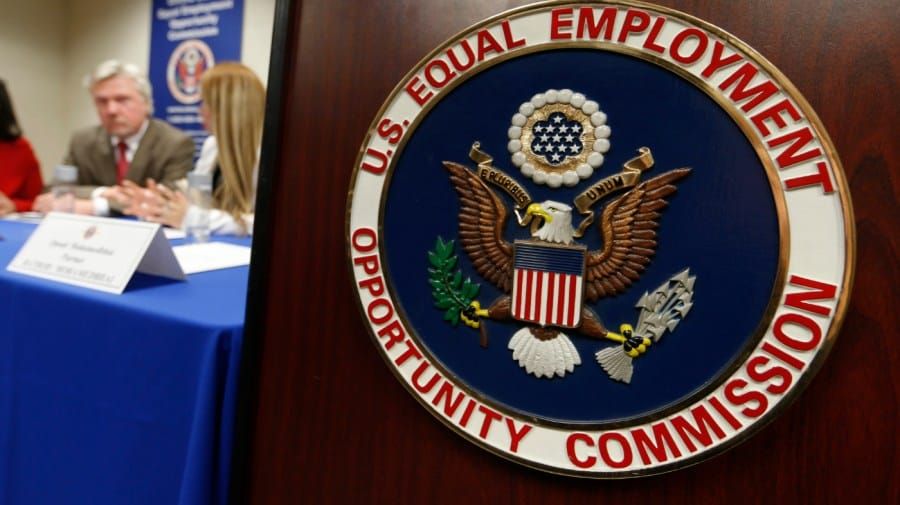
The Justice Department's Office of Legal Counsel issued an opinion this week declaring that the Equal Employment Opportunity Commission's guidelines on disparate impact liability are unconstitutional, according to The Hill. The OLC's stated rationale: the guidelines pressure employers to take race into consideration when making hiring decisions. That framing — that anti-discrimination enforcement is itself a form of racial discrimination — is not a legal novelty. It is the operating theory of this administration's entire civil rights posture, applied here with maximum institutional force.
The OLC opinion is not a court ruling. It does not carry the force of law. But that distinction matters less than it might seem. OLC opinions shape how federal agencies act, how federal prosecutors exercise discretion, and — critically — how employers calculate risk. An employer facing a discrimination claim now has a Justice Department memo in hand declaring the enforcement mechanism behind that claim unconstitutional. That changes the math on whether to settle, whether to contest, and whether to change practices in the first place. The opinion is a weapon, and it has been handed to the side with more lawyers.
Disparate impact doctrine holds that employment practices can be unlawful if they disproportionately exclude protected groups — even without proof of intentional discrimination. Established by the Supreme Court in Griggs v. Duke Power Co. (1971) and later codified in the Civil Rights Act of 1991, it has been the primary legal tool for challenging facially neutral hiring criteria — standardized tests, credential requirements, criminal background checks — that systematically screen out Black, Latino, and female workers at higher rates.
Disparate impact doctrine has a specific history that the DOJ memo implicitly erases. It was created precisely because employers learned to discriminate without writing it down. After the Civil Rights Act of 1964 made explicit discrimination illegal, companies adopted hiring criteria — aptitude tests, diploma requirements, physical standards — that produced the same racially exclusionary outcomes without the paper trail. The Supreme Court's 1971 ruling in Griggs v. Duke Power Co. recognized this reality and gave workers a way to challenge it. Congress codified that protection in the Civil Rights Act of 1991 after the Supreme Court began narrowing it. The doctrine is not a bureaucratic guideline. It is the legislative response to fifty years of evidence that discrimination adapts.
The OLC opinion's argument — that considering statistical disparities in outcomes pressures employers to make race-conscious decisions — inverts that history. It treats the measurement of discriminatory outcomes as the problem, rather than the outcomes themselves. Under this logic, a company that uses a hiring test that screens out Black applicants at three times the rate of white applicants faces no legal exposure as long as no one wrote a racist memo. The discrimination becomes invisible the moment you stop looking for it — which is precisely what this opinion authorizes.
This move fits a broader pattern of using administrative action to achieve what legislation and litigation have not. As Tinsel News has covered, the CFPB's erasure of fifteen years of consumer protection records and the federal investigation of medical school diversity programs follow the same architecture: use executive power to hollow out enforcement infrastructure, then watch the underlying rights wither from lack of support. No act of Congress required. No Supreme Court ruling needed. Just a memo, a policy shift, and the institutional weight of the federal government placed on the employer's side of every future discrimination claim.
The workers most directly affected are those in industries where facially neutral screening practices have historically functioned as proxies for exclusion: warehousing and logistics, where criminal background check policies disproportionately screen out Black applicants; financial services, where credential requirements have long exceeded actual job demands; construction and skilled trades, where physical and testing standards have been used to maintain demographic homogeneity. These are not abstractions. They are the industries where disparate impact litigation has produced the most concrete results — back pay, policy changes, consent decrees — and where the removal of that enforcement tool will be felt most immediately.
The opinion also arrives at a moment when the EEOC itself has been systematically weakened across federal institutions. The administration has moved to install loyalists, reduce staff, and narrow the agency's mandate. An OLC opinion declaring the agency's core enforcement guidelines unconstitutional is not a standalone legal argument — it is the capstone of a coordinated effort to disable the federal government's civil rights enforcement capacity from the inside.
What comes next will be determined in federal courts, where plaintiffs' attorneys will continue filing disparate impact claims regardless of what the OLC says. But litigation is expensive, slow, and uncertain. The workers who most need anti-discrimination protection are the least likely to have the resources to pursue multi-year federal lawsuits against well-resourced corporate defendants. The OLC opinion does not eliminate their legal rights on paper. It makes those rights functionally unreachable — which, for the people bearing the cost, amounts to the same thing.