ANALYSIS
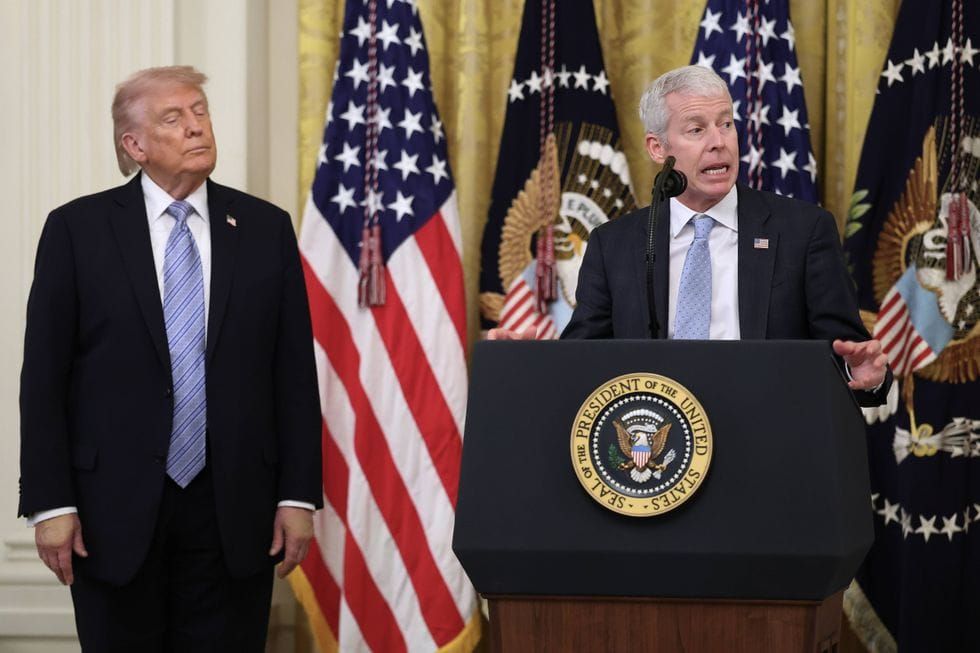
The official story was straightforward: American families were paying too much for electricity, and a new administration would fix it. "We intend to slash prices by half within 12 months — at a maximum 18 months," the president told a campaign rally in North Carolina in August 2024. "Every single thing that I promised, I produced."
The 18-month deadline passed this week. According to US Energy Information Administration data cited by Common Dreams, residential electricity rates hit 18.83 cents per kilowatt-hour in April 2026, compared with 17.55 cents in April 2025. Since January 2025, when the administration began its second term, prices have risen more than 18 percent. The promise of a 50 percent cut has produced the arithmetic opposite.
But the failure is not primarily a story about a broken campaign promise. Broken promises are ordinary. This is a story about three specific policy choices — a trade war, an AI datacenter expansion, and the cancellation of renewable energy projects — that did not merely fail to lower electricity costs. They were structurally guaranteed to raise them. The gap between the stated goal and the policy instrument was not a miscalculation. It was the entire design.
Start with the trade war. Tariffs on imported goods increase the cost of the equipment used to build and maintain the energy grid — transformers, cables, turbines, solar panels, the physical infrastructure that electricity travels through before it reaches a household. Those costs do not absorb themselves. They move, predictably and mechanically, into the rate requests that utilities file with state regulators. In the second quarter of 2026, utilities filed $9.2 billion in rate hike requests — a 26 percent increase over the same period in 2025, according to reporting from 24/7 Wall Street cited by Common Dreams. That number is not a consequence of market failure. It is a consequence of deliberate policy applied to an industry with no competitive alternative. Consumers cannot shop for a different grid.
The second mechanism is the administration's aggressive push for AI datacenter expansion. Datacenters consume electricity at a scale that strains regional grids. PJM Interconnection, the largest grid operator in the country, reported a capacity price of $16.4 billion for power delivery in the 2028-29 period. Of that, Reason reported that datacenter electricity demand added $6 billion to PJM's capacity auction alone — costs that flow directly to ratepayers. The household paying a higher electricity bill in Pennsylvania or Virginia is, in part, subsidizing the energy appetite of server farms. The administration championed this expansion as economic development. The electricity bill is the mechanism by which ordinary families pay for it.
This connects to a pattern that Tinsel News has tracked across the AI infrastructure buildout: the costs are socialized while the profits are privatized. Meta's datacenter contractor dumped contaminated water into Wyoming's sewers. Communities from Monterey Park to Seattle have moved to block datacenter construction precisely because the infrastructure costs — water, power, grid capacity — land on residents, not on the corporations whose revenue the servers generate. The electricity price increase is the same dynamic expressed through the utility bill.
The third mechanism is the cancellation of renewable energy projects. This one is the most direct contradiction of the stated goal. Renewable energy — solar and wind in particular — has become the cheapest source of new electricity generation in most of the United States. When those projects are cancelled or delayed, the counterfactual matters: the lower-cost supply that would have entered the grid does not. The existing, more expensive supply mix remains. Prices stay higher than they would have been. The EIA projected in May that residential electricity prices would rise by about 5 percent this year, with the largest increases concentrated in East Coast states — precisely the states where grid constraints are most acute and where renewable buildout would have had the most impact.
Released as the administration's self-imposed deadline passed, the TCF report found that energy bills have increased three times faster than the inflation rate since January 2025. The average household in 18 states now pays more than $280 per month for utilities. Average costs have risen more than 20 percent in 10 states since the second term began. The national average overdue utility balance reached $817 in March 2026 — a figure the report says is now reaching into the middle class, not just the lowest-income households.
The Century Foundation's report, titled "Power Failure: Rising Energy Debt Is Climbing into the Middle Class," documents what happens when these three mechanisms operate simultaneously on a household budget that was already strained. The national average utility bill reached $280 per month in early 2026 — a 12 percent increase since the end of 2024. The average overdue utility balance for a household hit $817 in March 2026. These are not abstract statistics. An overdue utility balance is the specific, material form that energy unaffordability takes: a family that has decided, or been forced to decide, that the electricity bill will wait while something else gets paid first.
The 7.3 percent increase in average electricity bills over the past 12 months alone — roughly double the rate of general inflation, as 24/7 Wall Street reported — means that electricity costs are pulling away from wages and from the general price level. A household that could absorb last year's bill is less able to absorb this year's. The overdue balances are the leading indicator. Shutoffs follow.
What makes this politically durable, and analytically significant, is the structure of the accountability gap. Each of the three contributing policies has a constituency that benefits from it. The trade war benefits domestic producers who compete with imported goods. The AI datacenter expansion benefits the technology companies and the financial interests behind them. The cancellation of renewable projects benefits fossil fuel interests. The household paying 18 percent more for electricity has no equivalent organized constituency inside the policy process. The cost is diffuse, distributed across millions of bills. The benefit is concentrated, flowing to identifiable industries with identifiable lobbying operations.
This is not a novel observation about how regulatory capture works. But it is the specific mechanism that explains why the promise and the policy pointed in opposite directions from the beginning. A genuine effort to reduce residential electricity costs would have accelerated renewable deployment, managed grid capacity demand from large industrial users, and avoided tariff structures that increase infrastructure costs. The administration pursued the reverse of each. The 50 percent cut was not a goal that was attempted and failed. It was a claim made in the opposite direction from every policy lever being pulled.
As the Democratic research group American Bridge 21st Century noted this week: "Time's up, and so is your bill." The line is effective because it is precise. But the more consequential observation is forward-looking: the policies producing these increases are still in effect. The EIA projection of an additional 5 percent increase this year was made in May. The rate hike requests filed in the second quarter of 2026 have not yet been adjudicated. The datacenter capacity costs priced into PJM's 2028-29 auction will reach ratepayers over the next several years. The overdue balances accumulating now will become shutoffs, and then reconnection fees, and then a deeper hole for the households carrying them.
The deadline passed. The prices are still moving in the same direction. The policy instruments that are moving them have not changed. Half of Americans already cannot afford gas and groceries. The electricity bill is not a separate crisis. It is the same one, arriving through a different meter.