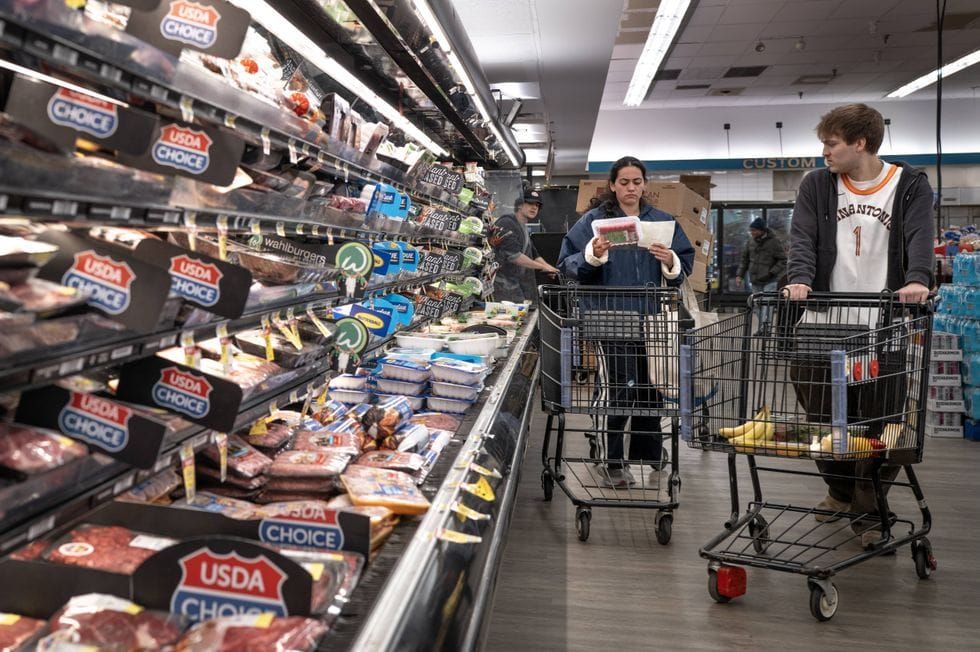
Fifty-two percent of Americans say they are struggling to afford gas. More than half say they cannot keep up with grocery bills. Nearly half are falling behind on loan payments and utilities. These are not projections or forecasts — they are the present-tense conditions of American life in 2025, documented by a Harris Poll conducted on behalf of The Guardian, released this week.
The same poll found that 95% of Americans — across party lines, across income levels, across every demographic the survey measured — believe the country is facing an affordability crisis. That number is not a majority. It is not a plurality. It is a consensus so broad it has almost no parallel in modern American polling.
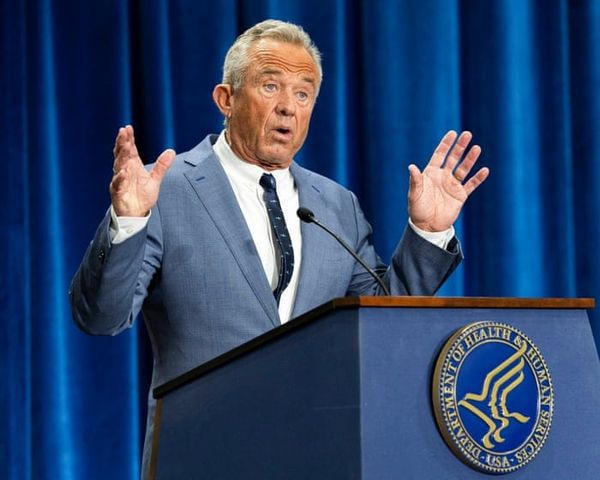
And the president, who ran on lowering costs for working people, said in May that he does not "think about Americans' financial situation."
That admission — made while the administration was negotiating an end to the Iran War it started in February, a conflict that sent oil prices soaring — is not a gaffe. It is a governing philosophy made visible. Understanding the affordability crisis as a political failure requires understanding it first as a design feature: the people bearing the cost of this economy were never the intended beneficiaries of the policies producing it.
The Harris Poll data shows something that should unsettle both parties. The pessimism is not partisan. Two-thirds of Americans — including nearly half of Republican voters — say they do not believe the administration will improve the affordability crisis. The number of Americans who believe the economy is getting worse has climbed from 46% in February to 57% now. Just 16% say it is getting stronger. Only 27% of Republicans agree with that optimistic assessment. Whatever political loyalty once buffered perceptions of economic pain, it is eroding.
The causes of that pain are not abstract, and they are not accidental. A previous Tinsel News analysis found that 77% of Americans believe White House policies are making their lives more expensive — and the mechanisms are traceable. The administration's tariffs have contributed to elevated grocery prices, as recent analyses have found. The Republican Party's elimination of tax credits for solar and wind power, combined with the administration's push for the unregulated expansion of energy-consuming artificial intelligence data centers, drove the average utility bill up by $110 — a 6.4% increase over last year, according to a March report by Democrats on the Joint Economic Committee. The administration also ended the Biden-era SAVE program, eliminating income-based student loan repayment for millions of borrowers.
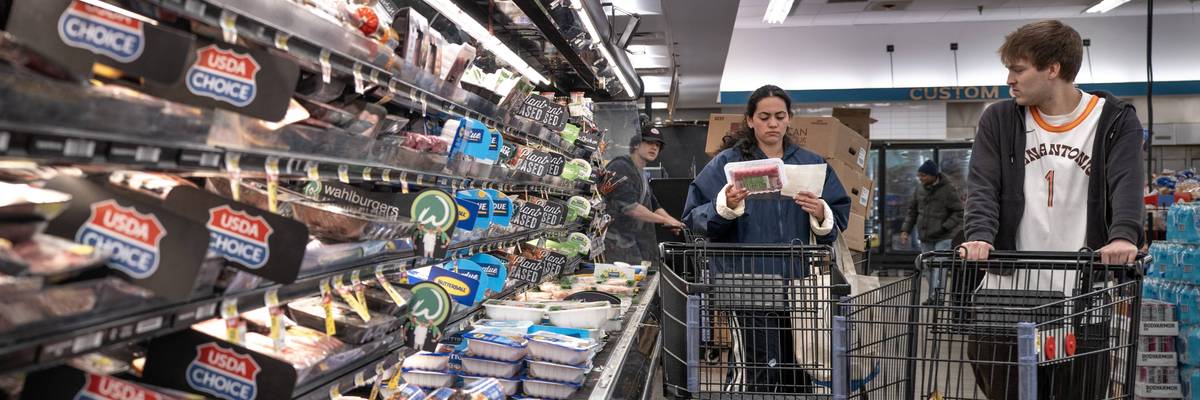
Gas remains at $3.79 per gallon on average, even as Brent crude prices have fallen sharply since the U.S.-Iran peace deal was signed. That gap — between the falling cost of the underlying commodity and the price families pay at the pump — is not explained by market forces alone. The administration has declined to take on corporate consolidation in the meatpacking industry, which analysts have connected to persistently high grocery prices. The pattern is consistent: costs are passed down, profits are retained, and the policy architecture that could interrupt that flow is left untouched or actively dismantled.
The administration eliminated the SAVE student loan repayment program, cutting income-based relief for millions of borrowers. It ended tax credits for solar and wind power while expanding AI data centers, driving utility bills up 6.4% over last year. It declined to challenge corporate consolidation in meatpacking, a key driver of grocery inflation. And it refused to sign a bipartisan affordable housing bill, calling it "a big yawn."
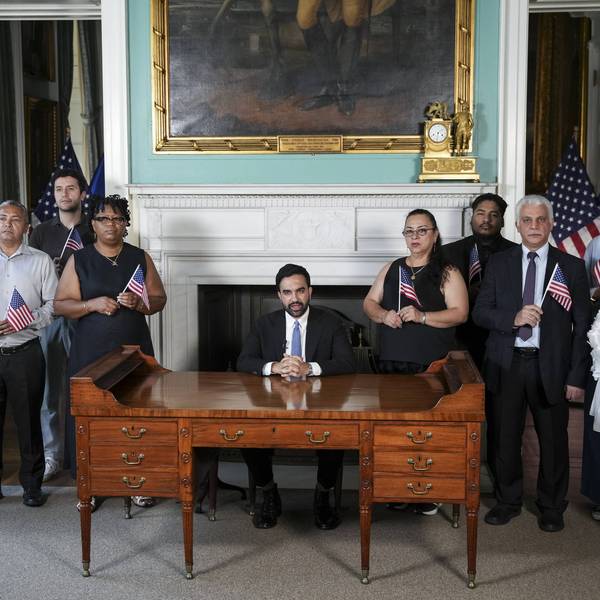
The housing dimension of this crisis deserves its own accounting. The poll was released nearly a week after the president refused to sign affordable housing legislation — a bipartisan bill he dismissed as "a big yawn." As Tinsel News has reported, the White House has made passage of a voter restriction law a precondition for moving on housing relief — a sequencing that tells you exactly whose interests the administration considers urgent and whose it considers negotiable.
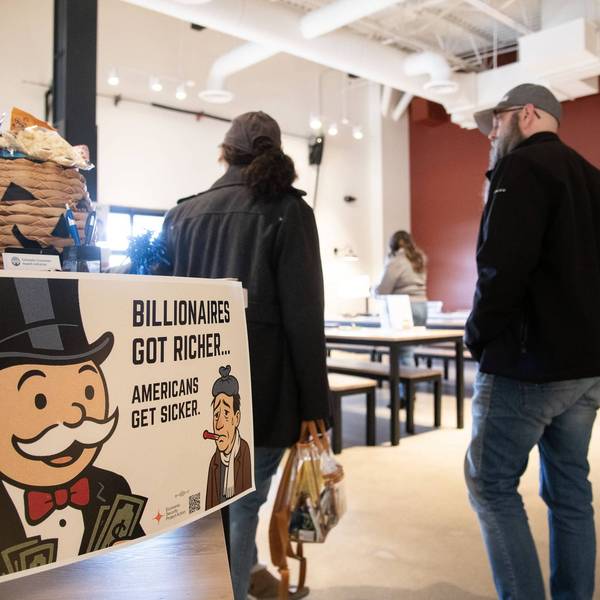
This is where the accountability lens becomes essential. The question is not whether the administration is aware of the affordability crisis — the polling makes clear that awareness is universal. The question is why the policy response has moved in the opposite direction from relief. The answer requires naming the interests that benefit from the current arrangement. Corporate consolidation in food and energy markets generates profits for shareholders. The elimination of clean energy tax credits benefits fossil fuel producers. The refusal to address price gouging protects the industries doing the gouging. As Tinsel News documented, 41 energy billionaires pocketed $23.5 billion while 32 million people were pushed into poverty by the same war that drove up their fuel costs. The crisis is not a market failure. It is a market outcome — one that the policy environment was shaped to produce.
The Iran War is not incidental to this story. The conflict the administration started in February sent oil prices soaring, hitting family budgets at the gas pump and through supply chain disruptions that filtered into grocery prices. The peace deal signed last month has not produced the relief that might be expected: gas remains nearly $3.80 per gallon even as crude costs have dropped. The war's economic legacy will outlast its military phase, and the communities that bore its costs — working families who did not choose the conflict and had no mechanism to stop it — will carry that legacy forward.
The poll also captures something about political trust that the raw affordability numbers cannot fully convey. When nearly half of a president's own party's voters say they do not expect him to fix the crisis, something structural has shifted. It is not simply that people are frustrated with prices. It is that a majority of Americans across the political spectrum have concluded that the people with the power to act on their behalf have chosen not to. That conclusion — that relief is available but withheld — is more politically destabilizing than any single economic indicator.
In April, the president said the federal government "can't take care of daycare" and healthcare for Americans because it was focused on "military protection." The framing is clarifying. Military protection is for the nation. Daycare, healthcare, food, housing, gas — those are for individuals to manage on their own. The affordability crisis, in this framing, is not a policy problem requiring a government response. It is a personal failing requiring personal solutions. That the government's own choices — on tariffs, on energy policy, on corporate consolidation, on housing — are among the primary drivers of the crisis does not enter the frame.
The 95% figure in the Harris Poll is striking not because it is large, but because of what it represents: the near-total collapse of the distance between lived experience and political acknowledgment. Americans do not disagree about whether there is a crisis. They disagree, in diminishing numbers, about whether anyone in power intends to do anything about it. Eight hundred thousand children have already lost food assistance in eight months. The housing bill sits unsigned. The utility bills keep climbing.
The political question for the months ahead is not whether Americans feel economic pain — they do, and they say so with a unanimity that polling rarely captures. The question is whether that pain will translate into pressure on the specific policy decisions producing it, or whether it will be absorbed into generalized frustration and displaced onto targets that have nothing to do with the cost of a gallon of milk. The administration is betting on the latter. The poll suggests the window for that bet is narrowing.