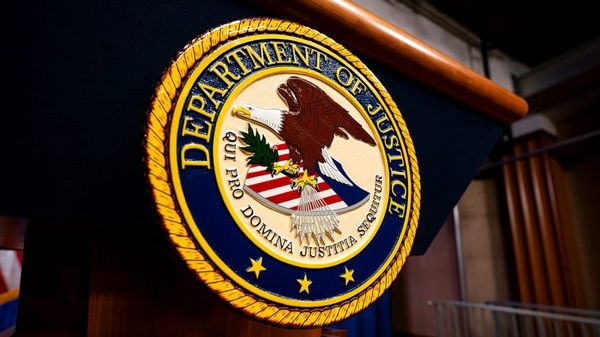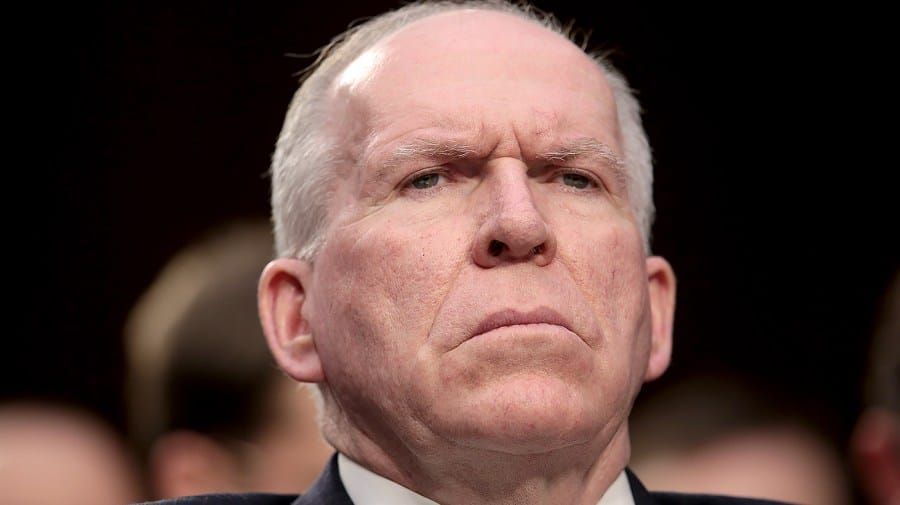
The House Intelligence Committee voted last week to hand two 2017 documents to the Department of Justice — both involving former CIA Director John Brennan and his role in the agency's assessment of Russian interference in the 2016 election. The move, reported by The Hill, is being read by observers as a significant step toward potential charges against Brennan. The official version: this is a routine oversight function, a committee fulfilling its legal obligations to refer material to the executive branch.
The reality is harder to square with that framing. Brennan is not a random bureaucrat. He is a vocal, public critic of Donald Trump — one who appeared regularly on television during Trump's first term to question the administration's conduct and its relationship with foreign intelligence. He is also the latest in a growing list of former national security officials, law enforcement figures, and perceived political adversaries who have found themselves in the Justice Department's field of view since January 2025.
What the documents contain has not been made fully public. According to The Hill's reporting, one is a transcript of a meeting involving Brennan from 2017; the other relates to the CIA's handling of the Russia probe. The committee's Republican majority framed the referral as a matter of accountability for the intelligence community's conduct during the 2016 cycle. What accountability looks like — and who it is meant to serve — is the question the framing leaves unanswered.
This is not the first time the current administration has trained the DOJ's machinery on figures from the intelligence and law enforcement world who crossed Trump during his first term or the investigations that followed. The FBI's targeting of a counter-terrorism official who questioned war justifications followed a similar logic: deploy federal investigative resources against individuals whose professional conclusions or public statements were inconvenient to the administration's preferred narrative. The mechanism changes. The target changes. The direction of pressure does not.
Legal scholars and civil liberties advocates have long warned that the distinction between investigating political opponents and investigating genuine criminal conduct depends entirely on the independence of the institution doing the investigating. That independence has been systematically eroded. The DOJ under the current administration has proposed shielding federal prosecutors from state ethics oversight — a structural change that would make it harder, not easier, to hold the department's own lawyers accountable for how they exercise their power. Critics argue that taken together, these moves construct a department that is simultaneously more aggressive toward designated enemies and less answerable to external review.
The 2016 Russia investigation has always been contested terrain. Republicans have argued for years that the intelligence community's assessment of Russian interference was politically motivated — that Brennan, James Comey, and others used their institutional positions to damage Trump's candidacy and later his presidency. Those arguments have been litigated in congressional hearings, inspector general reports, and special counsel investigations. None produced criminal charges against Brennan. The question now is whether the absence of charges in prior investigations reflects a genuine lack of criminal conduct — or whether it simply means the right administration wasn't in place to bring them.
That distinction matters enormously, because the answer determines whether what is happening is law enforcement or its opposite. A government that uses prosecutorial power to settle political scores does not stop being dangerous simply because its targets are sometimes genuinely controversial figures. The mechanism, once normalized, does not stay pointed in one direction. As Tinsel News has covered, democracy experts have warned that institutional "stabilization" can mask a diminished baseline — where the norms being defended are already weaker than the ones that existed before the pressure began.
Brennan has not been charged. He may not be charged. The DOJ's interest in these documents could produce nothing. But the function of this kind of sustained, publicized investigative attention is not exclusively legal — it is also political. It tells current and former officials what the cost of public dissent looks like. It tells career intelligence and law enforcement professionals where the lines are being redrawn. And it does this without requiring a single indictment to land. If charges do come, they will arrive in a department that has already spent months constructing the public predicate for them, in a media environment where the mere existence of an investigation carries weight regardless of outcome. That is not how prosecutorial independence is supposed to work. It is how prosecutorial capture does. The same department has already moved to shield federal prosecutors from state ethics rules, and has shown it is willing to use its investigative machinery against journalists covering inconvenient stories — a pattern that makes the Brennan referral harder to read as anything other than political.