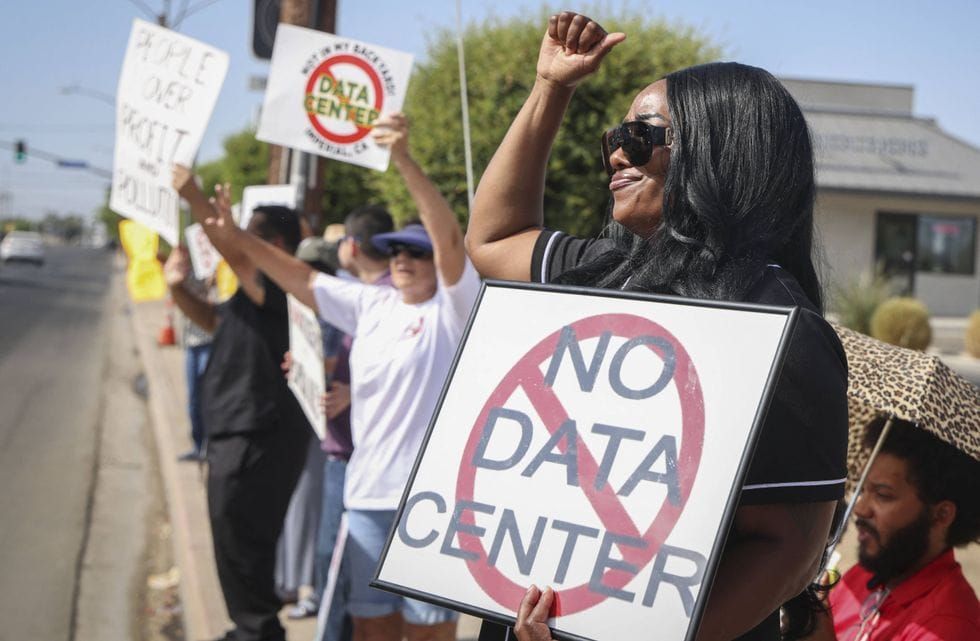
Only 27 percent of Americans say they would welcome an AI data center in their neighborhood. That figure, from a June 2025 Echelon Insights poll cited by Common Dreams, puts data centers below nuclear power plants on the list of things Americans want near their homes. Thirty-four percent of respondents said they'd accept a nuclear plant. The data center industry, which has spent years telling communities it is building the future, has managed to make itself less popular than fission.
That number is not the kind of thing a political party can charm its way out of. But the National Republican Senatorial Committee is trying. A leaked memo, first reported by Axios and covered by Common Dreams, warns Silicon Valley executives that their AI infrastructure buildout has become a "massive political liability" — and that if they don't fix their public image fast, Republican politicians across the country will stop taking their calls, or at least stop defending their permits.
The memo centers on Ohio, where former Democratic Senator Sherrod Brown has made opposition to data centers a cornerstone of his campaign against incumbent Republican Senator Jon Husted. The NRSC's concern is specific: if Brown wins a state Donald Trump carried by double digits in 2024, running on an anti-data-center platform, every state legislator and Senate candidate in America will do the math. "If he loses and data centers get the blame," the memo warns, "politicians across the country will take notice — and they will not go near the next one."
What the memo does not say — what it cannot say, because the party commissioned it — is that the Republican Party created this problem. For the past three years, GOP leadership has been among the most aggressive promoters of AI infrastructure investment, framing data centers as engines of economic revival and national competitiveness. The same senators who now face constituent fury over utility bill increases and industrial water consumption were, until recently, cutting ribbons at groundbreakings and posing for photos with tech executives. The backlash was not hard to predict. It was simply inconvenient to predict, because the money was good.
The money trail here is not subtle. Big Tech has been one of the most significant sources of political donations flowing into both parties, but its alignment with the Republican pro-deregulation, pro-AI agenda has been particularly tight since 2024. The implicit bargain was straightforward: tech companies would get permissive federal policy on AI development, data privacy, and energy use, and Republicans would get donor cash and a modernization narrative. What neither party to that bargain accounted for was the people living next to the facilities — the ones watching their electricity bills climb, their groundwater tables drop, and their local grid strain under the load of server farms that employ a handful of people and generate enormous heat.
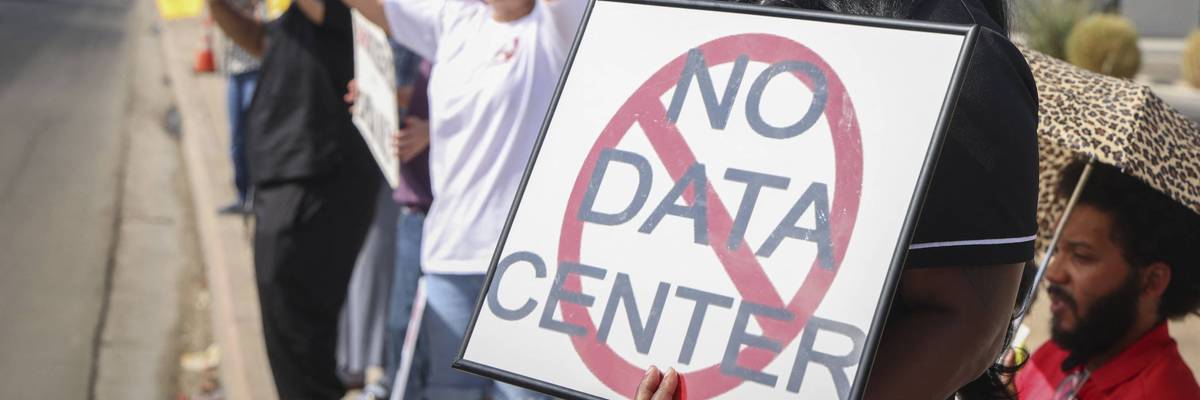
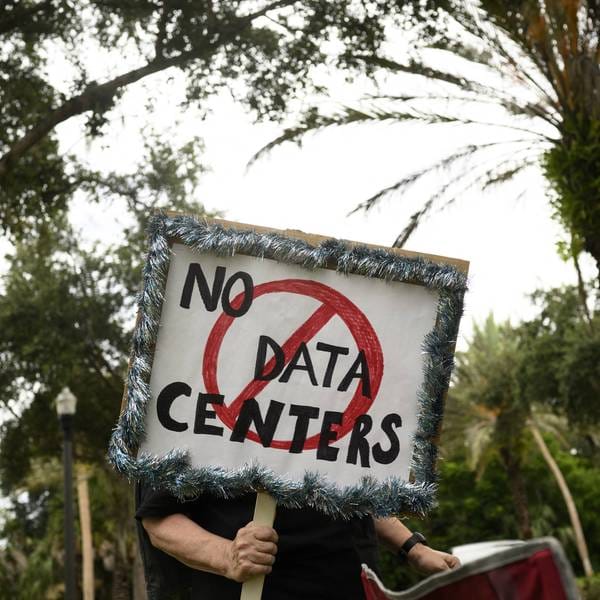
As Tinsel News has reported, resistance to AI data centers is not a coastal progressive phenomenon. It is rural. It is bipartisan. Willie Nelson is fighting a data center near his Texas hometown. Communities from Wyoming to Wisconsin are organizing against facilities that promise jobs and deliver noise, heat, and higher power bills. The NRSC memo's anxiety about Ohio is really anxiety about a national pattern the party helped build and now cannot stop.
The memo's proposed solution — urging tech companies to mount a public relations campaign showing Americans "the benefits they will get from data centers" — has already been assessed by the people who understand public opinion best. Pollster Adam Carlson, writing on social media after the Axios report, was blunt: "Charm offensives from tech firms would've been more effective if they did them proactively instead of in response to very predictable local backlash. They got greedy. Now they're trying to play catch-up and it's probably too late. No one to blame but themselves."
That assessment tracks with what Axios separately reported: tech insiders privately acknowledge they "can't find a compelling message to shift opinion fast enough" ahead of the 2026 midterm elections. This is the specific failure of an industry that spent decades building products designed to shape human attention and behavior, and then — when it needed to shape opinion about its own physical infrastructure — discovered it had no credible voice left. You cannot spend years collecting people's data, raising their energy costs, and draining their aquifers, and then expect a glossy brochure about "the AI-powered future" to close the gap.
The fracture inside the Republican coalition is now visible in public. Wisconsin Republican gubernatorial nominee Tom Tiffany has come out against AI data center construction in his state — a position Axios described as "a striking crack" in Trump's pro-AI coalition. That crack is structural, not personal. Tiffany is not an ideological outlier. He is a politician reading the same internal polls the NRSC memo is reacting to, polls that reportedly show data centers are "as popular as spent nuclear waste."
AI data centers require enormous amounts of electricity and water for cooling. A single large facility can consume as much power as a small city and millions of gallons of water per day. As the AI buildout has accelerated, communities across the country have seen utility rates rise and grid capacity strained — costs that are distributed across ratepayers while profits flow to tech companies and their investors.
This story fits a pattern Tinsel News has tracked across multiple beats: the moment when an industry's political capture of one party produces a constituency-level revolt that the party cannot suppress. Red and blue states alike are blocking AI data centers, and the resistance is growing faster than the industry's lobbying budget can contain it. The NRSC memo is, at bottom, a document produced by a party that has noticed it is losing a fight it thought it had already won.
The question the memo avoids is the one that matters most: who told these communities their concerns didn't count? The answer is the same senators and state legislators now worried about their electoral futures. They approved the zoning variances. They killed the utility rate protections. They fast-tracked the permits. They did this because the industry asked them to, and the industry asked them to because the industry was paying them to. The memo is not a warning to Silicon Valley. It is a warning to Silicon Valley that the politicians who took the money are now considering whether the money is still worth what it costs.
That calculation will be resolved in Ohio. If Sherrod Brown wins by running against the infrastructure that Republican donors built, the donor-politician relationship that produced the current AI buildout will face its first serious political constraint. Not a regulatory one — Congress has shown little appetite for meaningful AI oversight — but an electoral one. Politicians who cannot survive their constituents' anger at data centers will stop approving data centers. The industry that spent years buying political access will discover that access has a shelf life, and that shelf life expires the moment the constituent is angrier than the donor is generous.
The NRSC memo calls this "a sleeper issue for the entire election cycle." It was never sleeping. The communities affected were always awake. Washington just wasn't listening.