The federal government's immigration enforcement apparatus has a stated mission: remove people who pose a threat to public safety and national security. The data from its own arrest records tells a different story.
Over a five-month period, federal agents conducted 430 street arrests across New York and New Jersey in what investigators describe as a stealth enforcement campaign. More than 93% of the people arrested — those who filed suit — were from Latin American countries, according to an investigation by the City Reporter, based on a review of more than 1,200 lawsuits and reported by The Guardian US. Latinos make up 66% of immigrants without legal status in the region. The gap between those two numbers — 66% of the population, 93% of the arrests — is not a statistical anomaly. It is a methodology.
The arrests were clustered in predominantly Latino communities. That geographic targeting matters as much as the demographic data. When enforcement concentrates in specific neighborhoods rather than following individual case leads — warrants, criminal records, specific tips — it stops being immigration enforcement and starts being something else: a dragnet defined by ethnicity and zip code. The legal term is racial profiling. The political term, deployed by the administration, is "border security."
This is the argument the source data does not make, but the numbers require: the gap between Latinos' share of the undocumented population and their share of these arrests is large enough that it cannot be explained by enforcement priorities focused on criminality or flight risk. It can only be explained by enforcement that uses racial and ethnic appearance — and neighborhood — as a primary filter. That is not immigration law. It is discriminatory policing dressed in a federal uniform.
The accountability question runs in two directions. The first is operational: who ordered these enforcement patterns, and what criteria did agents use to decide whom to approach on the street? Street arrests — as distinct from arrests at ports of entry or following specific warrants — require agents to make real-time judgments about who to stop. When those judgments produce a 27-percentage-point racial disparity over hundreds of arrests, the judgment criteria are not a mystery. They are documented in the outcome.
The second accountability question is institutional. ICE does not operate without oversight structures — or it is not supposed to. Department of Homeland Security guidelines nominally prohibit enforcement actions based solely on race or ethnicity. If 93% of street arrests in a defined region over five months targeted one ethnic group at a rate far exceeding their share of the relevant population, either those guidelines were not applied, were not enforced, or were not designed to catch what this investigation documents. Any of those explanations is a systemic failure. The investigation's findings — drawn from court records, not anonymous sources — constitute the kind of evidence those oversight mechanisms exist to catch and correct.
ICE street arrests — conducted without a specific warrant for an individual — rely on agent discretion to identify and approach people in public spaces. When those arrests cluster in specific ethnic communities at rates exceeding those communities' share of the undocumented population, civil rights law recognizes the pattern as evidence of profiling. The City Reporter's review of 1,200+ lawsuits provides a dataset large enough to document a pattern, not just isolated incidents.
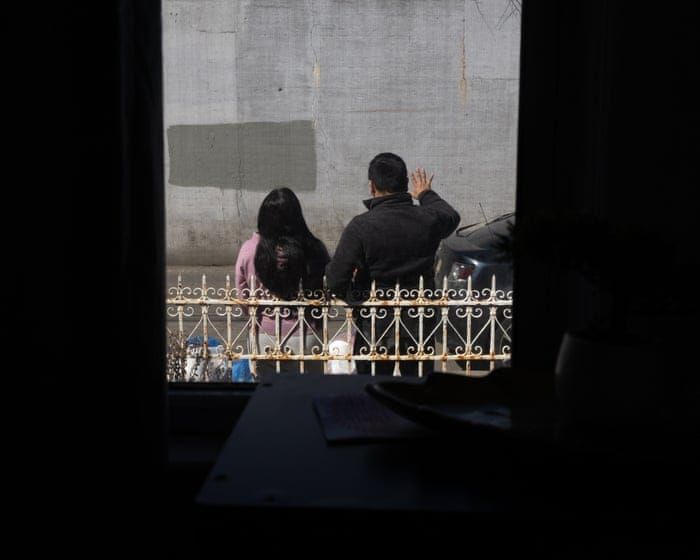
The communities where these arrests were concentrated are not abstractions. They are neighborhoods in New Jersey and New York where people have built lives, raised children, run businesses, and paid taxes — in many cases for years or decades. The chilling effect of a visible, ethnicity-targeted enforcement campaign extends far beyond those actually arrested. When residents of a predominantly Latino neighborhood watch federal agents conduct street stops at a rate nearly one and a half times their share of the undocumented population, the message received is not "we are enforcing immigration law." The message received is: your neighborhood is a target. Your appearance is probable cause.
That chilling effect has documented consequences. As Tinsel News has reported, immigrant families in cities across the country have curtailed basic activities — grocery runs, medical appointments, school drop-offs — in response to enforcement campaigns. In Houston, immigrant communities facing ICE raids have reported avoiding healthcare systems entirely, compounding the public health consequences of enforcement-by-neighborhood. The harm is not only to those arrested. It is structural, and it is by design.
The administration's framing for this enforcement campaign — as for all its immigration enforcement — centers on public safety. But the disparity documented in the City Reporter investigation does not fit a public safety rationale. A genuine public safety focus would produce enforcement distributed across the undocumented population in proportion to criminal records or specific threat assessments, not enforcement clustered by ethnicity. The 27-point gap between Latinos' population share and arrest share is evidence that the public safety rationale is doing rhetorical work that the actual enforcement data does not support.
There is also a legal architecture question the investigation opens. The lawsuits filed by those arrested — more than 1,200 of them — represent an unusual volume of legal challenge. That volume is itself information. People who believe their arrest was lawful and properly executed do not typically sue. A dataset of 1,200-plus lawsuits, concentrated in a specific region, targeting a specific enforcement campaign, is a legal record of a community's documented experience of arbitrary and discriminatory enforcement. Courts will decide individual cases. But the pattern belongs to the public record now.
The administration has been explicit that it views immigration enforcement as a tool for demographic reshaping — not merely for removing individuals with specific criminal records. That stated goal, combined with enforcement data showing arrests clustered by ethnicity in ethnic neighborhoods, is not a coincidence of outcomes. It is a program. And as the DOJ has simultaneously gutted decades of disparate impact enforcement tools, the legal mechanisms that would normally flag exactly this kind of pattern-based discrimination are being dismantled at the same time the pattern is being built.
The 27-percentage-point gap between who is undocumented and who is being arrested off the streets of New York and New Jersey will not be closed by better messaging. It will be closed by enforcement criteria that do not treat Latino appearance and Latino neighborhoods as operational proxies for immigration status. Until that changes, the data will keep documenting what the administration's language will keep denying: that this is profiling, conducted at scale, with federal resources, in American cities.