The White House is not a venue. It is not a hospitality property, a sponsorship platform, or a branded entertainment space. It is the official residence of the executive branch, maintained by taxpayer funds, and governed by ethics rules that exist precisely because the building's symbolic weight can be converted into financial value by anyone willing to use it that way.
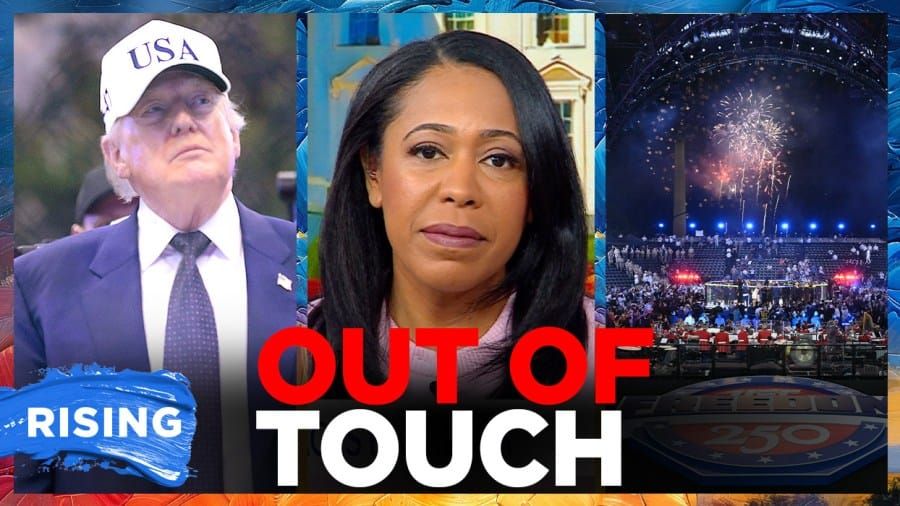
Last weekend, the Trump administration used it as a venue. The UFC held a fight event on the White House grounds — an arrangement that, as The Hill observed, generated immediate backlash over the optics of a sitting president hosting a commercial entertainment property while millions of American families struggle to cover basic costs. But the optics argument misses the more serious problem. This isn't about appearances. It is about money, and about who is making it.
Donald Trump and his family hold significant financial ties to the Ultimate Fighting Championship. Trump has appeared ringside at UFC events for years, a relationship that predates his return to the White House. His sons have been publicly associated with the promotion. Dana White, UFC's chief executive, delivered a prime-time speech at the 2024 Republican National Convention in support of Trump's candidacy. That is not a neutral business relationship. That is an alliance — one with commercial stakes on both sides.
UFC CEO Dana White delivered a prime-time endorsement speech at the 2024 Republican National Convention. Trump and members of his family have held long-standing public associations with the promotion. When the White House becomes a UFC venue, the question of who profits from the elevated brand value is not hypothetical — it is structural.
When a commercial promotion holds an event at the White House, it does not pay rent. It does not compensate the public for use of a public asset. What it receives is something more valuable than a venue fee: legitimacy, prestige, and a global marketing moment courtesy of the most recognizable address in the world. That value accrues to UFC as a brand. And UFC's brand value accrues, in part, to the people who hold equity or financial relationships with it — including, through various arrangements, members of the Trump family.
This is the conflict the administration has not answered. The White House has claimed, in various contexts, that no financial conflicts exist in this presidency — that the president's business interests are managed through trusts and arrangements that insulate official decisions from personal gain. That claim deserves scrutiny here. When an official government asset is deployed to benefit a commercial partner with documented financial ties to the president's family, the trust arrangement is not a shield. It is a fig leaf.
The accountability question is not whether Trump personally signed a check. It is whether the use of a government resource — the White House grounds, the Secret Service protection required to host the event, the staff time, the institutional prestige — generated value for a business partner whose interests overlap with the president's. By any reasonable reading, it did. The question of whether that constitutes an emoluments violation, a breach of the ethics in government framework, or simply an abuse of public property for private gain is one that oversight bodies have the authority to pursue — if they choose to.
They have not chosen to. That absence of oversight is itself a data point. As we've documented in the case of GEO Group and Jim Jordan, the current political environment has systematically dismantled the institutional mechanisms that would normally check this kind of self-dealing. The ethics infrastructure that might have flagged a White House UFC event in a previous administration — the Office of Government Ethics, congressional oversight committees, an active inspector general network — has been either hollowed out or captured.
The pattern here is not incidental. It is structural. Since January 2025, the Trump administration has monetized the presidency in ways that have no modern precedent. The president's crypto ventures have received favorable regulatory treatment from agencies his administration controls. His social media platform has benefited from government adjacency. His properties have hosted foreign government delegations at rates that flow directly to his bottom line. The White House UFC event is one data point in a larger system — a system in which the boundary between the office and the business has been deliberately erased.
The human impact of this is not abstract. Every dollar of public institutional prestige converted into private commercial value is a dollar that belongs to the public — to the people who pay for the White House's upkeep, the people whose government is being rented out for a pay-per-view promotion. The families The Hill referenced, the ones struggling with the financial pressures this administration's policies have deepened, are the same people whose government is being used as a backdrop for a business deal they will never benefit from.
There is also a global dimension that domestic coverage has largely ignored. The UFC event was broadcast internationally. The White House grounds served as a production set for a commercial product sold to audiences in dozens of countries. Foreign viewers did not see a sporting event. They saw the official residence of the United States executive branch being used to generate revenue for a promotion with documented ties to the sitting president. The message that sends about American governance — about the separation of public office from private gain — is not recoverable with a press statement.
The administration's defense, when it bothers to make one, relies on a familiar move: normalize the behavior by repetition until scrutiny feels like partisanship. This is how stock trades by the president's trust in companies his administration regulates get treated as routine financial management rather than as conflicts of interest. It is how the monetization of the presidency becomes background noise rather than a constitutional crisis.
The UFC fight at the White House is not a scandal in the traditional sense — there is no smoking document, no wire transfer with a paper trail. The conflict is structural, not transactional. That makes it harder to prosecute in the court of public opinion, and easier for the administration to wave away. But structural corruption is not less serious than transactional corruption. It is more serious, because it does not require anyone to make a single bad decision. It simply requires the decision-makers to stop caring about the line between public office and private gain — and then to govern as though that line never existed.
The line still exists. It is in the Constitution, in the ethics statutes, in two centuries of norms about what the presidency is for. What has changed is not the law. What has changed is whether anyone with the power to enforce it will.