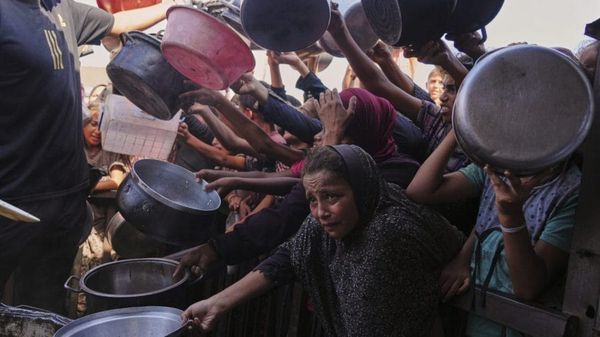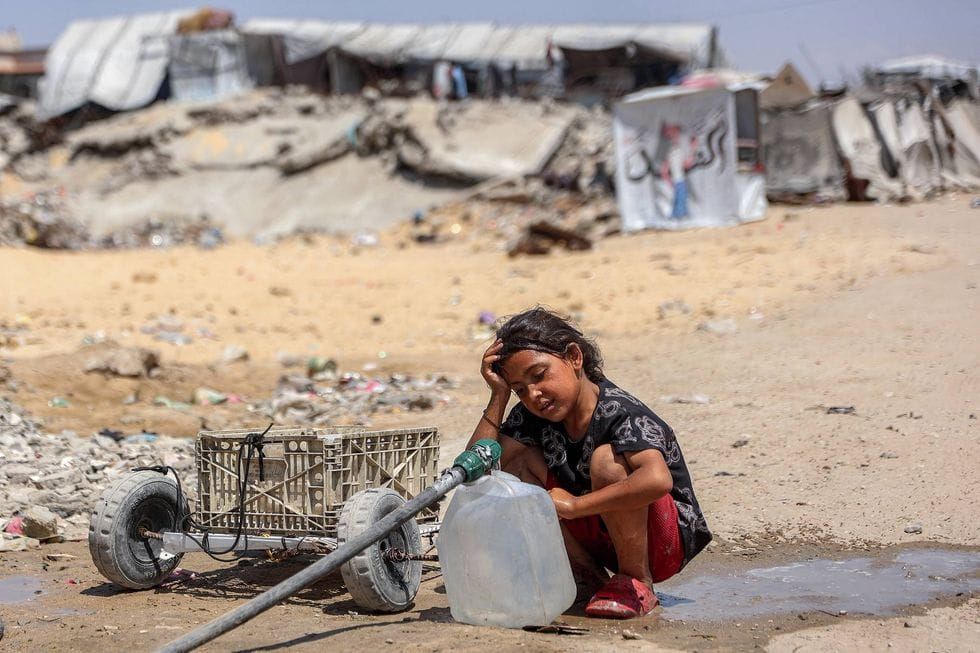
Seventy percent of families in Gaza cannot collect even six liters of water per person per day. The World Health Organization says a person needs between 50 and 100 liters daily to meet basic survival needs. That gap — between six liters and fifty — is not the result of drought, infrastructure age, or resource scarcity. It is the result of a sustained, documented military campaign against the systems that keep people alive.
On Monday, that campaign reached a water refilling station east of Gaza City. Tamer Nahed, a journalist and activist with the humanitarian group Sake For Gaza, reported via social media that the facility his group partnered with was "directly struck, resulting in the deaths of several people and injuries to others working there." Middle East Eye reported the attack killed two people as Israeli forces shelled the city early Monday morning. The Palestinian outlet Al-Quds described the strike as one that "directly targeted civilians as they stood in front of a water filling station" in the Al-Samar area.
The timing was not incidental. Less than an hour before the strike, Nahed had announced that his group's 11th truck had reached one of Gaza's most dangerous areas, carrying 5,000 liters of fresh drinking water. "We truly risked our lives to reach this place," he wrote, describing a route running close to military deployment zones. The truck arrived. Then the station it served was bombed. The water distribution project has been suspended indefinitely.
Under international humanitarian law, deliberately attacking civilian infrastructure — and specifically facilities essential to survival, including water systems — constitutes a war crime. The legal standard does not require proof of intent to kill civilians directly. Destroying the infrastructure that keeps civilians alive carries the same legal weight. Israel has not provided a military justification for Monday's strike on the water station that has been independently verified.
Doctors Without Borders (MSF) has documented that Israel has destroyed or damaged nearly 90% of water and sanitation infrastructure across Gaza. The organization has catalogued specific incidents: military fire on clearly marked water trucks, the destruction of boreholes, the demolition of desalination plants that entire communities depended on, and attacks on civilians in the act of collecting water. MSF's characterization is direct — Israel has used water as a "weapon" in what the organization describes as a genocidal war. A late-May report from UNICEF found that approximately 82% of families in Gaza remain water insecure.
This is the context that wire service coverage of Monday's strike tends to omit. The attack on the Al-Samar water station is not an isolated incident to be evaluated on its own terms. It is one entry in a documented series. Families in Gaza City have been forced to rely on groundwater and contaminated water sources to survive, leading to serious illness. The destruction of each remaining clean water source does not merely inconvenience — it kills, through dehydration, waterborne disease, and the compounding effects of malnutrition in a population already cut off from adequate food. Tinsel News has previously covered the UN's documentation of 20,000 children killed in Gaza and the systematic targeting that inquiry identified.
The accountability gap here is specific and worth naming. International law is not self-enforcing. The International Criminal Court has issued arrest warrants. The UN Security Council has passed resolutions. The UN Human Rights Council has documented atrocities. None of this has changed the operational reality on the ground in Gaza, where water infrastructure continues to be struck and humanitarian workers continue to suspend operations after losing the facilities they depend on. The United States has vetoed every ceasefire resolution at the Security Council. Congress has moved to deepen defense integration with Israel in ways that no future administration can easily reverse. The weapons flowing to Israel are American. The diplomatic cover at the UN is American. The accountability mechanisms that might interrupt the pattern are being blocked by the same government that funds it.
Nahed called the destruction of the water station "very heartbreaking news" — the language of someone watching a humanitarian operation collapse in real time, not a diplomat issuing a statement. His group had been attempting to send one truck per day to families living in tent cities. Eleven trucks in eleven days. The station that received them is now gone. "This station was one of the most important remaining sources of clean water in Gaza City," he wrote, "and served as a lifeline for thousands of families."
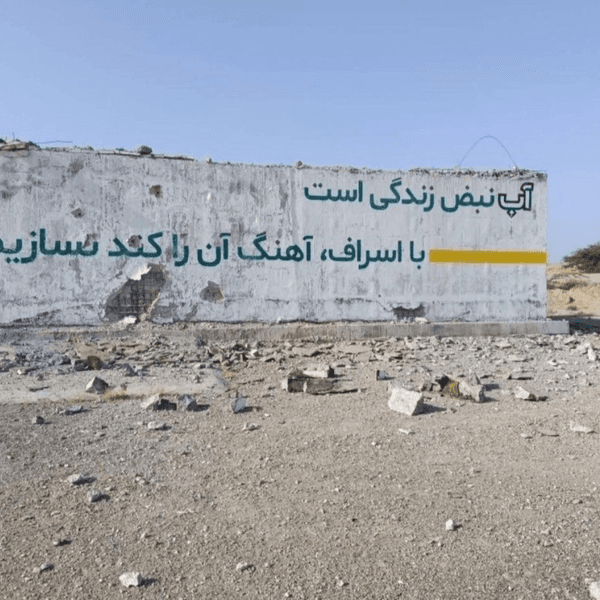
The families those trucks served are still there. The water is not. And the legal framework that is supposed to prevent this from happening is watching, documenting, and doing nothing that has changed the outcome. As Senate opposition to arms transfers has grown, the question is no longer whether the evidence exists — MSF has it, UNICEF has it, Al-Quds has it, and now Sake For Gaza has it. The question is whether the governments with the power to act will decide that documented war crimes are finally sufficient reason to stop providing the military support that makes them possible.