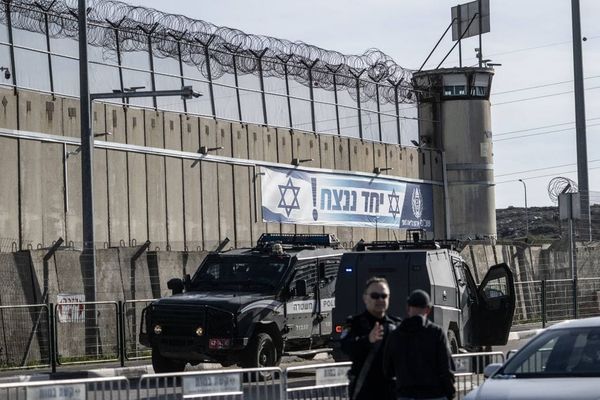
The geometry of occupation is rarely accidental. When Israeli authorities opened formal construction tenders for the E1 corridor — the strip of land east of Jerusalem that, once built upon, would physically sever the northern West Bank from the southern West Bank — they were not making a new decision. They were completing one that has been building, permit by permit, for more than three decades. BBC News reported the tender announcement, noting that Israeli plans to build on the area east of Jerusalem have long been internationally condemned. What the wire service framing does not capture is what "long condemned" actually means when measured in outcomes: the condemnations have been consistent, the condemnations have been ignored, and the construction has advanced.
That the E1 project violates international law is not in dispute; it has been documented for decades. The harder question sits elsewhere. The international community's response to E1 has functioned, in practice, as permission. Every statement of concern that produced no consequence, every Security Council resolution blocked by U.S. veto, every diplomatic communiqué that registered objection without attaching cost — each one taught the Israeli government the same lesson. The lesson is that the architecture of a permanent settlement enterprise can be built in full view of the world, condemned in full voice by the world, and completed anyway. The opening of tenders is not a provocation. It is a graduation.
The E1 area is a roughly 12-square-kilometer zone east of Jerusalem, adjacent to the Ma'ale Adumim settlement bloc — one of the largest Israeli settlements in the West Bank with a population of approximately 40,000. Construction in E1 would connect Ma'ale Adumim to Jerusalem, creating a continuous built-up zone that would physically separate the northern West Bank from the southern West Bank, cutting off Ramallah from Bethlehem and making territorial contiguity for a future Palestinian state geographically unachievable without Israeli-controlled land corridors. The project has been opposed by the United States, the European Union, the United Nations, and virtually every government that has publicly commented on it — including multiple Israeli allies — since plans were first advanced in the early 1990s.
To understand what is happening now requires understanding what E1 is and is not. It is not a small outpost. It is not a disputed hilltop seized by ideological settlers acting outside state sanction. E1 is a state-planned infrastructure project, designed by Israeli government ministries, funded by Israeli public budgets, and embedded within the legal architecture of Israeli civil administration over occupied territory. The Ma'ale Adumim settlement bloc it would connect to Jerusalem already houses approximately 40,000 Israeli citizens. The E1 corridor would transform that bloc from a large settlement into a geographic barrier — a built environment that makes the physical separation of Palestinian population centers permanent and irreversible without Israeli consent.
The international legal framework governing this is not ambiguous. The Fourth Geneva Convention prohibits an occupying power from transferring its civilian population into occupied territory. The International Court of Justice, in its 2004 advisory opinion on Israel's separation barrier, affirmed that Israeli settlements in the West Bank are established in violation of international law. In 2016, UN Security Council Resolution 2334 — passed 14-0 with the United States abstaining rather than vetoing — declared that Israeli settlements in Palestinian territory occupied since 1967, including East Jerusalem, have no legal validity and constitute a flagrant violation of international law. E1 falls squarely within the territory that resolution addresses. The legal conclusion has never been in doubt. What has been in doubt — and has now been answered — is whether legal conclusions produce political consequences.
They have not. And the United States bears specific, documentable responsibility for that outcome. Washington has blocked or threatened to block Security Council resolutions on settlements more than forty times since 1972. The diplomatic protection the U.S. has extended to Israeli settlement construction is not incidental to the E1 project's progress — it is constitutive of it. Without the certainty that no binding international enforcement mechanism would be permitted to function, the calculus of building in E1 would look different. That certainty has been provided, consistently and across administrations of both parties, by the United States government. As Tinsel News has reported, the legislative architecture deepening U.S.-Israel defense integration has been constructed with deliberate bipartisan durability — designed to outlast any single administration's policy preferences.

The Palestinian communities most directly affected by E1 are not abstractions in this story. The Jahalin Bedouin community has lived in the E1 area for generations, and Israeli civil administration has been attempting to relocate them for decades — a process that has involved demolition orders, forced displacement, and the removal of people from land where they have lived since before the state of Israel existed. Palestinian residents of the villages surrounding Ma'ale Adumim — Anata, Al-Eizariya, Abu Dis — already navigate a geography of checkpoints, permit requirements, and separation barriers that fragment what was once a continuous urban and agricultural landscape. E1 construction would not introduce separation into this landscape. It would finalize it.
Follow the money. The settlement enterprise in the West Bank is not a spontaneous movement of private citizens making individual housing choices. It is an industry, subsidized by the Israeli state through below-market land allocation, infrastructure investment, tax incentives, and security provision. The Ma'ale Adumim bloc, which E1 would connect to Jerusalem, was built on this model. The construction tenders now open for E1 represent a new tranche of public investment in a project whose economic beneficiaries — construction contractors, land developers, municipal authorities — have strong financial interests in its completion. The story runs on that money, not just the ideology.
This story belongs to a broader pattern: the gap between international legal norms and enforcement capacity, and how powerful states exploit that gap to achieve outcomes that no formal vote would sanction. The current U.S. administration's moves against the International Criminal Court fit the same logic — not merely as a response to any specific investigation, but as a structural effort to ensure that the enforcement mechanisms that might impose costs on allies remain defanged. An ICC with genuine enforcement authority over settlement construction in occupied territory is an ICC that creates political risk for Israeli government officials. The pattern of U.S. opposition to ICC jurisdiction is inseparable from the pattern of U.S. protection of Israeli settlement policy.

The timing of the E1 tender announcement is also not incidental. It comes during a period in which the Israeli government has calculated, with considerable evidence to support the calculation, that the international political environment for settlement expansion is as permissive as it has been in decades. The current U.S. administration has not merely declined to pressure Israel on settlements — it has actively signaled that settlement expansion will not be a source of friction in the bilateral relationship. For a government that has watched the E1 project stall repeatedly under international pressure, that signal is an authorization. The formal opening of tenders is the response.
What the BBC report describes as a project that has "long been internationally condemned" is better understood as a project that has long been internationally permitted — permitted through the specific mechanism of condemnation without consequence. There is a meaningful difference between a norm that is violated and then enforced at cost to the violator, and a norm that is violated, condemned, and then violated again. The first describes a functioning legal order. The second describes a rhetorical order — one in which the language of law is preserved while the substance of law is discarded. E1 has existed within the rhetorical order for thirty years. The opening of tenders suggests the Israeli government has concluded that the rhetorical order is all there will ever be.
The question for Palestinian communities east of Jerusalem is not whether the international community opposes E1. Opposition is documented, voluminous, and consistent. The question is what opposition without enforcement costs the people it fails to protect. As Tinsel News has documented, UN condemnation of specific acts of settler violence and dispossession in the West Bank has produced no structural change in the conditions that enable those acts. The E1 tender announcement is the same dynamic operating at the level of state infrastructure rather than individual violence. The mechanism is different. The outcome — land taken, communities fragmented, futures foreclosed — is the same.
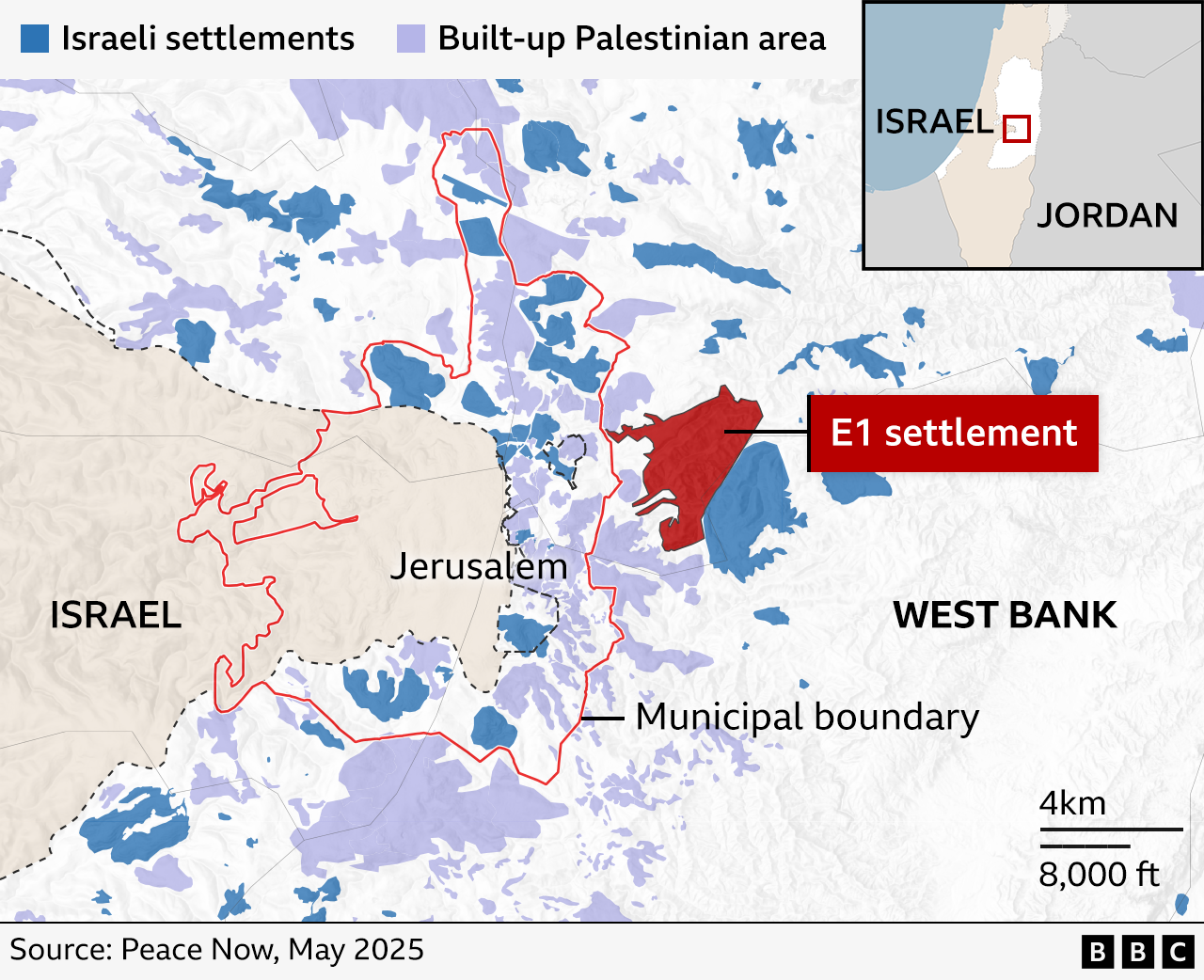
When construction equipment moves into the E1 corridor, it will not be moving against the will of the international community in any operationally meaningful sense. It will be moving with the full knowledge that the international community's will has no instrument capable of stopping it. That is the condition that decades of diplomatic protection and Security Council vetoes have created. The tenders are open. The machinery is being procured. And the statements of concern are already being drafted.