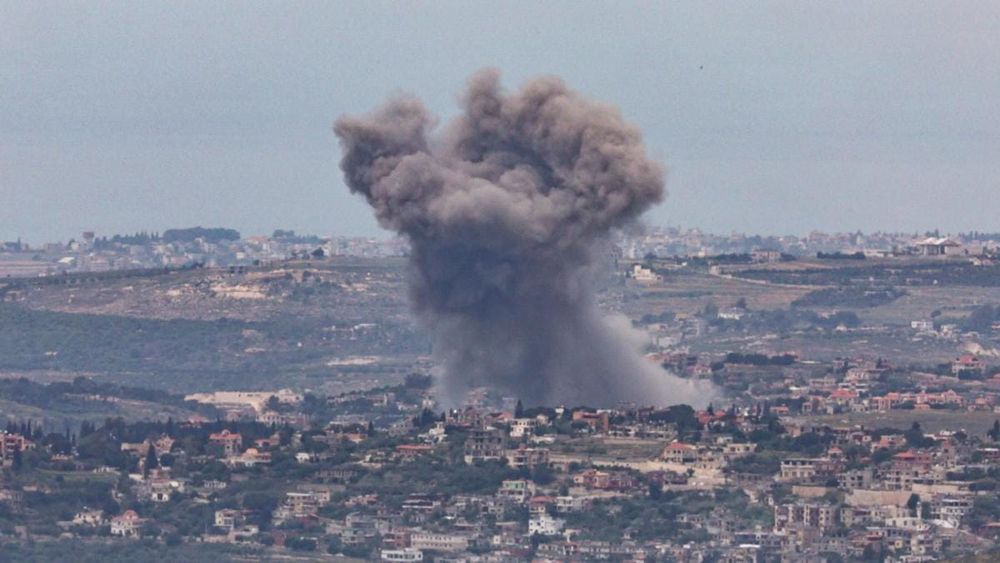
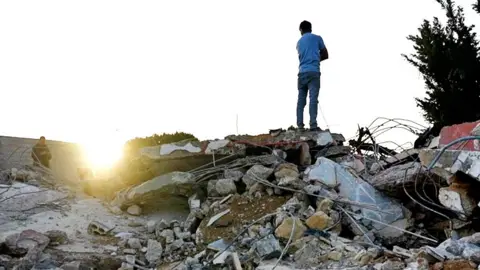
Ten people are dead after Israeli strikes on Nabatieh in southern Lebanon, according to Lebanon's health ministry — among them two paramedics who had driven into the strike zone to pull survivors out of an earlier attack. The paramedics were not combatants. They were doing the job that international humanitarian law specifically protects: retrieving the wounded. They were killed for it. BBC News reported the ministry's account of the strikes.
The November 2024 ceasefire between Israel and Hezbollah was announced with considerable fanfare. American and French diplomats took credit. Lebanese politicians spoke carefully about a new phase. The agreement was supposed to end more than a year of cross-border fire that had displaced over a million people in Lebanon and left entire towns in the south — Nabatieh among them — gutted. What it did not include was any mechanism for accountability when one party continues to strike. What it does not have is a single enforcement body with authority to respond when civilians and rescue workers die. What it amounts to, in practice, is a name for a condition that does not exist.
The killing of medical and rescue personnel is not incidental to this pattern — it is the sharpest possible test of whether a ceasefire is real. Under the Geneva Conventions, medical workers and those responding to the wounded are explicitly protected from attack. The prohibition is not ambiguous. When paramedics arrive at the scene of a strike and are then killed by a second strike on the same location — a tactic human rights organizations have documented in Gaza, in Lebanon, and elsewhere — the question of intent cannot be waved away with claims of military necessity. Lebanon's health ministry stated that the paramedics were on an active rescue mission in response to the first attack when they were killed. That is the sequence. It has a name in international humanitarian law, and that name is not "ceasefire."
The ceasefire between Israel and Hezbollah, brokered with U.S. and French involvement, took effect in late November 2024 after more than a year of escalating cross-border strikes. The agreement required Israeli forces to withdraw from Lebanese territory and Hezbollah to pull back north of the Litani River. It included no independent enforcement body and no mechanism for international adjudication of violations. Human rights organizations have documented continued Israeli strikes in southern Lebanon since the agreement was signed.
The UN Rights Office has previously stated that Israeli strikes on Lebanon may constitute war crimes — a finding that predates this latest attack and that has produced no change in conduct. The United States, which co-brokered the ceasefire and which supplies Israel with the weapons used in Lebanese airspace, has not conditioned that supply on compliance with the agreement's terms. That is not an oversight. It is a policy choice. The $8 billion in weapons transfers to Israel and Gulf nations that Congress never voted on continues regardless of what happens on the ground in Nabatieh.
Nabatieh is a city of roughly 100,000 people, the administrative capital of the Nabatieh Governorate in southern Lebanon. It is not a remote village. It has hospitals, schools, a municipal government. It has been struck repeatedly since October 2023. The people who live there are not abstractions in a geopolitical negotiation — they are the population the ceasefire was supposed to protect. When paramedics in that city are killed while responding to a strike, the correct journalistic framing is not "tensions continue" or "violence persists." The correct framing is: the ceasefire is not functioning, people are dying, and the international architecture designed to prevent this has produced no consequence for the party conducting the strikes.
The pattern documented in Lebanon echoes what Gaza healthcare workers have documented in systematic detail: attacks on medical infrastructure and personnel, followed by international statements of concern, followed by no change in military conduct. The WHO halted medical evacuations from Gaza after an Israeli strike killed a Palestinian contractor driving the route. The mechanism for accountability in that case, as in this one, was a press release. Lebanon's health ministry will file its report. The UN will issue a statement. The U.S. will express concern through a spokesperson. And the next strike will come.
What is missing from the dominant framing of these events — particularly in American media, which tends to cover Lebanon as a subplot to Israeli security concerns — is the lived reality of a country that has now endured more than a year of bombardment, a ceasefire that stopped nothing, and a political leadership too fractured and economically dependent to force accountability from any external party. Lebanon was already in economic freefall before the latest round of strikes. Its healthcare system, already strained beyond capacity, loses workers every time a rescue convoy enters a strike zone and does not come back.
Two paramedics drove toward an explosion to help the people inside it. That is the job. They were killed before they could finish it. The ceasefire that was supposed to make that drive safe was signed six months ago. The question is not whether it has been violated — the bodies answer that. The question is who bears responsibility for maintaining an agreement that exists in name while the dying continues in fact, and whether the governments that brokered it will ever be asked to answer for the gap between what they announced and what they allowed.