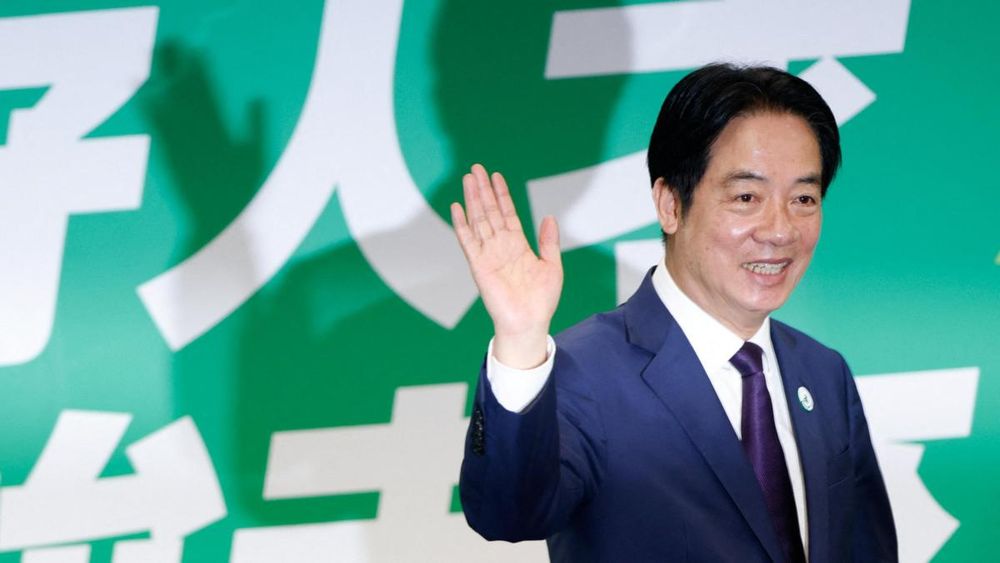
The statement from Taipei came swiftly and without diplomatic cushioning. Taiwan is independent, its government declared — and no conversation between Washington and Beijing would change that. The response was directed at the U.S. president, who had just returned from a summit in China and issued what amounted to a public warning to a democratic partner of 46 years: do not formally declare what you already functionally are.
That sequence — an American president visiting Beijing, then cautioning Taiwan against sovereignty — is not a diplomatic nuance. It is a structural shift in how Washington signals its commitments to the region, and to every government watching from Manila to Seoul to Vilnius that has built its security calculus around the assumption of American reliability.
The source material, reported by BBC News, is spare: a president warns Taiwan against a formal independence declaration after a Beijing summit; Taiwan insists it is independent regardless. But the architecture beneath those two facts is what matters. The original thesis here is not that Trump said something alarming about Taiwan — it is that the warning itself functioned as a concession to Beijing, and that Taiwan's defiant response has now made that concession visible to every party in the Indo-Pacific who needs to decide whether the United States means what it says.
The 1979 Taiwan Relations Act requires the United States to provide Taiwan with defensive arms and maintain the capacity to resist any forcible resolution of Taiwan's status. It does not commit the U.S. to military defense. The ambiguity — called "strategic ambiguity" — was deliberate. It was designed to deter both a Chinese invasion and a Taiwanese unilateral declaration of independence. The question now is whether that ambiguity, long managed in Taiwan's favor, is being reweighted toward Beijing.
American alliance credibility does not collapse in a single moment. It erodes through accumulated signals — a failure to act here, an accommodation there, a warning issued to a friend rather than an adversary. The warning to Taiwan after a Beijing summit is one such signal. It arrives in a context already thick with others. As Tinsel News has previously reported, U.S. credibility arrived in Beijing already damaged — and China came prepared to extract concessions from that weakness.
What does Beijing gain from a U.S. president publicly cautioning Taiwan against formal independence? It gains a normalization. The People's Republic of China has long sought international validation for the proposition that Taiwan's political status is a matter subject to negotiation between Beijing and Washington — not a matter for the 23 million people living on the island. Every time an American president treats Taiwan's sovereignty as a variable in U.S.-China diplomacy rather than a settled democratic reality, that framing advances. The warning, in this reading, is not a neutral diplomatic gesture. It is a concession dressed as caution.
Taiwan's government understands this. Its swift, unequivocal response — that it is independent, full stop — was not a provocation. It was a refusal to accept a frame. Taipei has watched the pattern across multiple administrations: the United States reaffirms its commitment to Taiwan's security, sells it weapons, and then, at diplomatically inconvenient moments, asks Taiwan to be quieter about what it actually is. Taiwan's response this week was a message not just to Washington but to Beijing: the island will not be managed into ambiguity by either power.
The power and money dimensions of this moment are worth naming directly. The U.S.-China relationship is, at its core, an economic entanglement of extraordinary depth. China holds hundreds of billions in U.S. Treasury debt. American corporations depend on Chinese manufacturing supply chains. The technology war between Washington and Beijing — over semiconductors, AI, and advanced manufacturing — runs directly through Taiwan, which produces the majority of the world's most advanced chips through TSMC. Any diplomatic accommodation of Beijing's position on Taiwan is therefore not merely a security calculation. It is also a business calculation, made by an administration with documented financial entanglements in Chinese markets and a president who has consistently treated foreign policy as an extension of deal-making.
The systemic pattern here extends well beyond Taiwan. Governments from Eastern Europe to Southeast Asia have spent the past several years recalibrating their relationship to American security guarantees in real time. The pattern they are observing is consistent: the United States under the current administration treats alliances as transactional, commitments as negotiable, and democratic partners as subordinate to great-power accommodation. The warning to Taiwan is one data point in a pattern that includes the vice president's endorsement of Viktor Orbán in Budapest and the broader erosion of the multilateral security architecture the United States spent seventy years building.
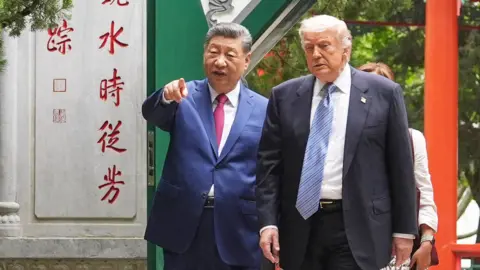
For Taiwan specifically, the human stakes of this pattern are not abstract. The island's 23 million residents have built a functioning democracy, a free press, a pluralist civil society, and one of the most dynamic economies in Asia — all under the permanent shadow of a neighbor that claims the right to absorb them by force if necessary. The question of whether the United States will honor its commitments is not, for Taiwanese people, a geopolitical thought experiment. It is the organizing reality of their security environment. When Washington signals — even obliquely — that Taiwan's formal status is subject to American diplomatic management, it is signaling something about whose lives and whose democracy count in the final ledger.
The accountability question this moment demands is direct: who benefits from the current framing, and who bears its costs? Beijing benefits. American corporations with deep China exposure benefit from reduced trade tension. The people who bear the cost are the 23 million Taiwanese whose democratic self-determination is being treated as a negotiating variable — and, more broadly, every government in the Indo-Pacific that has made security bets premised on American reliability.
The precedent being set is also worth examining carefully. If Washington can be pushed into warning a democratic partner against asserting its own sovereignty — not through military pressure, but through the diplomatic theater of a summit — then the message to Beijing is that the cost of pressure is low and the returns are real. That lesson does not stay in the Taiwan Strait. It travels to every contested space where Chinese power is expanding and American commitment is being tested.
Taiwan's defiance, then, is doing something the United States currently cannot: holding a line. Taipei's refusal to accept the frame — to treat its own independence as a matter for Washington to adjudicate in Beijing — is the clearest signal in this episode that the island intends to be a subject of its own history rather than an object of great-power negotiation. Whether Washington eventually matches that clarity, or continues to treat Taiwan's sovereignty as a diplomatic instrument, will determine not just the island's future but the credibility of every security commitment the United States still claims to hold. As Tinsel News has documented, Beijing studied the first-term playbook carefully. The second term is confirming that the lessons it drew were correct.