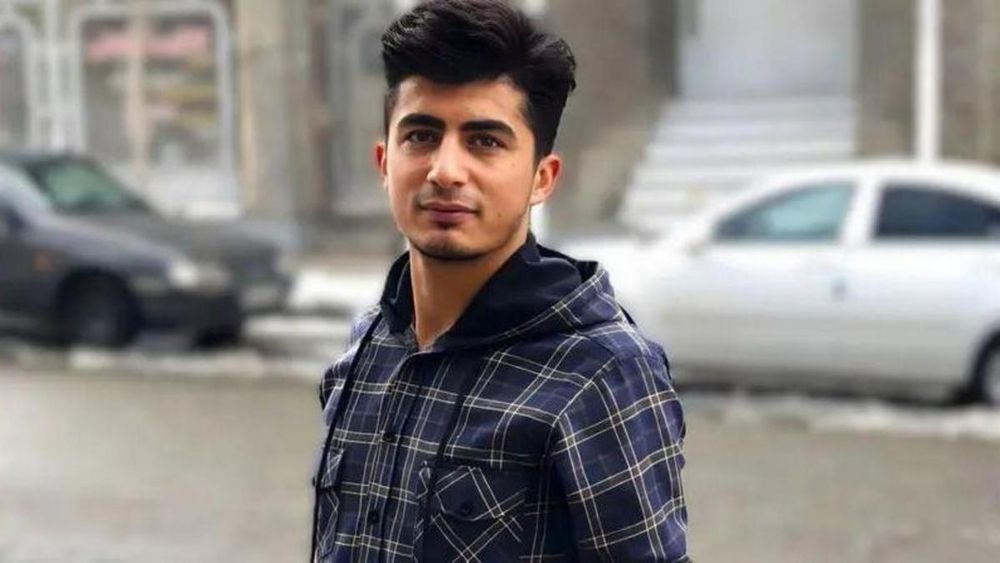
Thirty-two political prisoners have been executed in Iran since U.S. and Israeli forces began bombing the country on February 28, according to BBC News, citing verified figures from the United Nations. Thirty-two people who were not combatants, not soldiers, not casualties of airstrikes — people who were held in cells, processed through courts, and killed by the state while the world's cameras pointed at the smoke rising over Iranian military installations.
That number is what the UN has verified. Verification in wartime Iran, where independent journalists face criminal prosecution and war reporting has been treated as a federal crime even in the United States, is a floor — not a ceiling. The actual toll is almost certainly higher.
Here is the argument the source material does not make, but the evidence demands: this is not a coincidence of timing. The Islamic Republic has long used periods of external threat — real or manufactured — to accelerate the elimination of internal dissent. War has always been the regime's most reliable cover. The U.S. attack on February 28 did not create Iran's political prison system or its willingness to execute those inside it. But it handed Tehran something the regime could not have purchased at any price: the world's sustained attention fixed on missiles and military installations, while the executions proceeded in the background.
The mechanism is not complicated. When a government is under military attack, every act of state violence gets reframed as a security necessity. Dissidents become potential fifth columnists. Protest becomes treason. Execution becomes counterterrorism. The Iranian state has made this argument explicitly for decades — the war simply made it easier to make, and harder for anyone outside to challenge. Those 32 people were killed in the space created by the conflict, in the shadow of it, under its noise.
This is the systemic pattern that wartime coverage almost always misses. Military strikes generate enormous media attention — the sorties, the targets, the body counts of combatants, the diplomatic fallout, the oil prices. What they do not generate, reliably, is sustained coverage of what authoritarian governments do to their own people while the bombing runs provide atmospheric cover. The Islamic Republic has used this playbook before: during the Iran-Iraq War in the 1980s, the regime executed thousands of political prisoners — many of them leftists and opposition members — in a wave of killings that received almost no international attention because the world was focused on the battlefield. The pattern is not new. The current iteration has the same logic.
The accountability question here runs in multiple directions, and it is important to follow each one. The Iranian government is directly responsible for these executions. Full stop. No external military pressure compels a state to kill its political prisoners — that is a choice, made by identifiable people, in identifiable institutions, with identifiable names. The Islamic Republic's judiciary, its Revolutionary Guard, its political leadership: they ordered these killings. They carried them out. The war did not pull the trigger.
But the war created the conditions. And the people who started the war bear responsibility for the conditions they created. The decision to attack Iran on February 28 was made without a coherent strategy, without congressional authorization, and — by multiple accounts from within the administration itself — without a serious assessment of second-order consequences. Those second-order consequences now include at least 32 confirmed dead political prisoners. When a government launches a war and the war produces foreseeable atrocities, the architects of that war share in the moral ledger of those atrocities. That is not an exoneration of Tehran. It is an insistence that Washington answer for what its choices made possible.
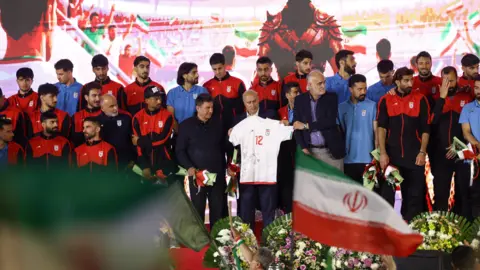
Iran's execution rate was already among the highest in the world before February 28. Human rights organizations had documented a sharp increase in executions of political prisoners and ethnic minority dissidents in the years preceding the conflict. The war did not create this system — it accelerated and obscured it.
The congressional picture makes the accountability gap worse. Seven Senate votes to rein in the Iran war have failed. The war has no authorization, no budget, and no defined endpoint. The people who have repeatedly tried to impose oversight — and failed — have documented, for the record, that this conflict is being prosecuted without democratic accountability. The executions happening under its cover are therefore happening without democratic accountability either. No vote was taken. No consequences were weighed. No one in the U.S. government was required to ask: what will Tehran do to its own people if we bomb them?
It is worth being precise about what "political prisoners" means in the Iranian context, because the phrase can flatten into abstraction. These are people imprisoned for organizing, for speaking, for writing, for belonging to ethnic or religious minorities the state deems threatening, for protesting fuel prices or election results or the mandatory hijab. The 2022 Mahsa Amini protests produced thousands of arrests; many of those arrested remained in custody when the bombs started falling. The Kurdish, Baluch, and Arab minorities in Iran have historically faced disproportionate execution rates. The 32 verified dead since February 28 are not an abstraction — they are the terminus of specific lives, specific cases, specific families who are now receiving specific news.
The human impact is also generational in a way that wartime coverage rarely captures. When a dissident is executed, the chilling effect on everyone who knew them — every writer, every organizer, every person who attended the same protest — is immediate and total. The message of a political execution is not addressed to the person being killed. It is addressed to everyone still alive who might consider doing what that person did. The 32 verified executions since February 28 are not just 32 deaths. They are a message delivered to the entire Iranian civil society about the cost of dissent during wartime. That message lands with particular force when the country is under attack and any internal opposition can be painted as collaboration with the enemy.

There is a direct line between the strategic choices made in Washington and the cells emptied in Tehran. It does not require conspiracy or even intent — it requires only the predictable logic of how authoritarian states behave when they are given cover. The U.S. government knew, or should have known, that attacking Iran would empower the regime's most repressive instincts. The historical record of every similar intervention makes this predictable. Iranian civilians are paying the price of a military strategy that has failed to weaken the regime while strengthening its justification for internal violence.
The people who said "this may be the last time you hear my voice" — the phrase that gave the BBC its headline — said it before February 28. They said it because they knew what their government was capable of. The war did not change what Tehran was capable of. It changed what Tehran could do without the world noticing. Those are different things, and the difference matters enormously for how we assign responsibility and what we demand from the governments that made this situation possible. The executions will continue. The question is whether anyone in a position to stop them — in Tehran, in Washington, in the UN Security Council — will be required to answer for the choice to let them proceed.