The government did not fight this case. That is the fact that matters most.
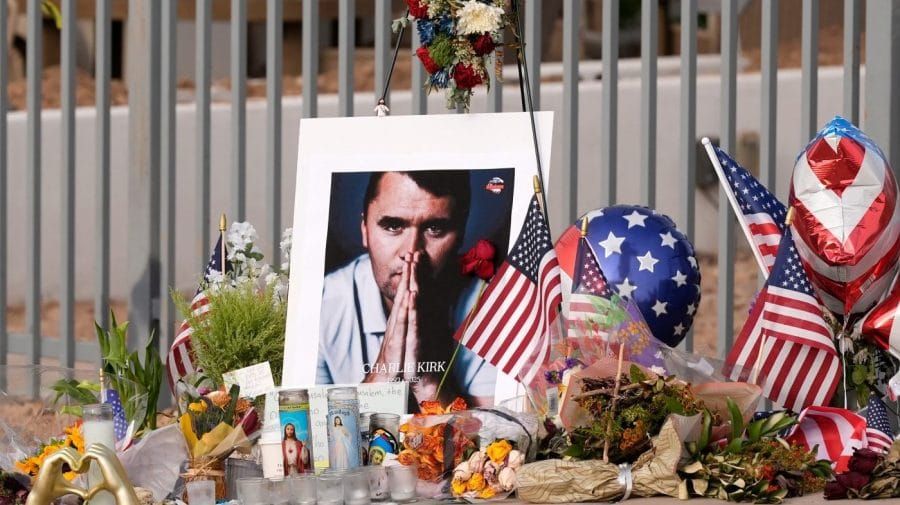
Larry Bushart, a 61-year-old retired law enforcement officer from Tennessee, was arrested in September 2024 and spent 37 days in jail after sharing Facebook memes about the killing of conservative commentator Charlie Kirk. He was not charged with making a threat. He did not contact Kirk. He did not name a target, a time, or a method. He shared political memes on a social media platform — the kind of speech the First Amendment exists to protect most fiercely. According to The Hill, Bushart will receive an $835,000 settlement from the government. No trial. No full evidentiary hearing. The government assessed the constitutional exposure and paid.
That decision — to settle rather than litigate — is a confession. Not a legal admission, but a practical one. Governments that believe their conduct is defensible go to court. Governments that know they crossed a line write a check and hope the story moves quickly.
The arrest itself — of a retired law enforcement officer who presumably understood the legal lines better than most civilians — tells you something about how far the threshold for political speech prosecution has shifted. Bushart's memes, according to reporting by The Hill, accused the Turning Point USA founder of various offenses. They were, by any reasonable reading, political commentary. Crude, perhaps. Provocative, certainly. Constitutionally protected, unambiguously.
What the arrest required was a decision by someone — a law enforcement officer, a supervisor, a prosecutor — to treat that speech as criminal. That decision did not emerge from a legal vacuum. It emerged from a political environment in which the line between protecting a public figure and punishing their critics has been systematically blurred. Charlie Kirk is not a private citizen requiring protection from anonymous threats. He is one of the most prominent conservative media figures in the country, with a platform that reaches millions, a well-funded political organization, and — critically — proximity to power. The question of who benefits when his critics get jailed is not a complicated one.
This is where the accountability lens clarifies what the settlement obscures. The $835,000 does not come from the officers who made the arrest decision. It does not come from the supervisors who approved it. It does not come from the prosecutors who evaluated the case and apparently found it worth pursuing, at least initially. It comes from taxpayers. The people whose constitutional rights law enforcement is supposed to protect are now paying for the violation of those rights. The officers involved face no documented professional consequence. The structural incentive — arrest first, let the courts sort it out, let the public absorb the cost — remains fully intact.
That structure is not accidental. As Tinsel News has documented in its coverage of qualified immunity, the legal doctrine that shields law enforcement officers from personal liability for constitutional violations was built precisely to insulate individual actors from the consequences of their decisions. The settlement in the Bushart case is the system working as designed: the government pays, the officers walk, and the precedent — such as it is — costs nothing to the people who set it.
The pattern here extends well beyond a single Tennessee arrest. Political speech directed at powerful figures has faced escalating legal pressure across multiple jurisdictions. The legal theory used to jail Bushart — that memes constituting political commentary about a public figure could support criminal charges — is not an outlier position. It is part of a broader effort to reframe criticism of prominent conservatives as harassment, intimidation, or threat. That reframing has consequences. When retired law enforcement officers with full knowledge of the law can be jailed for 37 days over Facebook posts, the chilling effect on ordinary citizens — those without legal training, without financial resources, without a settlement lawyer — is orders of magnitude larger.
The First Amendment's protection of political speech is not contingent on the speech being polite, accurate, or fair to its target. The Supreme Court has been unambiguous on this point across decades of jurisprudence. Public figures — and Kirk, as founder of Turning Point USA and a nationally recognized conservative commentator, is unambiguously a public figure — accept heightened scrutiny and diminished legal protection against criticism as the price of their public role. Jailing someone for memes about a public figure is not a close constitutional call. It is a failure so basic that it raises the question of whether the people who made it understood the law, or simply did not care.
Under established First Amendment doctrine, public figures — politicians, media personalities, prominent activists — have significantly reduced legal recourse against criticism, satire, and political commentary. Prosecution of political speech targeting public figures faces a near-insurmountable constitutional barrier. Governments that pursue such prosecutions and then settle, rather than litigate, effectively acknowledge the barrier exists.
There is also the matter of what Bushart's 37 days in jail actually cost him — and what no settlement fully compensates. Detention is not an abstraction. It means lost income, disrupted family life, potential health consequences, and the particular humiliation of a retired law enforcement officer being processed through the system he spent a career operating. The $835,000 is not justice. It is the government's estimate of what it would cost to be exposed in court. Those are different things.
The Bushart settlement arrives in a political moment when the boundaries of permissible political speech are under active contestation from multiple directions. Governments at the state and federal level have moved to restrict protest, criminalize dissent, and expand the definition of "threat" to encompass constitutionally protected expression. The pattern — which extends to cases like the FBI clearing Mahmoud Khalil of any credible threat two days before his arrest while the administration continued calling him dangerous — is one of deliberate boundary-testing. Arrest someone. See what happens. If the courts push back, settle. If they don't, the precedent holds.
The Bushart case is particularly instructive because he won — in the sense that the government paid him — and yet the system that jailed him for 37 days over a Facebook meme remains completely unchanged. It is a dynamic courts have confronted before, most recently when a rapper successfully fought back after police sued him for mocking their failed raid — another case where law enforcement used legal process to punish protected speech rather than address genuine harm. The officers involved retain their authority. The prosecutorial discretion that allowed this case to proceed has not been reformed. The next person who posts a meme about a powerful figure in the wrong jurisdiction faces the same risk Bushart faced, with one difference: they probably won't have the resources or the profile to extract an $835,000 settlement.
That is what a settlement without accountability actually produces. Not a deterrent. A price list.