The architecture of consent on the internet has always been skewed in one direction. You post. The platform collects. The terms of service, written in legal boilerplate and buried under scroll wheels, authorize whatever comes next. Meta's decision to let users generate AI images from public Instagram profile pictures is not a new kind of violation — it is the same violation, running on newer infrastructure, at greater scale, with a more obvious gap between what the company calls consent and what consent actually means.
As BBC News reported, Meta says users can opt out of the feature. Privacy campaigners have called that opt-out a "recipe for disaster." Both things are technically accurate. Neither gets to the core of what is happening here: that opt-out, as a privacy framework, was designed to serve platforms, not people. It transfers the burden of protection onto the individual while the platform collects by default. By the time most users learn a feature exists, the data pipeline that powers it has already run.
This is not a story about one feature. It is a story about a business model that treats personal images as raw material, and a regulatory environment that has allowed that model to calcify into industry standard practice.
An opt-out system means data collection begins automatically and continues unless a user actively stops it. This contrasts with opt-in consent, where collection requires affirmative agreement before it starts. Privacy regulators in the EU have repeatedly found that opt-out frameworks — especially those applied retroactively after data has already been processed — do not meet the standard of meaningful consent under the General Data Protection Regulation.
The specific mechanics matter here. When Meta makes a profile picture public — or when a user does — that image becomes accessible not just for viewing but, under this feature, for synthetic generation. A user who posted a photo in 2019 to share with friends, family, or followers did not consent to that image becoming training data or generative input for AI systems in 2025. The platform's terms of service may claim otherwise. But a terms-of-service click from six years ago is not the same as informed consent to a technology that did not yet exist in its current form.
Privacy campaigners have long argued that opt-out mechanisms are structurally inadequate for this kind of data use. The argument is straightforward: collection happens continuously, at machine speed, across billions of accounts. Notification to individual users is slow, inconsistent, and frequently absent. The population of people who actively monitor their platform settings for new features, understand the implications of those features, and take the correct steps to disable them before their data is processed is vanishingly small. This is not a failure of individual attention. It is a predictable consequence of a design choice that benefits the platform.
Meta's business model depends on scale. The value of an AI image generation feature is proportional to the breadth of its training and input data. Asking users to opt in — requiring affirmative consent before their images could be used — would reduce that breadth dramatically. Opt-out preserves the dataset. The choice of framework is not neutral. It is a business decision dressed in the language of user control.
The global dimension of this cannot be set aside. Instagram's two billion monthly users are not primarily American. They are in Brazil, India, Nigeria, Indonesia, the Philippines, and across Europe, Southeast Asia, and Latin America. The images Meta is now processing belong to people in countries with varying levels of data protection law, varying awareness of platform policies, and varying access to the technical literacy required to navigate opt-out systems in English-language settings. A feature announced without proactive notification, defaulting to collection, operating across jurisdictions where enforcement of data rights is weak or nonexistent, is not a privacy choice — it is a privacy imposition.
The European Union's General Data Protection Regulation sets a different standard. Under GDPR, processing personal data for a new purpose — one not covered by the original basis for collection — generally requires a fresh legal basis, often explicit consent. Applying an opt-out to retroactive use of existing data sits uneasily with that framework. Whether European regulators will move quickly enough to matter is a separate question. The gap between the law's requirements and the platform's behavior is not ambiguous.
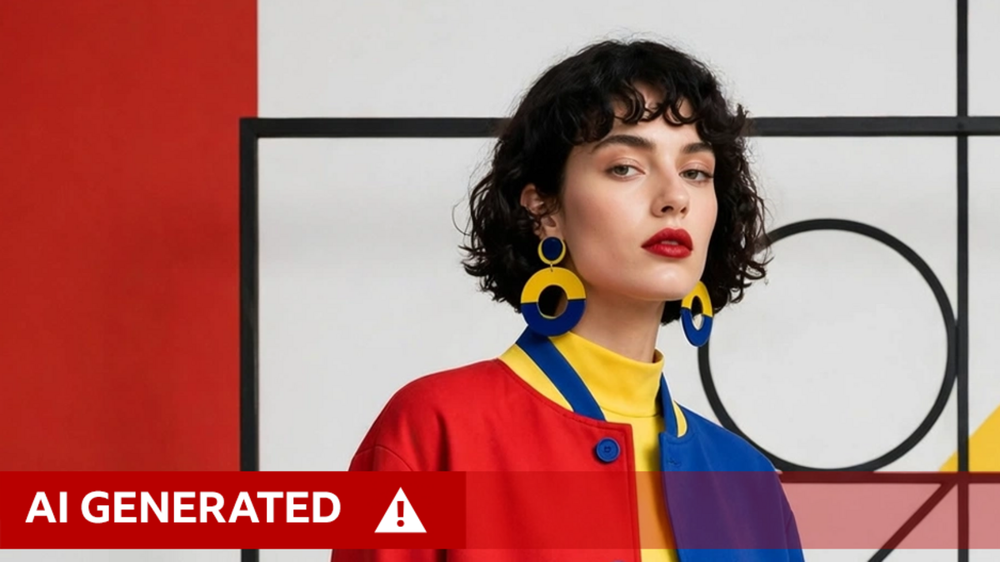
There is also a specific harm that generic privacy language tends to obscure. AI image generation tools applied to real people's photographs can produce synthetic images of those people — their faces, their likenesses — in contexts they did not choose and cannot control. The technology to generate realistic fake images of real individuals from reference photographs is mature and widely accessible. A feature that makes public Instagram profile pictures available as inputs for AI image generation is not just a data privacy concern. It is an infrastructure question: what safeguards prevent that feature from being used to produce non-consensual synthetic imagery of real people? Meta's announcement, as reported, does not answer that question. The opt-out mechanism does not address it at all.
This connects to a broader pattern in how large technology platforms have approached AI development. As Tinsel News has covered in relation to AI governance and democratic accountability, the companies building the most consequential AI systems have consistently moved faster than the regulatory frameworks designed to govern them — then positioned the resulting gaps as evidence that regulation is impractical. Meta is not an outlier. It is the pattern, one visible in everything from AI used to manufacture consent to the quiet algorithmic suppression of users who fall outside a platform's preferred demographics.
The company's stated rationale — that public images are, by definition, public — reflects a deliberate conflation. Public, in the context of social media, has always meant visible to other people. It has not historically meant available for commercial AI processing, synthetic image generation, or any other automated use the platform later chooses to implement. The word "public" is doing significant work in Meta's framing, and precision about what it actually authorizes matters.
The accountability question here is not complicated. Meta has the engineering capacity to implement opt-in consent. It has the legal teams to design a framework that would meet a higher standard. It has the resources to notify users proactively, in their primary languages, before a feature processes their data. It chose not to do those things. That choice has a beneficiary: the company's AI product development, which depends on the kind of large-scale, low-friction data access that opt-out systems provide.
The people who will bear the costs of that choice — the users whose images are processed without meaningful prior notice, the individuals whose likenesses could be used in ways they never anticipated, the communities in countries where data protection enforcement is weakest — are not represented in that calculation. They are the raw material. The opt-out is the fig leaf. It is the same logic by which platforms perform user protection while their systems quietly work against the very people they claim to serve.
There is a version of this technology that could exist with genuine informed consent, robust safeguards against non-consensual synthetic imagery, and clear accountability for misuse. Meta has not built that version. What it has built is a feature that maximizes data access, minimizes friction to collection, and places the burden of protection on the people least equipped to exercise it. The question for regulators — in Europe, in the UK, and in every jurisdiction where Instagram's two billion users live — is whether they will treat this as the structural consent failure it is, or wait for the harms to accumulate before acting. History on that question is not encouraging. And the data pipeline, in the meantime, keeps running.