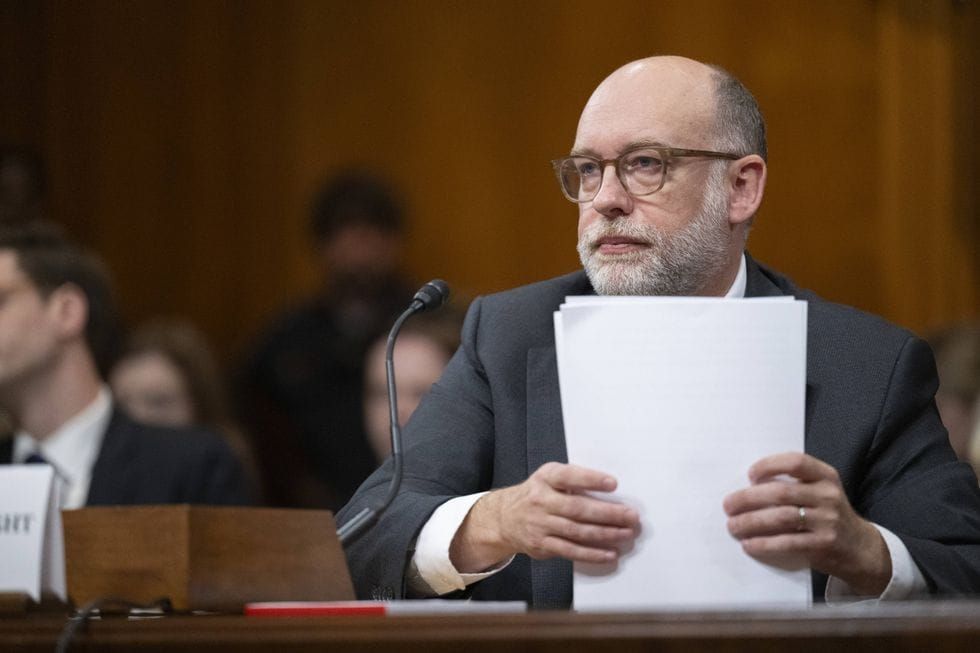
Paul Dans built Project 2025. He staffed it with former Trump administration officials, coordinated with dozens of conservative organizations, and spent years translating the American right's policy wishlist into 900 pages of actionable governance. When the second Trump administration began dismantling the Education Department, gutting USAID, and stripping civil service protections from federal workers, Dans did not pretend he was surprised. "This is exactly the work we set out to do," he told CNN. "We wanted to make sure the president was ready to hit the ground running on day one."
That admission — made months ago, barely noticed — is now the frame for understanding what the Heritage Foundation put in a fundraising email this week. The right-wing think tank told its donors, in a message first reported by Bloomberg and covered by Common Dreams, that 53% of Project 2025 is now federal policy. The email cited the dismantling of USAID and the administration's attack on diversity, equity, and inclusion programs as examples. Then it asked for money to finish the job: "in this special 250th anniversary year, we must work to implement all of Heritage's policy recommendations."
The original thesis of this story is not that Trump implemented Project 2025. That was always the plan, and the people who made the plan said so. The original thesis is this: the fundraising email is not a boast — it is a receipt. Heritage is telling its donor base, in writing, that it purchased a governing agenda and is collecting on the investment. This is not a think tank claiming credit for influence. This is an organization documenting return on investment for its funders, in real time, while the policies it bought are still being written into federal law.
During the 2024 campaign, Trump said he had not read Project 2025 and did not know who was behind it. The claim was implausible from the start — Russell Vought, one of Project 2025's chief architects, now runs the White House Office of Management and Budget, the most powerful administrative position in the executive branch. Vought's OMB controls how money flows through the federal government. It is not a coincidence that 283 of 532 Project 2025 policy recommendations had been implemented by February 2025, according to a tracker maintained by the Center for Progressive Reform and Governing for Impact. It is an organizational chart.
The tracker's authors warned that "these actions will have devastating consequences for workers, the environment, public health, and the rights of millions of Americans." Those are not abstract categories. The dismantling of the Education Department affects the 50 million children enrolled in public schools. The halting of federal grants for environmental organizations affects the communities — disproportionately low-income, disproportionately non-white — that rely on those organizations to monitor pollution and advocate for clean water. The stripping of civil service protections from federal workers affects the roughly 2 million career employees who are now exposed to political termination for any reason or no reason at all. The cuts to food assistance and the gutting of anti-discrimination enforcement are also in the Project 2025 playbook — and both are underway.
The Heritage Foundation's fundraising email is also a window into how conservative governance actually works — not through elections alone, but through the patient construction of policy infrastructure that elections then activate. Heritage did not write Project 2025 because it expected Trump to read it. It wrote Project 2025 so that when a Republican won the presidency, the machinery of implementation would already exist: the personnel lists, the executive order templates, the regulatory rollback schedules. Dans was explicit about this. The document was designed so that a new administration could begin dismantling federal agencies before the opposition had time to organize a legal response.
That sequencing matters. The speed of implementation — 283 actions in roughly the first month of the administration — was not a sign of Trump's personal ideological commitment. It was a sign of Heritage's organizational competence. The think tank had done the work that the campaign did not have to. It had converted decades of conservative policy theory into specific, actionable directives, and it had placed the people who wrote those directives inside the administration to execute them. This is what the Power & Money lens makes visible: the donors who fund Heritage did not give money to a debating society. They funded a policy delivery mechanism, and the email this week is Heritage telling them the delivery is on schedule.
Project 2025 is a 900-page governance blueprint published by the Heritage Foundation and nearly 100 allied conservative organizations ahead of the 2024 election. It calls for the dismantling of multiple federal agencies, the elimination of civil service protections, the reversal of climate and environmental regulations, and the centralization of executive power. Russell Vought, who now heads the White House OMB, was a primary architect. Paul Dans, who oversaw its creation, served in the first Trump administration.
The global dimension of this story is not incidental. USAID's dismantling — one of the specific examples Heritage cited in its email — has had consequences that extend far beyond American domestic politics. USAID funded health infrastructure, famine response, and disease surveillance programs across sub-Saharan Africa, Southeast Asia, and Latin America. The organizations that depended on that funding did not close gracefully. They stopped operating. The people who depended on those organizations — for HIV medication, for maternal care, for food aid — did not receive a press release explaining the policy rationale. They were simply cut off. Heritage's fundraising email does not mention them. They are not the audience.
There is a pattern here that the Accountability Lens makes impossible to ignore. When Project 2025 was a campaign liability, Trump distanced himself from it. When it became governing policy, its architects stepped forward to take credit. The think tank that produced it is now using its implementation as a donor acquisition tool. This is not hypocrisy — it is a strategy that worked precisely because the disavowal during the campaign was never meant to be believed. It was meant to prevent the document from becoming a political liability long enough for the election to be won. Once won, the disavowal became irrelevant.
Heritage's email says it aims to implement "all" of its recommendations. The tracker maintained by the Center for Progressive Reform confirms that 47% of Project 2025's proposals have not yet been enacted. That remaining 47% includes provisions on reproductive rights, immigration enforcement, education policy, and the further concentration of executive power. The administration has not slowed down. Heritage is not being modest about its ambitions or its timeline.
The receipts are public. The architects are named. The tracker is updated. What Project 2025's implementation demonstrates — more clearly than any campaign promise or policy speech — is that the most consequential political decisions in America are often made not in election years, but in the years between them, by organizations that most voters have never heard of, funded by donors whose names do not appear on ballots. Dark money infrastructure and think-tank policy pipelines are not peripheral to democratic governance — they are increasingly its operating system. The Heritage Foundation just sent its donors a progress report. The people affected by that progress had no vote on the agenda and no seat at the table where it was written.