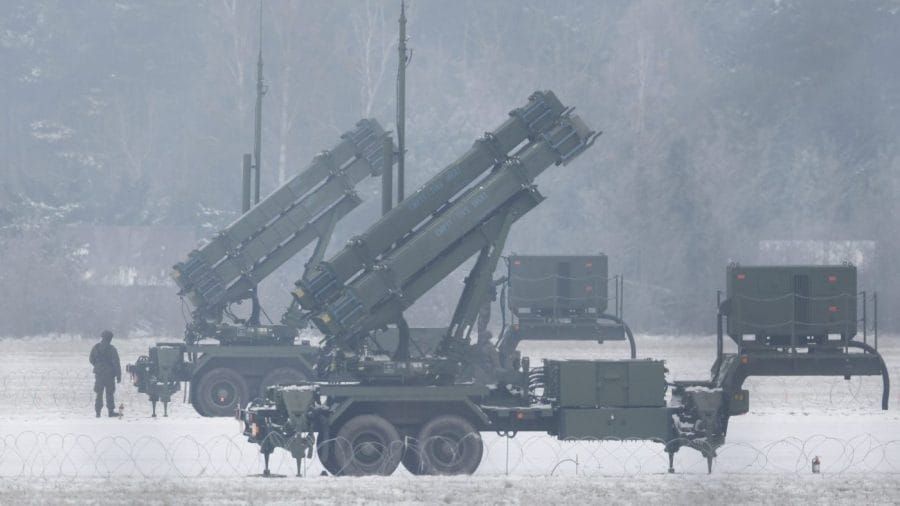
The State Department approved more than $8 billion in arms sales to Persian Gulf nations and Israel last Friday, according to The Hill. The package includes a $992.4 million Advanced Precision Kill Weapon System sale to Israel, $147.6 million in the same weapons to the United Arab Emirates, and additional sales to other Gulf states. Every nation receiving weapons in this package has been directly involved in the U.S.-Israeli conflict with Iran.
That last sentence is the one that should stop you. The United States is mid-conflict — a conflict for which no congressional authorization exists — and the executive branch just spent a Friday afternoon arming every significant player in it. No floor debate. No committee hearing. No vote. The Arms Export Control Act requires congressional notification for major sales, but notification is not authorization. Congress was informed. Congress was not consulted.
The timing is not incidental. Iran has explicitly threatened to strike Dubai and Abu Dhabi as the regional conflict expands beyond its original combatants. Selling precision kill systems to the UAE in this environment is not a routine transaction. It is a decision about the shape and duration of a war — a decision that, under the Constitution, belongs to Congress.
The mechanism being used here is the Foreign Military Sales program, which routes arms through the State Department rather than through the legislative branch. Under FMS, the executive notifies Congress of a pending sale; Congress has 30 days to block it through a joint resolution of disapproval. In practice, that resolution almost never passes. The arms go. The war expands. The public learns about it through a Friday news cycle.
What distinguishes this package from routine military commerce is the specific context: these weapons are going to nations currently engaged in active hostilities in a conflict the United States is itself prosecuting without authorization. The Senate has voted seven times to constrain the executive's war powers and failed each time. The White House has claimed it does not need Congress to conduct the war at all. Against that backdrop, an $8 billion arms package to active combatants is not a side transaction — it is a continuation of war policy by other means, executed through a channel designed to minimize legislative scrutiny.
Under the Arms Export Control Act, the executive branch notifies Congress of major foreign arms sales. Congress has 30 days to block a sale through a joint resolution of disapproval — a resolution that requires majority votes in both chambers and is subject to presidential veto. In practice, the threshold for blocking a sale is prohibitively high, and sales proceed in nearly all cases. Notification is not the same as authorization.
Follow the money and the logic becomes clearer. The Advanced Precision Kill Weapon System being sold to both Israel and the UAE is manufactured by BAE Systems and General Dynamics. Both companies have registered lobbyists active on Capitol Hill. Both have financial interests in the continuation of regional instability that generates demand for exactly these products. The State Department's approval does not happen in a vacuum — it happens inside a procurement ecosystem in which the companies selling the weapons have direct access to the officials approving the sales.
None of this is unique to this administration, and that is precisely the point. The arms-to-allies pipeline operates across administrations, across parties, with structural consistency that individual elections do not disrupt. What changes is the context into which the weapons flow. Selling precision strike systems to Israel during a period of active U.S.-Israeli military operations against Iran is categorically different from selling the same systems during a period of relative regional stability. The weapons are the same. The war is not.
The human dimension of this transaction is being systematically excluded from the domestic political framing. For the people living in Iranian cities that have already absorbed strikes on police stations, schools, and civilian infrastructure, the approval of nearly a billion dollars in additional precision weapons to the country conducting those strikes is not an abstraction about procurement law. It is a direct signal about the trajectory of the war they are living inside. Their perspective does not appear in the State Department's approval notice. It rarely appears in the American coverage of it.
The UAE's inclusion in this package adds a layer the domestic frame tends to miss. Abu Dhabi is not a passive bystander — it has served as a logistical hub and regional partner in the broader coalition posture against Iran. Iran's explicit threats against UAE cities reflect that role. Selling precision kill systems to the UAE now is a choice about which side of that confrontation the United States is actively resourcing, made without a public debate about whether that choice is wise, legal, or proportionate to any stated objective.
That debate has not happened because the architecture of the Foreign Military Sales process is designed to prevent it from happening at the wrong moment — meaning any moment when a sale might actually be blocked. The 30-day notification window is calibrated to the legislative calendar, not to the pace of military escalation. By the time Congress could theoretically act, the weapons are often already in transit.
The broader pattern is this: the executive branch is conducting a war, funding that war through emergency mechanisms, and now arming every significant combatant in the conflict through a procurement channel that structurally bypasses the body the Constitution assigned war-making power to. A war that could cost trillions has no congressional authorization, no budget, and no exit plan. The $8 billion in arms sales approved last Friday is not a separate story from that one. It is the same story, told through a different line item.
Congress can still move. The Arms Export Control Act gives it the authority to disapprove these sales within 30 days. The question is whether any member will force that vote — not because it will succeed, but because the vote itself would put every member of Congress on record about whether they believe the executive branch should be able to arm active combatants in an unauthorized war without legislative consent. That vote has not been called. The 30-day clock is running.