There is a version of the Iran war that the White House has sold to the American public: necessary, strategic, ultimately in the national interest. Gas prices, supply chain disruptions, the economic strain spreading through households — these are temporary costs, the argument goes, justified by a larger goal. On Tuesday, the president made that argument harder to sustain.
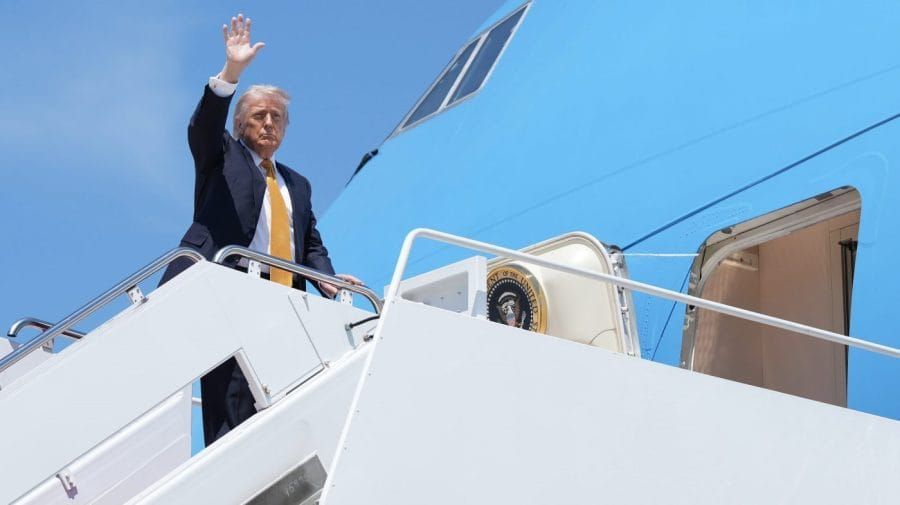
Asked by reporters how much the financial situations of ordinary Americans motivate him at the negotiating table, Trump was direct. "Not even a little bit," he told The Hill. The only thing that matters, he said, is what he wants from Iran.
The admission is worth pausing on. Not because it is surprising — the administration's conduct throughout this conflict has made its priorities legible — but because it was volunteered, publicly, with no apparent awareness that it contradicts every economic justification the White House has offered for staying in this war. If the financial situation of Americans is not even a marginal consideration, what exactly is the humanitarian and economic case for the conflict that administration officials have been presenting to Congress and the press?
The economic damage is not abstract. Gas has hit $5.80 as the Iran conflict disrupts global oil supply, with working families absorbing costs the administration has repeatedly framed as a necessary burden of necessary policy. Energy prices have surged 40 percent since Pentagon strikes closed major oil routes. The Strait of Hormuz — through which roughly a fifth of the world's traded oil passes — remains effectively shut. These are not peripheral effects. They are the central economic reality of this war for most Americans, and for much of the world.
Administration officials have repeatedly cited economic and security benefits to justify the Iran conflict — including lower long-term energy prices, reduced Iranian influence over global oil markets, and a stronger U.S. negotiating position. Tuesday's statement from the president directly contradicts the premise that American economic conditions inform that calculus.
What Trump's statement does, stripped of any diplomatic framing, is confirm that the negotiating process is not organized around American interests in any concrete, measurable sense. It is organized around what the president personally wants from Iran — a distinction that matters enormously for the question of accountability. Congress never authorized this war. The public never voted on it. And now the president has said plainly that the economic fallout falling on American families is not part of his calculus at the table.
That creates a specific accountability problem. Members of Congress who have supported continued military engagement — or declined to oppose it — have done so in part by pointing to the administration's stated goal of securing favorable terms that would stabilize energy markets and reduce costs. Senator Mark Kelly was among the first to ask publicly what the U.S. is actually getting out of this — a question Tuesday's admission makes considerably more urgent. If the president is not factoring in economic harm to Americans, what standard is being used to evaluate whether the negotiations are succeeding?
The global dimension compounds the problem. Iranian civilians have faced mounting humanitarian crisis as the conflict grinds on. The countries most dependent on Hormuz-routed oil — including major importers across South and Southeast Asia — have absorbed supply shocks with far less capacity to cushion them than the United States. If American financial pain isn't motivating the president, the economic suffering of people with even less power in this negotiation almost certainly isn't either.
The administration has operated throughout this conflict with a consistent pattern: state a rationale, act in ways that contradict it, and move on before the gap is examined. A president who couldn't say why he started the war told the country he might end it — without explaining what success would look like. Tuesday's statement fits the same pattern. The economic argument for the war was never really about Americans' economic situation. The president just said so himself.
The question for Congress — and for the lawmakers who have deferred to executive authority throughout this conflict — is whether a war that the president has now confirmed is not being conducted with Americans' economic welfare in mind still deserves the institutional silence it has received. The families paying $5.80 at the pump deserve a more specific answer than "not even a little bit."