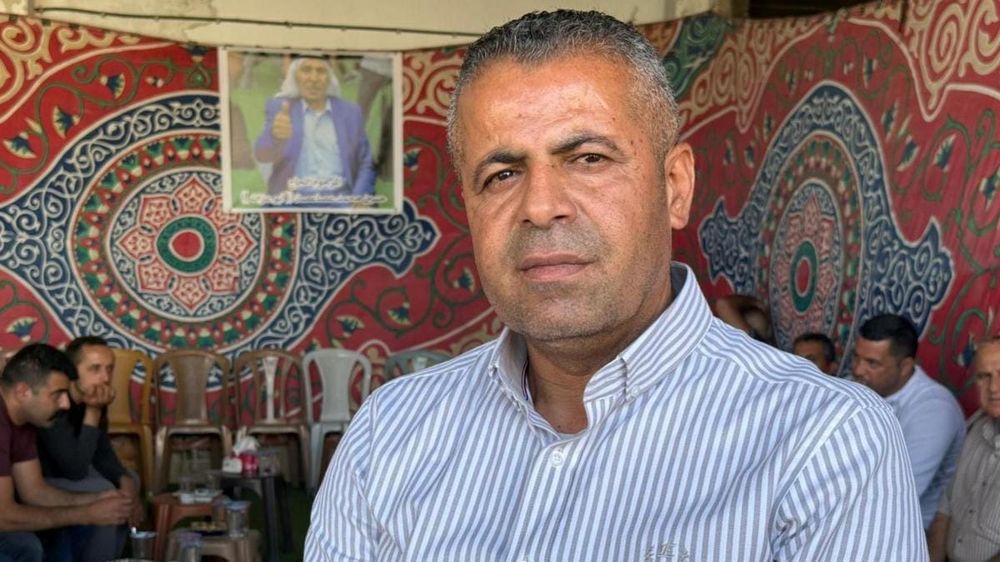
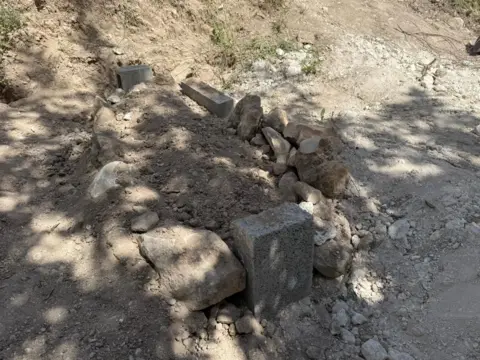
The family had just buried him. The body was in the ground. Then the settlers came.
According to BBC News, settlers in the occupied West Bank forced a Palestinian family to exhume the remains of their recently buried father — compelling them to dig up the body under duress. The UN human rights office did not use diplomatic language in response. It called the incident "appalling and emblematic of the dehumanisation of Palestinians" in the West Bank.
The UN condemnation is significant, but it also follows a familiar script. A horrific act is documented. An international body expresses outrage. Nothing structurally changes. The settlers responsible face no meaningful legal consequence. And the family is left to absorb a violation so intimate — so targeted at the most fundamental human rituals of grief — that it resists easy categorization as a political story at all.
It is a political story. The forced exhumation is not an isolated act of cruelty by rogue individuals. It is the visible surface of a system built over decades, maintained by policy, and financed in part by the United States. Understanding the incident requires understanding that system — because the system is the point.
Israeli settlers in the occupied West Bank are subject to Israeli civil law, while Palestinians in the same territory live under Israeli military law. This dual legal system means settlers and Palestinians who commit identical acts face categorically different legal consequences. UN investigators, human rights organizations, and the Israeli human rights group B'Tselem have documented this disparity for decades. Settler attacks on Palestinians — including property destruction, physical assault, and forced displacement — are prosecuted at rates human rights monitors describe as negligible.
The West Bank is governed under a dual legal structure. Israeli settlers live under Israeli civil law. Palestinians live under Israeli military law. The practical result, documented by organizations including the UN, Human Rights Watch, and the Israeli human rights group B'Tselem, is that settlers who attack Palestinians, destroy their property, or seize their land face prosecution at rates those monitors describe as negligible. The system does not fail to prosecute settler violence — it is structured to tolerate it.
This is the context the UN human rights office gestured at when it described the forced exhumation as "emblematic." The word choice matters. An emblematic act is not a shocking exception. It is a concentrated expression of a norm. What made this incident visible enough to generate international headlines was its particular brutality — the desecration of a burial, the weaponization of grief. What the UN is saying, carefully, is that the underlying dynamic it represents is not unusual at all.
Settler violence in the West Bank has escalated sharply since October 2023. The UN Office for the Coordination of Humanitarian Affairs and multiple human rights monitors have recorded hundreds of incidents — attacks on Palestinian villages, destruction of olive harvests, forced displacement of communities — many of them occurring while Israeli military forces were present and did not intervene. In some documented cases, soldiers participated. The line between settler violence and state-sanctioned violence in the West Bank has, in the assessment of those monitors, effectively dissolved.
The United States has a direct role in this structure, one that American political coverage consistently treats as peripheral. U.S. military aid to Israel — $3.8 billion annually under the standard memorandum of understanding, with supplemental packages approved by Congress — flows to a military that administers the occupation and, in documented incidents, has stood alongside or failed to restrain settlers during attacks on Palestinians. In 2024, the Biden administration imposed limited sanctions on a small number of individual settlers involved in West Bank violence. Those sanctions did not alter the underlying aid relationship, and they did not extend to the settlement enterprise itself.
The current moment is sharper still. The U.S. Senate voted this year on a measure to condition arms transfers to Israel on humanitarian compliance. As Tinsel News has reported, 40 Senate Democrats supported that measure — a number that would have been unthinkable four years ago. The vote did not pass. The arms continue to flow. And the family in the West Bank had to put their father back in the ground a second time.
There is a specific cruelty to targeting burial. Every culture, across recorded history, treats the interment of the dead as among the most protected of human acts. To compel a family to undo it — to force them to return to the raw wound of fresh grief and reopen it with their own hands — is not incidentally dehumanizing. It is precisely dehumanizing. It communicates, with unmistakable clarity, that Palestinian life does not carry the protections extended to other lives. Not in death. Not in mourning. Not in the ground.
That message is delivered not only by the settlers who carried out the act. It is delivered by every institutional layer that makes impunity the predictable outcome. The Israeli military justice system that prosecutes Palestinians at rates far exceeding settler prosecution. The Israeli government that has expanded settlement construction even as it acknowledged international criticism. The U.S. Congress that continues to appropriate military aid without enforceable humanitarian conditions. The UN Security Council, where the United States has vetoed ceasefire resolutions and accountability measures that might have created different incentives.
The UN human rights office's statement used the word "dehumanisation." This is a precise term in international human rights law. It describes not just cruelty but a pattern — a systematic denial of the humanity of a group, expressed through acts that would be treated as atrocities if committed against others. The forced exhumation of a Palestinian man's body meets that definition. So does the structure that produced it.
Tinsel News has covered the escalating toll of this structure in other contexts — the UN documentation of systematic torture of Palestinians in Israeli custody, the passage of a death penalty law applicable only to Palestinians. Each of these incidents generates a news cycle. None of them, in isolation, changes the accountability calculus — because the accountability calculus is not broken. It is functioning as designed, for the benefit of those it was designed to benefit.
The father's name has not been published in the available reporting. His family's name has not been published. They are, for now, a family in the West Bank who buried someone they loved and were made to dig him up. That anonymity is not a journalistic gap to be filled — it reflects the reality that Palestinian suffering in the West Bank occurs in a media environment where individual Palestinian lives rarely accumulate the narrative weight that would make their names household facts in Western countries.
What the UN said, and what the evidence supports, is that this incident is emblematic. The word should be read as an indictment — not of the settlers alone, but of every government and institution with the power to change the conditions that made it possible and the will to leave those conditions intact.
The family buried their father. They were forced to exhume him. They buried him again. The system that permitted this will not prosecute the people who demanded it. That is not a prediction. It is a pattern with a documented record going back decades — and the governments with the power to break it have, year after year, chosen not to.