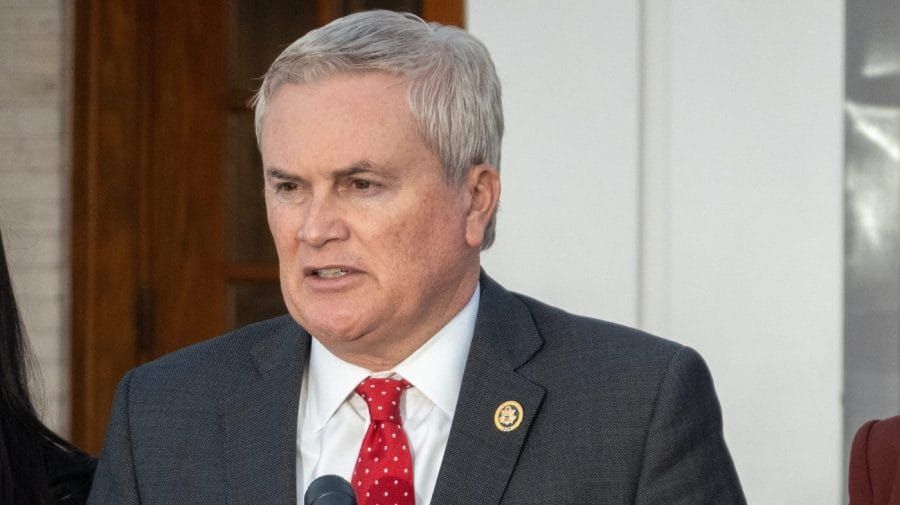
House Oversight and Government Reform Committee Chair James Comer sent letters Friday to the CEOs of Kalshi and Polymarket, demanding information about whether users of their platforms are trading on nonpublic or classified intelligence. The investigation, first reported by The Hill, asks Kalshi CEO Tarek Mansour and Polymarket CEO Shayne Coplan to produce details about their users, their data practices, and their internal compliance mechanisms.
The framing of the probe — insider trading, classified information, bad actors — is the narrowest possible way to look at what prediction markets have become. It treats the problem as a matter of individual misconduct. It is not. The problem is structural, and it was visible long before Comer picked up a pen.
Prediction markets have spent the last three years expanding from electoral forecasting into active betting on war, foreign policy, and the deaths of foreign leaders. Polymarket, the larger of the two platforms, has run markets on whether Iran would be bombed, whether a ceasefire in Gaza would hold, and whether specific military operations would succeed. As Tinsel News has previously covered, Polymarket sought a $15 billion valuation while its primary growth engine was bets on whether Iran gets bombed. The company's pitch to investors was, in part, that geopolitical instability is good for business.
That is the context in which Comer's investigation lands. Not a rogue trader with a classified document. A business model built on monetizing uncertainty about whether governments will kill people.
Prediction markets allow users to buy and sell contracts tied to the probability of real-world events — elections, policy decisions, military actions. Prices move based on collective betting activity and are often cited as forecasting tools. Kalshi is U.S.-regulated under the CFTC. Polymarket operates primarily offshore and is inaccessible to U.S. users under its current structure, though enforcement of that restriction is inconsistent.
The accountability question Comer is asking — are users trading on classified information? — is legitimate. Trading on nonpublic government intelligence is fraud, and there is documented reason to examine it. Anomalous price movements on prediction markets have preceded several major policy announcements, including tariff decisions and military actions. The BBC's own investigation, which Tinsel News covered, documented suspicious trading spikes before presidential announcements while the SEC did nothing. The pattern is real. The regulatory response, until now, has been absent.
But the insider trading frame, taken alone, implies that prediction markets would be fine if everyone played by the rules. That assumption deserves scrutiny.
Consider what a fully compliant prediction market in war and foreign policy actually does. It creates a financial incentive — distributed across thousands of traders — for specific geopolitical outcomes. A trader who has bet heavily that a military operation will succeed has a monetary interest in that operation succeeding. A trader short on a ceasefire contract profits if the ceasefire fails. These are not illegal positions. They are the intended function of the market. The question of whether that function should exist — whether private financial instruments should be designed to profit from the outcomes of wars — is a question the insider trading frame does not ask.
There is also a corruption incentive that runs in the other direction, and it is the one Congress has been slowest to examine. Congressional members and their staffers have access to classified briefings, policy deliberations, and advance knowledge of executive decisions. They also, as Tinsel News has documented, face no disclosure requirements for prediction market trades. The STOCK Act requires members to disclose stock trades. It says nothing about event contracts. A member who learns in a classified briefing that a military operation is imminent can, under current law, place a bet on that outcome and face no legal consequence.
Comer's investigation is directed at the platforms and their users. It does not appear to address whether members of Congress or their staffers are among those users.
The power and money dynamics here are not subtle. Kalshi has been aggressive in its regulatory lobbying, winning a landmark CFTC approval in 2024 to offer election contracts after years of litigation. That approval opened the door to the broader expansion of event-contract markets into policy and geopolitical territory. The company's legal and lobbying infrastructure is built around the argument that prediction markets are a form of protected speech and a public forecasting good. The argument is sophisticated. It is also financially motivated: a platform that can offer contracts on anything — war, legislation, executive orders — has a vastly larger addressable market than one limited to sports and entertainment.
Polymarket's position is different. It operates offshore, technically beyond the reach of U.S. regulators, and has grown to become the dominant platform for geopolitical event contracts. Its user base includes institutional traders, political operatives, and intelligence community alumni. The company has not been shy about its ambitions: its valuation pitch rests on the argument that real-money prediction markets produce better forecasts than expert analysis, and that governments and corporations will pay for that forecasting advantage. The logical endpoint of that pitch is a platform whose clients include the same governments whose decisions are being traded on.
That circularity — governments paying for forecasts derived from markets that bet on government decisions — is not a hypothetical. It is the current direction of travel, and it has received almost no congressional attention until now.
Comer's investigation, whatever its motivations, does open a door. If the committee pursues document production from both platforms, it will for the first time generate a public record of who is trading on war and policy outcomes, at what volumes, and with what information advantages. That record could be consequential. It could also be quietly buried, as oversight investigations often are, once the press cycle moves on.
The STOCK Act was passed in 2012 after reporting exposed systematic congressional stock trading on nonpublic legislative information. It took years of documented abuse, public pressure, and a specific scandal to produce even a weak disclosure regime. Prediction market regulation is earlier in that cycle. The abuse is documented. The incentive structure is clear. The regulatory gap is explicit. What is missing is the political will to treat the problem as structural rather than as a matter of a few bad actors on two specific platforms.
If the investigation produces real disclosure requirements — for platforms, for users, and specifically for members of Congress and their staffers — it will matter. If it produces a letter, a hearing, and a news cycle, the platforms will continue to grow, the war contracts will keep trading, and the next anomalous price spike before a classified decision will have no more accountability mechanism than the last one did.