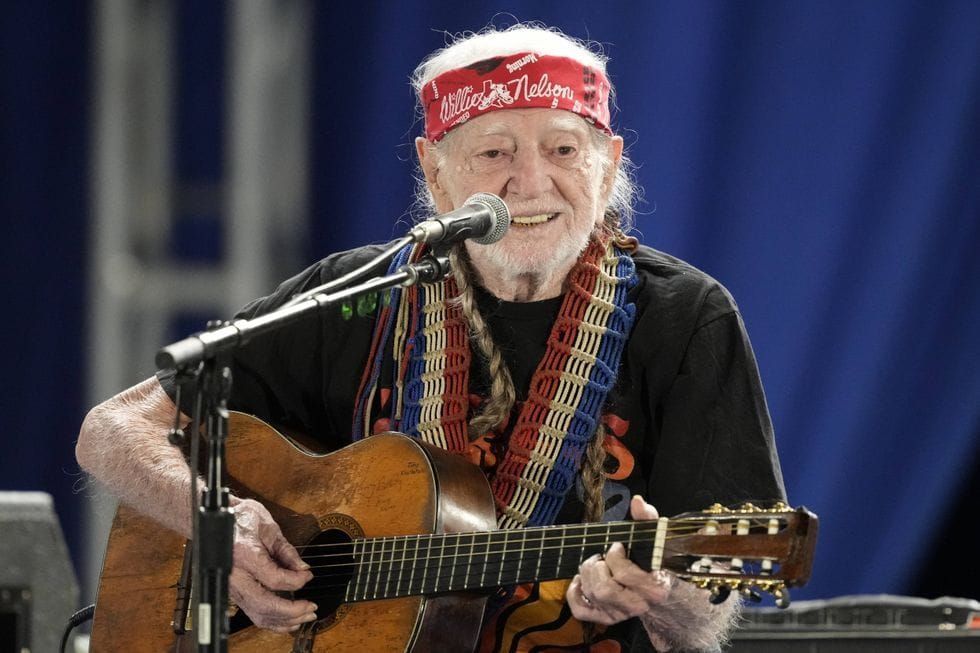
Abbott, Texas, has 356 residents. It has one water tower, one main road, and a cotton gin that has outlasted several American presidents. It also has Willie Nelson, who was born there 93 years ago and who, this week, told the AI industry to stay the hell out.
Nelson's statement, posted to social media and reported by Common Dreams, did not mince words. "The last thing we need," he wrote, "is a loud, water thieving, light polluting data center anywhere near our town (or any others for that matter)." He called for "thoughtful stewardship that doesn't steal farmland" and warned that data centers "only destroy the environment around them." The closing line: "Let's not allow our own demise, or give up control over necessary resources in the US, and especially in Abbott."
The celebrity framing will dominate the coverage. It shouldn't. Nelson's protest matters not because of who he is, but because of what Abbott represents: a small, water-stressed, economically fragile rural community that the AI industry has identified as a site of extraction. Abbott is a target precisely because it lacks the political infrastructure to fight back — or it did, until Nelson made it a national story.
AI data centers require vast amounts of land, water, and electricity — all of which are cheaper and less regulated in rural areas than in urban centers. Communities with limited political organization and few major employers are often unable to mount sustained opposition to development proposals backed by corporations with multibillion-dollar lobbying budgets.
The economics of AI infrastructure explain the geography of the fight. Data centers are not being proposed in downtown Austin or Houston, where land is expensive, water rights are contested, and residents have lawyers. They are being proposed in Abbott. In rural Virginia. In small-town Georgia. In communities where a single corporate development can overwhelm local planning capacity and where the promise of tax revenue — often delivered through state-level incentive packages negotiated without community input — is used to neutralize local opposition before it organizes.
Texas state Rep. Gina Hinojosa, a Democrat running against Republican Gov. Greg Abbott, called on the governor to act immediately. "Greg Abbott has the sole power to fix TODAY what he broke," she wrote, calling on him to sign an emergency order ending taxpayer subsidies for data center construction and convene a special session. That framing — subsidies, not just permits — is the right one. These facilities do not simply arrive in rural communities. They are recruited there with public money, through tax incentive programs that shift the financial risk of corporate infrastructure onto the residents least equipped to bear it.
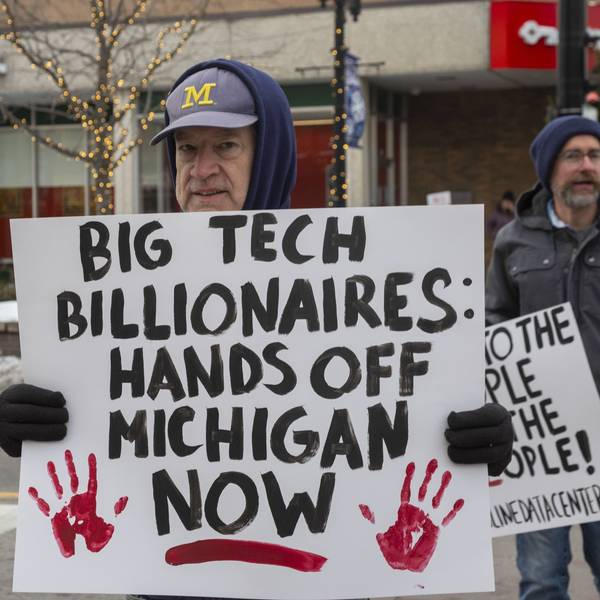
The pattern is national in scope and bipartisan in its targets. Red and blue states alike are seeing communities resist AI data center proposals, united less by political affiliation than by a shared experience: a corporation arrives, promises jobs, consumes water, spikes electricity demand, and leaves the surrounding community with the costs. In Monterey Park, California, 86 percent of voters passed a ballot initiative banning data center construction. Seattle has moved to pause new development. New York's legislature voted to impose a moratorium, though Governor Hochul's response remains uncertain. The resistance is growing faster than the industry's public relations apparatus can manage it.
Water is the issue that cuts deepest in Texas. Abbott sits in Hill County, a region where groundwater management is a perennial political crisis and where drought conditions have become a structural feature of agricultural planning rather than an exception to it. Data centers are not modest consumers of water: a single large-scale facility can use millions of gallons per day for cooling. Nelson's phrase "water thieving" is not hyperbole — it is a precise description of what happens when industrial water consumption is layered onto an aquifer system already under stress from agriculture and population growth. When a data center and a family farm compete for the same groundwater, the family farm does not win.
The electricity demand is equally consequential. The AI industry's infrastructure buildout is a primary driver of the surge in utility costs that is hitting American households across the country. Electricity bills have risen 18 percent as AI data center demand strains regional grids. Rural communities, which already pay higher per-unit electricity costs than urban areas due to distribution infrastructure, absorb a disproportionate share of that burden. The facility that arrives promising economic development is, in practice, a mechanism for transferring wealth from rural ratepayers to shareholders of technology corporations headquartered thousands of miles away.
The federal legislative response has been slow, but it exists. Sen. Bernie Sanders and Rep. Alexandria Ocasio-Cortez introduced a bill earlier this year that would impose a nationwide moratorium on AI data center construction until federal safeguards are established to protect workers, consumers, communities, privacy, civil rights, and the environment. The Sanders-AOC moratorium bill has not advanced in the current Congress, but its existence creates a legislative reference point for state and local advocates arguing that the industry is operating without adequate oversight.
Here is what most coverage of Nelson's statement will miss: this is not a story about a celebrity using his platform. It is a story about which communities the AI industry has decided are expendable — and about the specific financial mechanisms, including state-level tax incentive programs, that make rural communities attractive targets for infrastructure the industry knows would face stronger resistance elsewhere. The question is not whether Willie Nelson can stop a data center. The question is whether his visibility can accelerate the legal and legislative tools that rural communities need to exercise the kind of control over their land and water that wealthier, better-organized communities take for granted.
Nelson's statement ended with a call for "control over necessary resources." That language is more precise than it may appear. Water rights, electricity grid access, and land use are the three resource categories at stake in every data center siting fight in rural America. Communities that cannot exercise meaningful control over all three will continue to lose these fights regardless of who shows up to speak at the planning commission meeting. The infrastructure of resistance — legal frameworks, water rights advocacy, utility rate structures, state incentive program reform — is what determines outcomes. Nelson's statement can fund that infrastructure, if anyone is paying attention to the right part of the story.
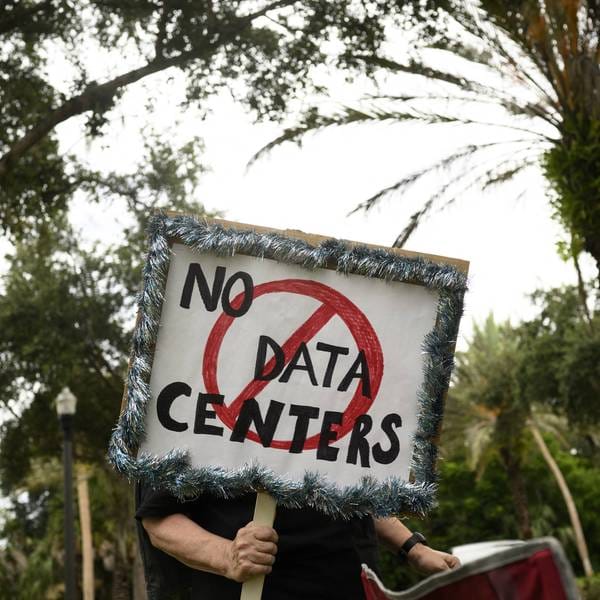
Abbott, Texas, has 356 residents and one very famous former resident who still considers it home. The AI industry, operating through state incentive programs built with public money, decided that was enough to make it a viable site for industrial infrastructure that would strain its water supply, raise its electricity costs, and transform its character permanently. The industry made that calculation because it has made the same calculation about hundreds of communities like it — communities without the resources, the lawyers, or the name recognition to make the fight visible. Nelson just changed the last variable. The other two remain the real problem.