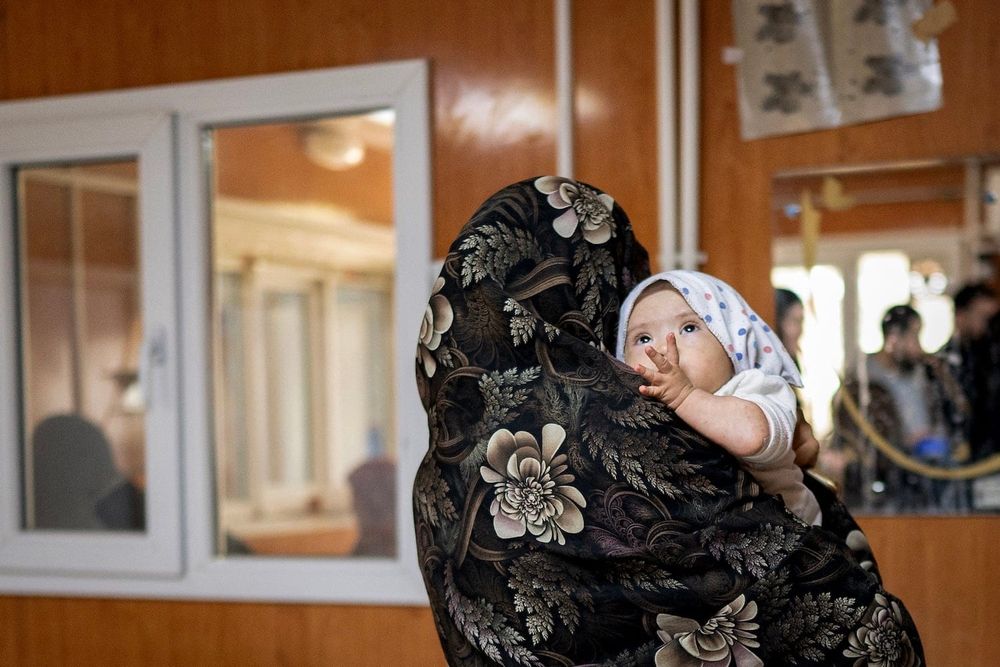
Forty-three percent of Afghan children under five are acutely malnourished. The maternal mortality rate — already among the highest on earth before the August 2021 withdrawal — has climbed further as clinics that depended on U.S.-backed funding have shuttered. These are not projections. They are documented outcomes, reported by Foreign Policy five years after the last American military transport left Kabul's Hamid Karzai International Airport.
The framing in Washington — when Afghanistan is discussed at all — centers on the Taliban, on counterterrorism risk, on the geopolitical embarrassment of the withdrawal itself. The people who are actually dying barely enter the conversation. That is not an accident. It is a choice, made repeatedly, by officials who have the information and the mechanisms to act differently.
The argument made publicly — by Secretary of State Marco Rubio and others in the current administration — is that aid to Afghanistan risks legitimizing or enriching the Taliban government. It is a coherent concern. The Taliban has systematically stripped women of their right to education, employment, and movement. Directing money through a government that enforces those prohibitions is a genuine ethical problem. But the administration has not offered an alternative framework for reaching Afghan civilians directly. It has simply cut the funding and moved on.
That gap between stated rationale and actual outcome is where the accountability question lives. Refusing to fund the Taliban is a defensible position. Refusing to fund the hospitals, nutrition programs, and maternal health clinics that operate independently of the Taliban — through NGOs, UN agencies, and community health networks that spent years building workarounds precisely because they knew the Taliban could not be trusted — is a different choice entirely. Foreign Policy documents that the administration made that second choice, and that the consequences are now measured in death rates.
This is not a story about an unforeseen humanitarian crisis. The UN Office for the Coordination of Humanitarian Affairs, UNICEF, and multiple international NGOs published detailed projections of what would happen to Afghan maternal and child health indicators if external funding was withdrawn. Those projections were available to policymakers before the cuts were made. The administration did not dispute the projections. It cut the funding anyway.
The dismantling of USAID's global health infrastructure — documented extensively this year — did not affect all countries equally. Afghanistan, already operating under Taliban governance that restricts women health workers, had fewer alternative funding mechanisms than almost any other recipient country. When U.S. funding disappeared, there was no European backstop, no Gulf state replacement. Clinics closed within weeks.

The systemic pattern here extends well beyond Afghanistan. As Tinsel News has reported on the broader USAID dismantling, the cuts were not targeted surgical reductions of programs with documented inefficiencies. They were wholesale eliminations of funding streams that took decades to build — maternal health infrastructure, disease surveillance networks, nutrition supplementation programs — in countries where no domestic alternative exists. Afghanistan is the sharpest case because the need is most acute and the alternatives are fewest.
The power and money analysis is worth making explicit. The United States spent approximately $2.3 trillion on military operations in Afghanistan over twenty years, according to the Costs of War Project at Brown University. The humanitarian assistance now being cut represents a fraction of one percent of that figure. The argument that the U.S. cannot afford to fund maternal health clinics in a country it occupied for two decades — while simultaneously increasing the Pentagon budget toward levels not seen since World War II — is not a fiscal argument. It is a priorities argument. The administration has made its priorities clear.
There is also a specific accountability question about promises made at the moment of withdrawal. The Biden administration, in August 2021, made explicit commitments to Afghan civilians — particularly women — that the United States would maintain humanitarian engagement even after military withdrawal. Those commitments were imperfect and often unfulfilled even under Biden. But they established a baseline expectation. The current administration has not repudiated those commitments in public. It has simply stopped honoring them while continuing to invoke the language of concern for Afghan women when it serves other rhetorical purposes — most often when criticizing the Taliban's gender apartheid policies in international forums.

That contradiction deserves to be named plainly: an administration that cites Taliban oppression of women as a reason to withhold aid is simultaneously withholding the aid that would most directly benefit those women. The clinics that have closed were not Taliban institutions. They were the institutions that existed specifically to serve Afghan women inside a system designed to exclude them. Closing those clinics does not pressure the Taliban. It removes the only safety net Afghan women had left.
The Rubio State Department's approach to Afghanistan fits a broader pattern that Tinsel News has tracked in its coverage of Rubio's posture toward international accountability mechanisms — a posture that consistently prioritizes geopolitical positioning over documented humanitarian outcomes. The ICC, humanitarian aid conditionality, refugee resettlement — in each case, the stated rationale involves principled concerns about governance or legal standards, and in each case the practical effect is to remove protections from the most vulnerable populations.
None of this requires a conspiratorial explanation. Bureaucratic indifference, ideological hostility to foreign aid, domestic political incentives that reward toughness toward anything associated with the Biden-era withdrawal — these are sufficient to explain the outcome. But sufficiency of explanation does not equal absence of accountability. People are dying from preventable causes in a country the United States occupied, reshaped, and then abandoned. The mechanisms to prevent those deaths exist. The funding required is marginal by any measure of the U.S. foreign policy budget. The decision not to provide it is active, not passive.

Five years after Kabul fell, the debate in Washington remains almost entirely about what the withdrawal meant for American credibility, American strategy, and American domestic politics. The 28 million Afghans currently in need of humanitarian assistance — per UN estimates — are the backdrop to that debate, not its subject. The maternal mortality statistics are the price of keeping it that way, and the administration has demonstrated, through its budget decisions, that it considers that price acceptable.
The next budget cycle will present the same decision again. The projections will still exist. The documented death rates will be higher. And the officials making the choice will still be able to invoke Taliban oppression as justification for a policy that, in practice, targets the people the Taliban is already oppressing.