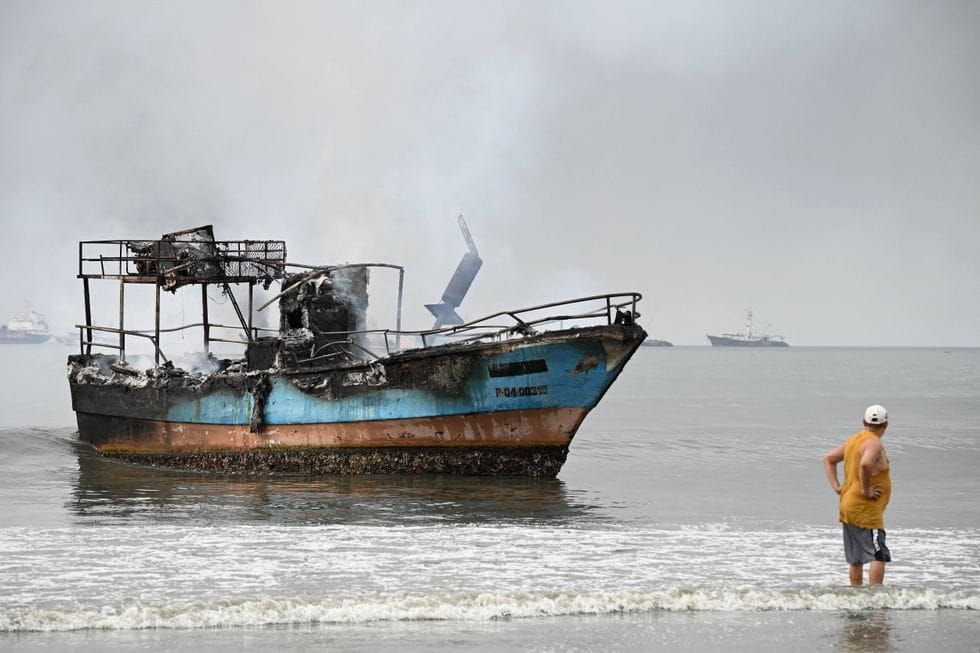
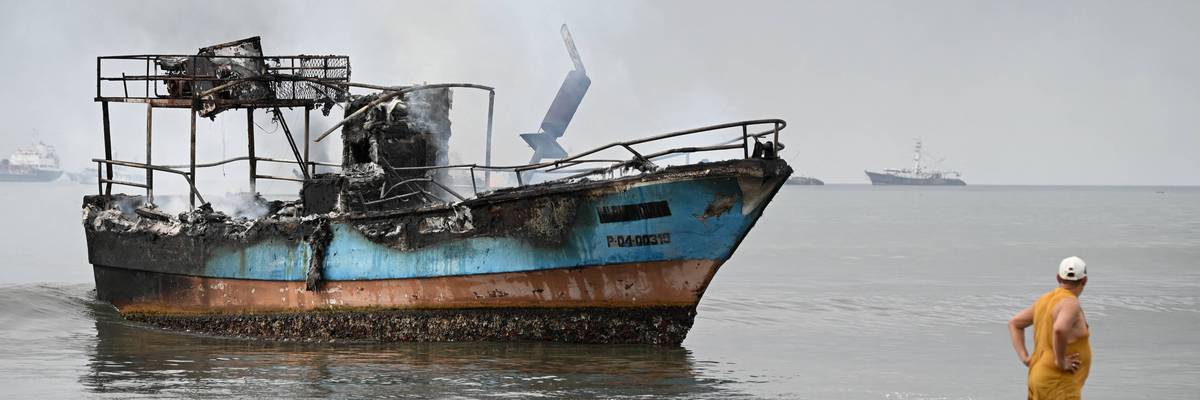
Eight men are still missing from the Fiorella, a small Ecuadoran fishing vessel that vanished on January 20. In the days before it disappeared, according to Amnesty International's investigation, the boat's captain sent daily satellite messages to his family describing his mounting fear. Aircraft, patrol boats, and drones marked with United States insignia were circling his vessel. On the morning of the disappearance, two crew members who had left the Fiorella on a skiff to lay fishing lines looked back toward the horizon and saw a large column of smoke.
That column of smoke, and what it represents, is the story the U.S. government did not want told.
On Thursday, the Washington Post reported that a covert CIA operation carried out multiple strikes on Ecuadoran fishing boats near the Galápagos Islands earlier this year. The revelation is significant not merely because of what it confirms — that U.S. intelligence agencies are conducting lethal operations against civilian vessels in the waters of a sovereign nation without public authorization or congressional oversight — but because of what it exposes about how the United States wages undeclared war in Latin America. There are two parallel campaigns running simultaneously: one that the Pentagon boasts about openly, and one that the CIA runs in the dark. Both are killing people. Only one is being debated.
The Pentagon's acknowledged bombing campaign against suspected drug-trafficking boats launched in September 2025 and has killed at least 220 people. The CIA's covert boat-strike operation near the Galápagos Islands is entirely separate — and was not publicly disclosed until the Washington Post and New York Times reported it this week. The CIA operation involved quadcopter drones that either dropped munitions on vessels or crashed directly into them.
The mechanics of the CIA strikes, as described by survivors to the Washington Post, are worth sitting with. Small quadcopter drones — the kind you might associate with aerial photography or hobbyist recreation — either dropped munitions onto fishing boats or flew directly into them as weapons. Survivors of a March attack reported being shipwrecked, then picked up by a nearby vessel, hooded and handcuffed by armed men, and transported to El Salvador — a country that has become, under the current regional security architecture, something of a detention and processing hub for U.S.-adjacent enforcement operations. The fishermen were eventually returned to Ecuador without explanation. No charges. No documentation of drug trafficking. No accountability for what happened to them in between.
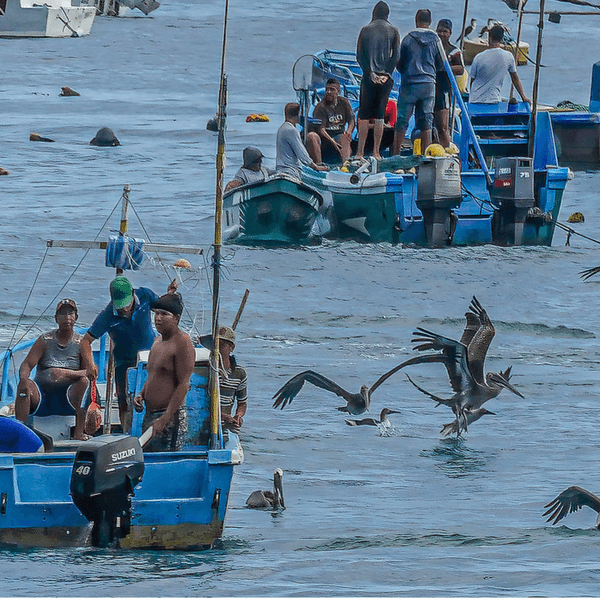
The Washington Post noted that no public evidence has emerged connecting any of the targeted crew members to drug trafficking. What the Post did document is that the Galápagos region has become a transit zone where local fishermen are sometimes recruited to deliver fuel to smugglers — a practice driven by poverty, not cartel membership. The distinction matters enormously under international law, and it matters for what these operations actually are: not targeted counternarcotics enforcement, but something closer to collective punishment of a maritime labor community.
Former U.S. officials with Latin America experience told the Post they were baffled by the covert nature of the CIA campaign, given that the Trump administration has openly publicized its other maritime strikes. "It begs the question about why you would need to do this," one former official said. "What would be the purpose of the secrecy?" The question answers itself: the secrecy exists because these operations cannot survive scrutiny. The Pentagon's acknowledged campaign has already drawn condemnation from human rights organizations and international law experts who describe the strikes as acts of murder. A parallel covert campaign — one that detains survivors, hoods them, flies them to a third country, and returns them without explanation — would face a far harsher accounting.
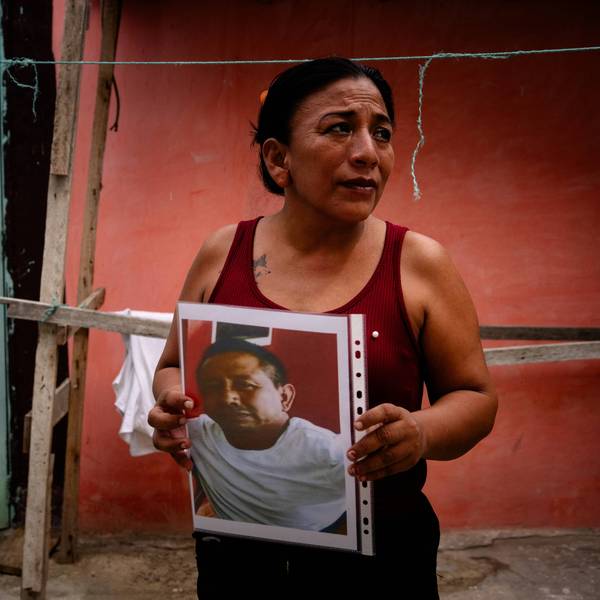
The Fiorella's story, documented by Amnesty International before the CIA's involvement was confirmed by the Post, provides the clearest window into how these operations work on the ground. The captain's satellite messages to his family — daily dispatches tracking the surveillance closing in around him — read as a record of a man who understood something was coming and had no recourse. He was not a combatant. He was a fishing boat captain in international waters, watched by drones bearing the markings of the most powerful military apparatus on earth, sending messages home because that was the only thing left to do. Eight of the ten people aboard the Fiorella are still missing.
The covert nature of the CIA campaign is not an operational detail — it is the central political fact. The United States is conducting what amount to acts of war against civilian infrastructure in the waters of Ecuador, a country with which it is not at war, under no publicly acknowledged legal authority, with no congressional debate, and with a detention protocol that involves rendering survivors to a third country. This is the architecture of an undeclared war, and it is being run through the intelligence apparatus precisely because the intelligence apparatus has the fewest legal constraints and the least public accountability.
This pattern is not new. The history of U.S. covert operations in Latin America is a history of operations that could not survive daylight: the mining of Nicaraguan harbors, the arming of Contra death squads, the support for coups from Chile to Honduras. What is new is the technological substrate. Quadcopter drones and satellite surveillance allow a covert campaign to be waged at scale with minimal personnel footprint — and minimal paper trail. The plausible deniability that once required elaborate cut-outs and proxy relationships can now be achieved with commercially available hardware and classified targeting authorities that no congressional committee has publicly reviewed.
The timing of the Washington Post and New York Times reports — published within a day of each other, with the Times presenting evidence of U.S. origin without naming the CIA directly — suggests that multiple sources with knowledge of the operation made independent decisions to disclose it. That kind of convergent leaking typically indicates that people inside the national security apparatus believe the operation has crossed a line. The question is whether the institutions nominally responsible for oversight — Congress, the courts, the press — are capable of acting on what they now know.
The administration's response, so far, has been silence. There has been no public acknowledgment of the CIA operation, no explanation of the legal authority under which it was conducted, no accounting for the eight missing men from the Fiorella, and no statement about the survivors who were hooded and transported to El Salvador against their will. The international mechanisms that might otherwise document and prosecute such conduct are themselves under pressure from Washington, which has moved aggressively to constrain the International Criminal Court's reach over U.S. personnel and allies.
What connects the CIA's covert Galápagos operation to the Pentagon's acknowledged bombing campaign is not just geography or stated purpose — it is the logic of impunity. When a government runs two parallel military campaigns simultaneously, one public and one secret, the secret one exists to do what the public one cannot. The public campaign has already been called murder by human rights organizations. The covert one involves the additional elements of rendition, detention without charge, and the disappearance of eight people whose families are still waiting for answers.
Those families are in Ecuador. The drones were American. The men who hooded and cuffed the survivors spoke with the authority of a state that has, as yet, offered no explanation for what it did with them or why. The column of smoke the two crew members saw from their skiff on January 20 has not been explained. Eight people have not come home. And the operation that may have caused all of this was, until this week, a secret — which is the point. Accountability requires acknowledgment, and acknowledgment requires pressure that has not yet materialized. The fishermen of the Galápagos are waiting to find out whether this time will be different.