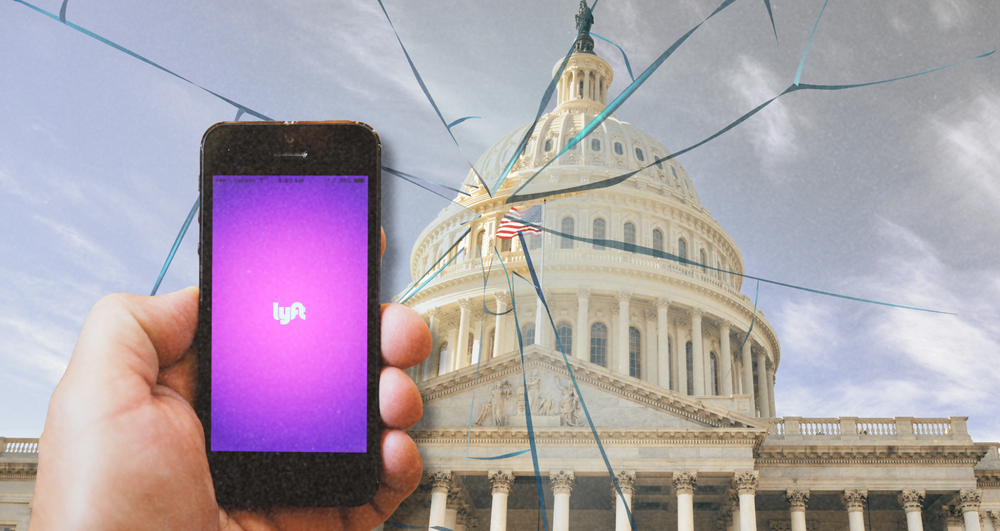
The provision did not get a standalone vote. It did not get a press conference. It did not get the scrutiny that would come from any lawmaker having to stand up and say, on the record, that Uber and Lyft should be shielded from civil lawsuits while thousands of people who say they were assaulted in those companies' vehicles are still waiting for their day in court. Instead, according to reporting by The Lever, the liability protection was tucked into a must-pass transportation bill — the kind of legislation that moves through Congress with minimal debate precisely because everyone needs it to pass.
This is not a legislative accident. It is a legislative technique. The must-pass bill is the preferred vehicle for provisions that cannot survive public scrutiny — provisions whose sponsors know that if voters understood what was being done, and for whom, the political cost would be prohibitive. The question worth asking is not just what this provision does, but why it had to be hidden to get done.
When Congress attaches liability protection to must-pass legislation, it bypasses the committee hearings, floor debates, and public record votes that would otherwise accompany a standalone bill. The tactic is effective because legislators who oppose the provision still vote for the broader bill — and the provision becomes law without ever being directly defended.
Uber and Lyft are not minor players in the litigation that this immunity provision would affect. Both companies have faced massive waves of civil lawsuits from passengers who say they were sexually assaulted by drivers on their platforms. A 2023 CNN investigation found that Uber alone had received more than 10,000 sexual assault reports over a recent two-year period. Lyft has faced similar claims. These are not edge cases or statistical noise — they represent a sustained pattern of harm that plaintiff attorneys and survivor advocates have spent years trying to address through the civil court system, often because criminal prosecution alone does not provide victims with accountability or compensation.
The civil lawsuit is, in practice, one of the only mechanisms available to survivors seeking to hold corporations — not just individual drivers — responsible for systemic failures. The argument at the heart of most of these cases is that Uber and Lyft knew about the risk of driver misconduct, failed to implement adequate screening or safety protocols, and continued to profit from a platform that enabled harm. That argument requires a courtroom to make. A liability shield removes the courtroom.
The power and money dynamics here are not subtle. Uber and Lyft have spent years and considerable resources lobbying against regulations that would increase their legal exposure — a pattern of corporate political spending to block accountability that tracks closely with how other tech and platform companies have operated. The gig economy business model depends, structurally, on limiting liability: drivers are classified as independent contractors rather than employees, which already insulates the companies from many forms of employment-related accountability. A civil immunity provision extends that insulation further, into the domain of personal injury and assault claims.
What makes the must-pass vehicle particularly effective for this kind of provision is that it forecloses the normal accountability mechanisms. When a standalone bill dies in committee, there is a record of who killed it and why. When a provision passes inside a larger bill, every legislator who voted for the transportation package is nominally on record as having supported it — but none of them had to say so explicitly. The opacity is the point. Corporate interests that cannot win a transparent public debate can still win a legislative one if the terrain is chosen carefully enough.
This dynamic is not unique to rideshare companies. It is the standard operating procedure for any well-resourced industry seeking to limit its legal exposure. The systematic dismantling of consumer protection infrastructure over the past several years has followed the same logic: weaken the mechanisms through which ordinary people can hold corporations accountable, and do it through processes that are difficult to see and harder to reverse. Liability immunity tucked into a transportation bill is a variation on the same theme.
The argument the companies and their legislative allies would presumably make — if they were making it in public — is that Uber and Lyft function as technology platforms rather than transportation companies, and should not bear unlimited legal liability for the conduct of independent contractors over whom they have limited control. This is the same argument the companies have made in employment classification battles, and in regulatory proceedings across multiple states. It has some legal basis. It is also, in the context of tens of thousands of assault claims, a description of a business model that profits from the labor of workers it refuses to employ and from the trust of passengers it refuses to fully protect.
The survivors of rideshare assaults are not an abstraction. They are people who opened an app, trusted a platform that had been marketed to them as safe, and were harmed. Many of them have spent years navigating civil litigation as the primary means of forcing accountability from companies whose market valuations run into the tens of billions of dollars. A liability shield does not make those people whole. It removes the last institutional mechanism they had.
There is a broader pattern worth naming directly. When Congress moves to limit corporate liability — for gun manufacturers, for pharmaceutical companies, for social media platforms — the stated rationale is usually about economic vitality, innovation, or the impracticality of unlimited legal exposure. The logic of immunity provisions, whether for police or corporations, consistently runs in one direction: protecting institutional power from the people it has harmed. The beneficiaries of these protections are entities with the resources to lobby for them. The people they are protected against are individuals who have already been harmed and are seeking redress.
The must-pass bill technique also creates a specific accountability problem for legislators who oppose the provision but vote for the larger package. They can — and often do — claim they were against the attached provision while still delivering the vote that passed it. This is not hypocrisy in the conventional sense; it is the rational behavior of legislators operating inside a system that was designed to produce exactly this outcome. The design is the accountability failure. It is the same structural logic at work when the executive branch is ignoring court orders — the formal mechanisms of accountability remain on paper while the practical ability to enforce them erodes.
The original thesis here is the one that the source material gestures at but does not fully develop: this provision is not a policy disagreement about the appropriate scope of corporate liability. It is a demonstration of what corporate power looks like when it operates without friction — when the companies involved have enough legislative access to choose the vehicle, draft the language, and time the insertion so that no individual legislator ever has to defend the outcome in public. The survivors of rideshare assaults did not get a seat at that table. They rarely do. And the transportation bill that carries their exclusion into law will pass, as must-pass bills do, because it must. The pattern of regulatory capture and legislative maneuvering that protects platform companies from accountability did not begin with Uber and Lyft, and it will not end here. What changes is the number of people who can no longer sue.