The number is 2032. That is the year Social Security's Old-Age and Survivors Insurance fund will no longer be able to pay out full benefits — absent congressional action. It was 2033 last year. The clock moved up by one quarter, and according to the program's own trustees, the shift reflects economic conditions that did not arise by accident.
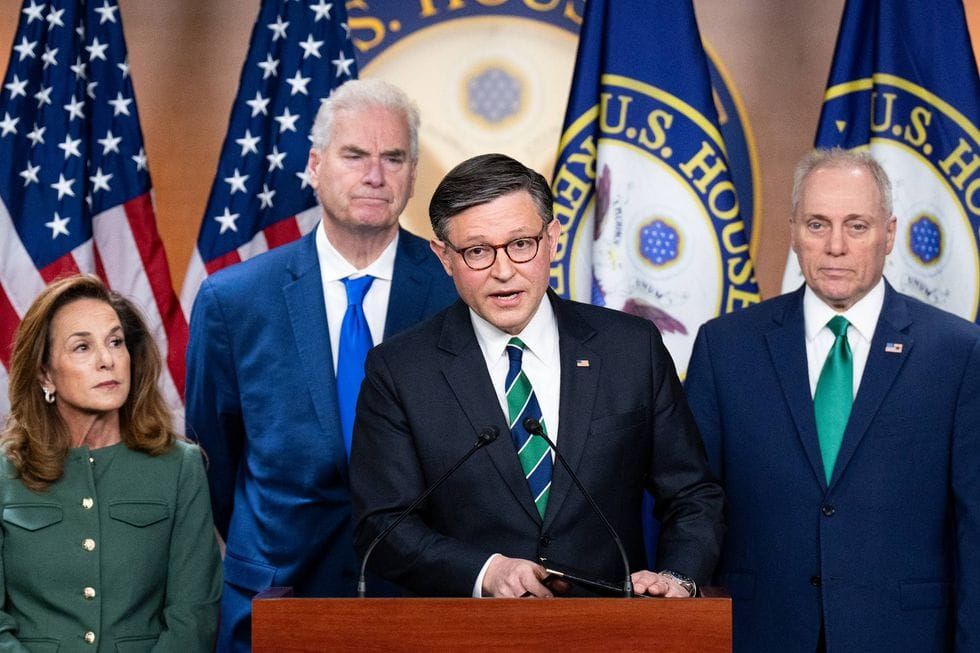
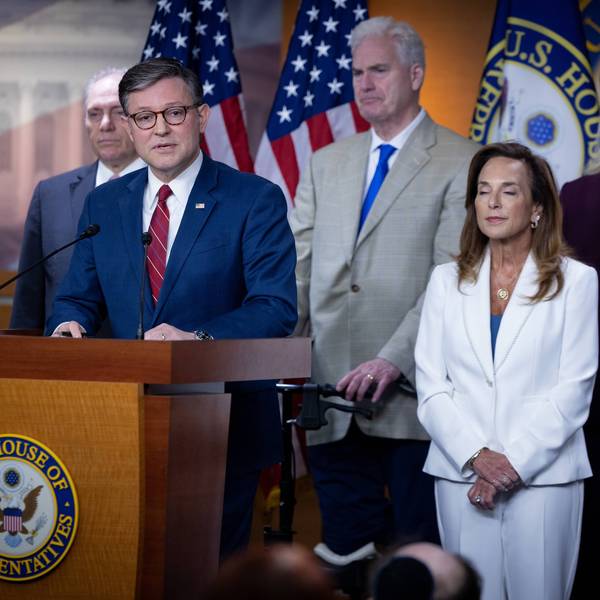
The trustees' annual report, released Tuesday and covered by Common Dreams, arrives at a specific political moment: one day after House Speaker Mike Johnson declared on a radio program that "entitlement programs like Medicare, Medicaid, and things like Social Security" need to be "adjusted and fixed." That phrase — adjusted and fixed — is doing a lot of work. In Republican policy debates, it has historically meant raising the retirement age, introducing means testing, or reducing cost-of-living adjustments. Johnson said a new GOP Social Security plan would come "next year," without details.
The original thesis here is not the trustees report, and it is not Johnson's radio remarks. It is the relationship between the two: the policies that weakened Social Security's finances are the same policies whose architects are now citing fiscal stress to justify benefit reductions. The program is not failing on its own. It is being set up.
The trustees' report is explicit about what drove the timeline forward. Nancy Altman, president of Social Security Works, named the contributing factors directly: "A tax bill that largely benefited the wealthy, economy-wrecking tariffs, a needless war with Iran, and hostility to immigrants." Each of those policy choices reduced the payroll tax revenue that funds Social Security. Fewer workers in the formal economy means fewer contributions. Lower wages and higher unemployment — the predictable consequences of a trade war — shrink the tax base. The Iran conflict, now entering its second month with no congressional authorization, is already being cited as an economic drag.
The payroll tax is the mechanism. Social Security is funded almost entirely by a 12.4 percent tax on earned income, split between employers and employees. But that tax currently applies only to income up to a cap — in 2025, $168,600. Every dollar earned above that threshold is exempt. A hedge fund manager earning $10 million pays the same nominal Social Security tax as a hospital administrator earning $170,000. The program's financing structure, in other words, was already regressive before the current administration's policies began compressing the revenue base further.
Social Security is funded by a 12.4% payroll tax applied to earned income — but only up to $168,600 in 2025. Income above that cap is not taxed for Social Security purposes. Progressive advocates argue that lifting or eliminating this cap would generate enough revenue to extend the program's full solvency for decades, without any benefit cuts.
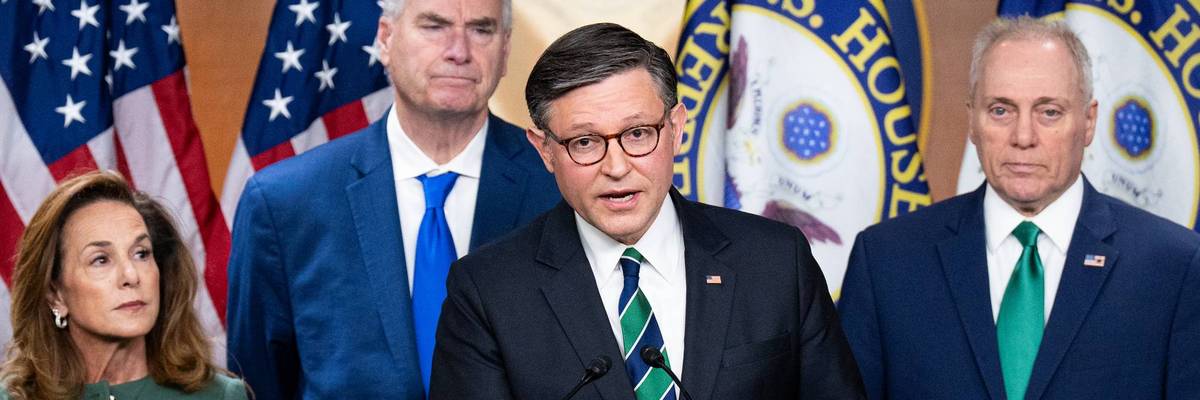
Johnson's decision to float the "adjustment" language now — and to delay the specifics until after the 2026 midterms — is not incidental. The Democratic Congressional Campaign Committee pressed him on the timing immediately. "MAGA Mike Johnson won't show the American people his secret plan to eliminate Social Security because he knows Republican policies are wildly unpopular and will be resoundingly rejected by the American people in November," said DCCC spokesperson Justin Chermol. The accusation is specific: that Johnson is sequencing the announcement to avoid electoral accountability, releasing a plan only after voters have cast ballots in the 2026 midterms.
There is a pattern to this sequencing that goes beyond electoral strategy. The current administration's fiscal agenda — the tax cuts, the tariffs, the immigration enforcement that removed workers from the payroll tax base — generated costs that are now materializing in the trustees' projections. The same coalition that produced those costs is now positioned to propose the remedy. And the remedy they favor is not revenue. It is benefits. The people who will bear the cost of "adjustment" are retirees and near-retirees on fixed incomes, not the high earners whose income above $168,600 escapes Social Security taxation entirely. As Tinsel News has documented, Congress has already let 5 million Americans lose health coverage by allowing ACA enhanced subsidies to expire — a structural parallel to the Social Security pressure campaign now underway.
Richtman was careful to correct a common misreading of the trustees report: the depletion date does not mean Social Security goes "bankrupt" or "broke." After 2032, continuing payroll tax revenue would still cover 78 percent of scheduled benefits. That is a significant cut — but it is not zero. The framing of imminent collapse, which tends to accompany Republican calls for "reform," overstates the crisis while underdisclosing the revenue-side options that could prevent it entirely.

The political economy of this moment is worth naming precisely. Social Security has 70 million beneficiaries. It is the largest income-support program in American history. Its finances are under pressure in part because of deliberate policy choices — a tax structure that exempts high earners, and an administration agenda that has reduced payroll contributions through tariff-driven economic disruption, immigration enforcement, and an unauthorized war that is now generating its own fiscal drag. The program's trustees have documented these pressures. The Speaker of the House has responded by announcing that the program needs to be "fixed" — while declining to say how, or when, or at whose expense.
The money question is not complicated. Social Security's shortfall could be addressed by requiring that the wealthiest Americans pay into the system on the same terms as everyone else. That option has been available for decades. It has not been taken. The option that has been repeatedly floated instead — raising the retirement age, reducing COLAs, means-testing benefits — shifts the cost of a revenue problem onto the people least positioned to absorb it. As the gap between billionaire wealth and working-class income reaches record levels, the argument that Social Security beneficiaries must absorb the cost of a system their own contributions funded requires more justification than a radio interview can provide.
Johnson has promised a plan next year. The trustees have already provided the data for this year. The depletion clock moved up one quarter because of specific, named, reversible policy choices. The question the 2026 midterms will answer is whether the people responsible for those choices will be the ones designing the solution — and whether that solution will ask anything of those who have so far been exempt from contributing their share.