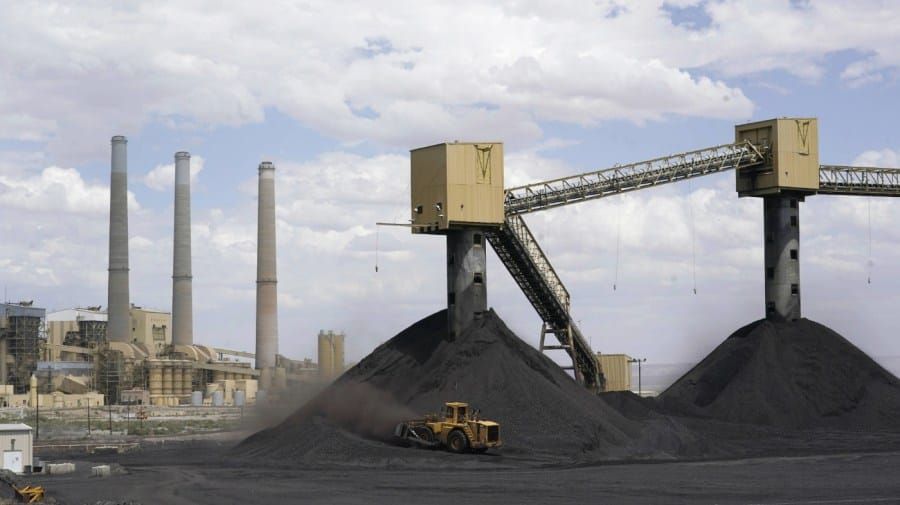
The Defense Production Act was passed in 1950 to give the president emergency authority to direct industrial production during wartime. It has been used to manufacture ventilators during a pandemic, to build out semiconductor capacity, to secure domestic supplies of critical minerals. The logic was always the same: genuine national emergencies require extraordinary executive tools. On Tuesday, according to The Hill, the administration announced it would use that same wartime authority to send $700 million to coal plants — most of them already on the industry's own closure lists.
This is not energy policy. It is a legal maneuver. The administration is not trying to build a new energy system — it is using emergency powers to delay the market's own verdict on a fuel that has been losing share to cheaper, cleaner alternatives for more than a decade. The emergency being invoked is not a threat to national security. It is the threat that coal might finish dying on schedule.
The breakdown of the announcement, as reported by The Hill: $425 million directed to 13 existing coal plants, $75 million for a coal export terminal in California, and $185 million in additional allocations still being finalized. The total comes to roughly $700 million in federal funds, routed through the Defense Production Act — a law that grants the executive branch sweeping authority to prioritize, direct, and fund domestic industrial production without a congressional appropriation vote.
That last point deserves to sit for a moment. The Defense Production Act bypasses the normal appropriations process. Congress does not vote on where this money goes. There is no committee markup, no public testimony, no amendment process. The executive branch decides which plants get funded, which terminals get built, which industries get saved — and the constitutional check that normally governs federal spending is simply absent. For a more detailed look at how emergency economic powers have been stretched across administrations, Tinsel News has previously examined the legal architecture of IEEPA and related statutes — the same family of laws now being applied to coal.
The stated rationale is energy security and grid reliability. The administration has argued, in various forms, that coal plants provide baseload power that cannot be replaced quickly enough by renewables, and that closing them creates vulnerability. This argument has a surface plausibility — grid reliability is a real concern, and the energy transition does create transitional stress on regional power systems. But the argument collapses under scrutiny when applied to these specific plants. The 13 facilities receiving $425 million were not selected because grid operators flagged them as critical. They were selected because they are coal plants, and the administration wanted to fund coal plants. The question of whether any of them are actually necessary for grid stability — a technical question with a documented answer in most regions — has not been addressed publicly.
The export terminal in California adds a different dimension. An export terminal does not serve domestic grid reliability at all. It serves the market for selling American coal to foreign buyers — primarily in Asia, where demand has not collapsed as fast as it has domestically. Seventy-five million dollars in emergency wartime authority, directed at building infrastructure whose entire purpose is to ship coal to other countries, is not a national security investment. It is a subsidy to the international coal trade, dressed in the language of emergency powers.
Follow the structural logic here. Coal's decline in the United States is not primarily a regulatory story, though regulation has accelerated it. It is an economic story. Natural gas, and increasingly utility-scale solar and wind, have become cheaper to generate electricity from than coal. Plant operators have been closing facilities because the math does not work, not because the government told them to. What this $700 million does is not reverse that math — it cannot, because the underlying cost structures have not changed. What it does is extend the operating lives of specific plants long enough to lock in their associated infrastructure: the rail lines, the supply contracts, the workforce arrangements, the grid interconnections. The subsidy buys time. The infrastructure it buys time for becomes the argument for the next subsidy.
The Defense Production Act of 1950 grants the president authority to prioritize contracts, allocate materials, and direct industrial production in service of national defense. It has been invoked for pandemic medical supplies, semiconductor manufacturing, and critical mineral supply chains. It does not require a congressional vote to spend funds. Critics and legal scholars have increasingly noted that its emergency authority has expanded well beyond its original scope — the coal announcement represents one of the most expansive uses of the law for a purely commercial energy purpose in the statute's history.
This is the systemic pattern the individual announcement sits inside. The administration is not making a one-time bet on coal. It is using emergency authority to create facts on the ground — physical infrastructure, operating contracts, workforce dependencies — that will be politically and economically difficult to unwind regardless of who holds power next. A coal export terminal built with federal dollars in 2025 will be lobbied for, litigated over, and demanded to be kept open for decades. The $700 million is not the cost. It is the down payment on a much larger commitment, made without a congressional vote, structured to be irreversible. Tinsel News has covered how the Defense Production Act has been stretched to serve fossil fuel interests under the cover of the ongoing Iran conflict — this coal announcement follows the same legal template.
The global dimension of this decision is not incidental. Asia's return to coal, accelerated by the collapse of LNG markets following the Iran war, has created a short-term export opportunity for American coal producers. Tinsel News has reported on how Asian energy buyers have pivoted back to coal as LNG supply chains fracture — the California export terminal is, in part, an infrastructure bet on that disruption becoming permanent. The communities in coal-producing regions who will be told this investment is for them should know that a significant portion of the money is designed to serve foreign buyers, not domestic energy needs. The workers are the justification. The export market is the purpose.
There are people whose lives are directly shaped by this decision, in ways that cut in multiple directions. Coal workers in Appalachia, the Powder River Basin, and the Illinois Basin have watched their industry contract for twenty years. The promise of federal investment is not nothing to them — it represents, at minimum, the possibility of extended employment in a region where alternatives have been slow to materialize. The failure to build a serious, funded transition for these workers and communities is real, and it is a failure that predates this administration. But the answer to that failure is not $700 million in emergency funds routed to plant operators, most of which will not flow to workers at all. It will flow to the companies that own the plants. The workers are the argument. The shareholders are the beneficiaries.
Meanwhile, the communities that live near these plants — disproportionately low-income, disproportionately communities of color — will continue to breathe the particulate matter, the sulfur dioxide, the mercury emissions that coal combustion produces. The health costs of coal pollution are not hypothetical. They are documented, quantified, and distributed unevenly. The people who bear those costs were not consulted about whether $700 million in wartime emergency funds should extend the operating lives of the plants making them sick. They were not part of the equation.
The deeper accountability question is this: what does it mean when a government deploys the legal architecture of wartime emergency to protect a private industry from market competition? The Defense Production Act was designed to subordinate private economic interests to national survival in moments of genuine crisis. Using it to insulate coal investors from the consequences of natural gas and solar's cost advantages inverts that logic entirely. It subordinates the public interest — in cleaner air, in a stable climate, in a grid built for the next fifty years — to the private interest of plant owners who would prefer not to close. The emergency is not national. It is financial. And the law being used to address it was never written for that purpose.
The 13 plants receiving $425 million will not, in most cases, still be operating in 2040. The export terminal may outlast them. The legal precedent — that wartime emergency authority can be used to direct hundreds of millions of dollars to fossil fuel infrastructure, without congressional authorization, in service of market stabilization rather than genuine security — will outlast all of it.