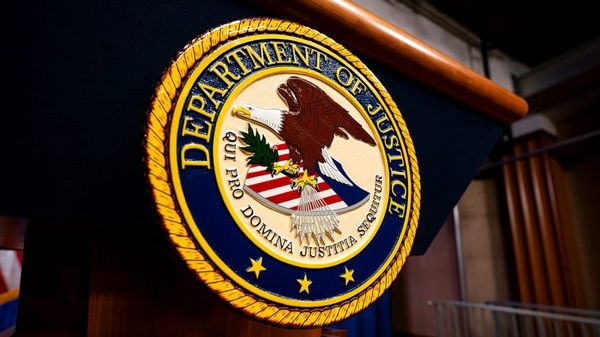
The Wall Street Journal published a story. The Department of Justice responded with a grand jury subpoena.
According to The Hill, the Journal received grand jury subpoenas from the DOJ on March 4, targeting reporters' records related to its February 23 coverage of the U.S.-Israeli conflict with Iran. That reporting named Gen. Dan Caine, the chairman of the Joint Chiefs, in connection with information the administration considers classified. The DOJ wants to know who told the Journal what it published. That is what a leak investigation is. But leak investigations aimed at reporters — not the leakers — are something else: they are a mechanism for making sources disappear and for making journalists afraid.
The thesis the administration is advancing, by sending subpoenas rather than press releases, is that war reporting is a form of criminal conspiracy. That thesis deserves to be named clearly, because the administration is counting on the procedural language of grand jury process to obscure what is actually happening.
Grand jury subpoenas served to news organizations demand reporters' communications, notes, and source records. Even when courts ultimately quash them, the process itself chills source relationships — officials who might speak to journalists about government wrongdoing know their communications could become evidence. The subpoena is the message, not just the mechanism.
This is not the first time this DOJ has treated journalism about the Iran war as a security threat. The administration has already sanctioned a UN official for documenting war crimes, as Tinsel News reported. It has threatened broadcast licenses over Iran coverage. A federal judge blocked a Pentagon policy that required media to pledge loyalty before covering the Defense Department. The Wall Street Journal subpoenas are the latest entry in a consistent pattern — not an aberration, not an overzealous prosecutor acting alone, but a strategy.
The strategy works like this: you do not need to win in court to suppress reporting. You need to make the cost of sourcing high enough that officials stop talking. A government employee who watched a general's name appear in a subpoena demand will think carefully before returning a journalist's call. That calculation — not any eventual prosecution — is the actual enforcement mechanism.
The specific story that triggered the subpoenas matters. The Journal's February 23 reporting dealt with Gen. Dan Caine and the conduct of a war that, as this publication has documented, Congress never formally authorized. The public has a direct interest in knowing who is running a war fought in its name, with its money, and with consequences — military, economic, and diplomatic — that will shape the next decade. The administration's position, implicit in the subpoenas, is that this information belongs to the government, not to the public. That is not a legal argument. It is a claim about who owns the truth about American military power.
It is worth being specific about what the DOJ is and is not doing here. The subpoenas target reporters' records — communications, presumably sources. The Espionage Act, the legal framework most often used in leak prosecutions, has historically been aimed at the leakers themselves, not the journalists who receive and publish the information. The Supreme Court has never directly ruled that publishing classified information is itself a crime. What the DOJ is doing with these subpoenas is applying pressure upstream of any prosecution: get the source's identity, pursue the source, and in the process make every future source aware that talking to a reporter creates a paper trail that ends in a federal grand jury room.
The Journal's response to the subpoenas has not been made fully public, but the publication's statement confirming receipt signals it intends to contest them. News organizations routinely challenge subpoenas for reporters' records on First Amendment and shield law grounds. Some states have strong reporter shield laws; federal protections are considerably weaker, and the current DOJ has shown no inclination to apply even the limited protections that exist as a matter of policy. The DOJ has also recently proposed shielding federal prosecutors from state ethics rules, a move that further insulates government lawyers from accountability.
The accountability question the press freedom framing tends to obscure is this: what was in the Journal's reporting that the government found so threatening? The story named a senior military official in connection with the conduct of the Iran war. The public interest in knowing who commands a war fought without congressional authorization — a war that has already cost, by conservative estimates, over $12 billion without a cent appropriated by Congress — is not a peripheral concern. It is the core democratic function that the First Amendment was designed to protect.
The DOJ is not acting in isolation. The FCC has threatened broadcast licenses over Iran coverage. The Pentagon defied a federal court order on press access — and the White House did nothing in response. The pattern across agencies is consistent enough that calling it coordinated is not speculation; it is description. Each individual action has a procedural explanation. Together they constitute a policy: make war reporting difficult, expensive, and legally perilous enough that less of it happens.
There is a global dimension here that American press freedom coverage tends to skip. The Committee to Protect Journalists and Reporters Without Borders track governments that use legal process — subpoenas, leak investigations, classification claims — to suppress war reporting. The United States has historically positioned itself as a critic of those governments. The Journal subpoenas place the U.S. in a different category: not a government that tolerates a free press covering its wars, but one that treats such coverage as evidence of a crime. That repositioning has consequences for every American journalist working abroad who relies on the argument that press freedom is a core American value, not a conditional one.
The Wall Street Journal is not a small outlet. It has the legal resources to fight these subpoenas, and it will. The concern is not the Journal. The concern is the local reporter, the freelancer, the foreign correspondent working for a publication without a legal department, who watches what happens to the Journal's records and decides the story is not worth the exposure. Chilling effects do not require convictions. They require examples.
The administration has now provided several. The next reporters to receive subpoenas will do so knowing that the DOJ moved against the Wall Street Journal and that the institutional response — from Congress, from the courts, from the executive branch itself — was silence. That silence is the precedent being built, one subpoena at a time. When the infrastructure for suppressing war reporting is fully in place, the absence of reporting will look like the absence of news. It will not be.