The bodycam footage of Henry Nowak's final encounter with West Yorkshire Police does something that official statements rarely do: it makes the mechanism visible. A teenager, dying, is treated as a suspect. The people with the power to help him treat him first as a threat. By the time that calculus shifts, it is too late.
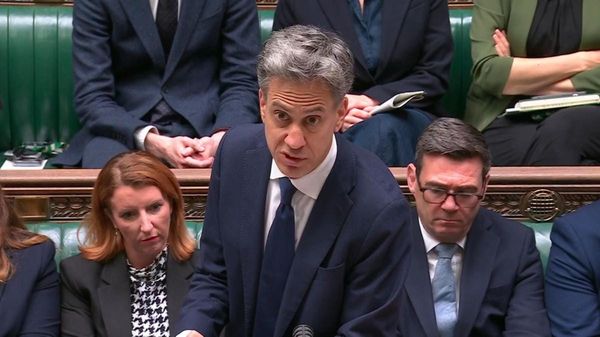
Prime Minister Sir Keir Starmer told BBC News that the footage raises "serious questions for police" and that the question of "how accusations of racism informed decision making" must be addressed. He is right that the questions are serious. But framing this as a matter of how racism informed a single decision, in a single incident, in a single police force, is already a retreat from what the footage actually shows.
What the footage shows is not a rogue moment. It is a protocol executing itself.
The original thesis that the source material does not make — and that this coverage must — is this: the Henry Nowak case is not primarily a story about bad individual officers making a bad call. It is a story about a system in which racial suspicion is structurally prior to medical need. The question is not whether racism "informed" the decision. The question is whether the decision-making architecture itself was built to produce exactly this outcome.
Henry Nowak was a teenager who died following a police encounter in the UK. Bodycam footage of his arrest has become central to a national debate about whether officers treated him as a suspect rather than a person requiring urgent medical attention. Prime Minister Keir Starmer has publicly stated the footage raises "serious questions" about how racism shapes police decision-making.
The accountability question here runs deeper than whether individual officers should face discipline. Policing in Britain — as in the United States, as in France, as in Brazil — operates through what scholars of institutional racism call cognitive shortcuts under pressure. Officers making split-second decisions do not consult their biases consciously. They consult their training, their experience, the stories the institution has told them about who is dangerous. When those stories are racially coded — and the evidence across decades of stop-and-search data, use-of-force records, and custody death statistics confirms they are — the split-second decision is already made before the officer sees the person in front of them.
This is why the prime minister's framing, while politically significant, is analytically insufficient. Asking how "accusations of racism informed decision making" positions racism as an external variable — something that entered the encounter from outside and corrupted an otherwise neutral process. The more accurate account is that racial hierarchy is baked into the encounter from the start. The officer does not first see a person in distress and then allow racism to distort their response. The officer first categorizes — and that categorization, shaped by institutional culture and structural bias, determines whether they see someone who needs help or someone who poses a risk.
Britain has been here before. The death of Stephen Lawrence in 1993 produced the Macpherson Report in 1999, which gave the world the formal definition of institutional racism: "the collective failure of an organisation to provide an appropriate and professional service to people because of their colour, culture, or ethnic origin." The report was a landmark. It was also, in the years that followed, systematically defanged. Its recommendations were implemented partially, selectively, and then quietly abandoned as successive governments decided the conversation had gone far enough.
The pattern matters here because it is the pattern. Each case — Lawrence, Mark Duggan, Belly Mujinga, Chris Kaba — produces a moment of national reckoning, a commission, a statement from a prime minister, a promise that questions will be answered. And then the architecture that produced the case remains intact, waiting for the next one. As Tinsel News has covered in the U.S. context, qualified immunity and similar legal shields are one mechanism by which accountability is structurally blocked after the fact — but the more fundamental problem is that the decision-making culture that produces these encounters is never the primary target of reform.
The Nowak footage is being described in British media as raising questions. It raises one question in particular that is almost never asked directly: what does it cost, materially and institutionally, to train officers to see Black and brown people as threats first? Not in the abstract. In the specific: what does it cost when that training produces an encounter in which a dying teenager is handcuffed instead of helped?
The answer is not only moral. It is operational. A police force that cannot reliably distinguish between a person who needs medical assistance and a person who poses a threat is a police force that is failing at its most basic function. The Nowak footage does not just document a human tragedy. It documents an institutional failure of competence, not only conscience.
The systemic pattern lens also requires naming what happens next. Starmer's statement is politically meaningful — a sitting prime minister acknowledging that racism shapes police decision-making is not nothing. But statements from prime ministers have followed every major UK custody death in living memory. The test is not the statement. The test is whether the accountability mechanism that follows is designed to examine the architecture or only the individuals inside it.
The Independent Office for Police Conduct — the body nominally responsible for investigating such cases — has a documented history of findings that stop short of systemic conclusions. Its remit is individual officer conduct, not institutional culture. This is not an accident. It is a design choice, and it is the design choice that ensures each case is treated as an anomaly rather than a data point in a pattern.
For readers in the United States, the parallel is not incidental. The same structural logic that produced the Nowak encounter — racial categorization prior to individual assessment, institutional training that codes danger along racial lines, accountability systems designed to absorb individual cases without examining their common source — is the logic that the U.S. has spent decades debating without resolving. The geography changes. The architecture does not. And as Tinsel News has documented, federal accountability mechanisms in the U.S. are now being actively dismantled, not reformed.
What the Nowak footage has done — and what makes it different from a government statement or a commission report — is remove the abstraction. The footage does not describe a culture of racial bias. It shows one. It shows the moment in which a dying person is processed as a threat, in real time, by real officers, following a logic that their institution gave them. That is the evidence. The question now is whether Britain's political class is prepared to follow it to its conclusion — or whether this will be another moment of visible horror that produces invisible change.
The prime minister says the questions must be addressed. Every family that has buried someone after a police encounter in Britain has heard that before. The footage exists. The pattern exists. The architecture that produced both has survived every reckoning so far.