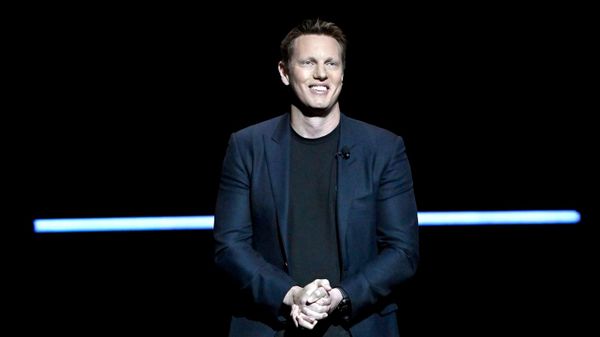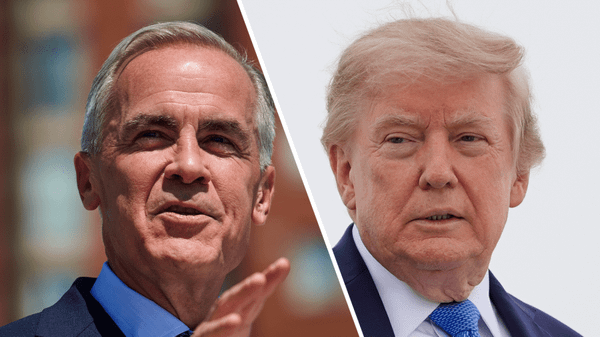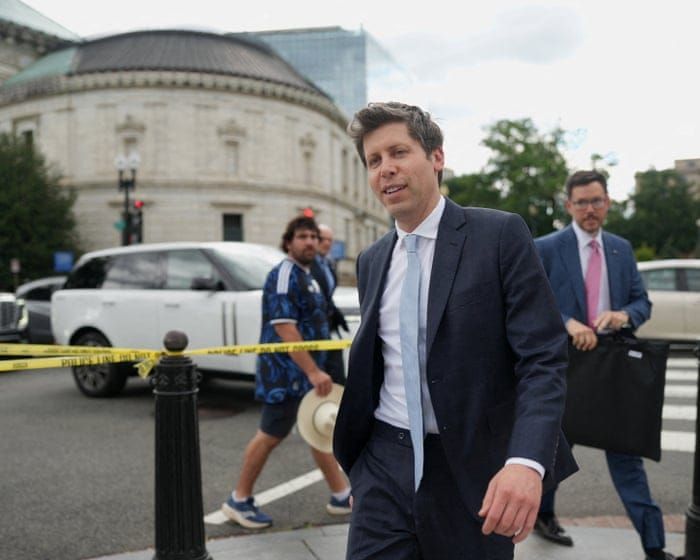
Six companies sent representatives to the White House on Tuesday for a private meeting about how the federal government will test their AI models for safety and cybersecurity risks. OpenAI, Anthropic, Meta, Google, Nvidia, and Microsoft — together worth roughly $12 trillion in market capitalization — were there. The public was not invited. Neither, apparently, will the public ever see what those tests find.
The administration finalized its AI safety testing framework this week after months of consultations with the tech industry, according to The Guardian. The framework establishes a volunteer vetting process for new AI models — meaning companies choose whether to submit their systems for evaluation. And the White House does not plan to release the testing criteria, or the results, to the general public. Only a select few tech companies will see them.
Read that sequence carefully: the companies whose products are being evaluated for danger get to know what the danger assessments say. Everyone else — regulators in other countries, independent researchers, the people who use these products, the communities that will live with their consequences — gets nothing.
The White House AI safety testing framework establishes a voluntary process for evaluating new AI models before public release. Participation is not mandatory. The testing criteria will not be made public. Results will be shared only with a select group of participating companies. No independent oversight body has been named. The framework covers safety and cybersecurity risks but does not specify enforcement mechanisms if a model fails its evaluation.
This is not, at its core, a story about bureaucratic process. It is a story about who gets to decide what risks the public is allowed to know about — and who benefits when that information stays private. The answer, in both cases, is the same group of companies that spent months helping design the framework they are now being tested against.
The structure of this arrangement has a name in regulatory economics: it is called regulatory capture. It happens when the industry being overseen gains sufficient influence over the oversight process that the regulator begins serving the industry's interests rather than the public's. The tell is always the same: the regulated parties get access to information that the public does not. The secrecy is not incidental to the system — it is the system's primary product.
Consider what transparency would actually cost these companies. If a safety evaluation found that a major AI model posed documented cybersecurity risks — that it could be manipulated to produce weapons instructions, or that its outputs were systematically unreliable in high-stakes medical or legal contexts — that finding would carry market consequences. It would invite regulatory scrutiny from foreign governments. It would hand ammunition to plaintiffs in civil litigation. It would complicate sales to government clients. Keeping those findings private is worth real money to the companies involved. The question the White House has not answered is: what does it cost the public?
The volunteer structure compounds the problem. A company with a model it suspects would perform poorly in safety testing faces no legal obligation to submit that model for evaluation. It can simply decline. The framework produces no baseline — no floor below which a model cannot be deployed. It produces, at best, a self-selected sample of companies confident enough in their systems to participate, which is precisely the sample least likely to surface the risks that most need surfacing. As Tinsel News has previously reported, OpenAI and Anthropic have simultaneously backed calls for slower AI development while continuing to release new models at pace — a pattern this framework does nothing to interrupt.
There is also a global dimension to this arrangement that domestic coverage tends to skip over. AI systems built by American companies are deployed in hospitals, courts, schools, and financial institutions across Europe, Asia, Latin America, and Africa. Regulators in those countries have no mechanism to access U.S. safety evaluation results under this framework. The European Union's AI Act creates mandatory transparency requirements for high-risk AI systems, but those requirements apply to systems sold in Europe — they cannot compel disclosure of what a private White House process found. The result is that governments responsible for protecting their own citizens from AI-related harms are making regulatory decisions without access to safety data the U.S. government already holds.
The companies present at Tuesday's meeting are not passive participants in this outcome. They spent months in consultation with the White House before the framework was finalized. The Guardian's reporting does not specify what positions those companies took in those negotiations, but the result — voluntary participation, private criteria, no public disclosure — is structurally consistent with what any company facing mandatory safety disclosure would prefer. The administration has not explained why public release of testing criteria, at minimum, would compromise anyone's interests other than those of companies with something to hide.
It is worth placing this against the broader pattern of how this administration handles information that powerful industries would prefer to keep private. The same week that AI safety findings were being locked away from public view, Tinsel News documented how the Commerce Department cleared OpenAI's most powerful model for mass release without an independent safety review. The pattern across both decisions is identical: speed of deployment is prioritized, and the oversight mechanisms that exist are structured to produce the minimum friction for the companies involved.
The administration's framing — that a private framework is better than no framework — deserves scrutiny. It is true that voluntary industry cooperation on safety testing is preferable to nothing. But the comparison is constructed to make a weak standard look like progress. The relevant comparison is not between this framework and a vacuum. It is between this framework and what actual public accountability would look like: mandatory participation for models above a defined capability threshold, published testing criteria developed with input from civil society and independent researchers, and public disclosure of results that would allow regulators, journalists, and affected communities to evaluate whether the process is working.
None of those features are present. What is present is a process designed by the people being evaluated, administered privately, with results shared only with those same people. The administration has announced that AI safety is a priority. What it has built is a structure that lets companies decide what the public knows about the risks their models pose — and call that safety.
The framework's secrecy is not a flaw to be corrected later. It is the architecture of the thing. And the companies who helped design it know exactly what they built. The question for Congress, for foreign regulators, and for anyone deploying these systems in consequential contexts is whether a safety evaluation whose findings are invisible to the public can protect anyone other than the companies that commissioned it. The evidence from Tuesday's meeting suggests the answer is already baked in — and it was never meant to be yes.