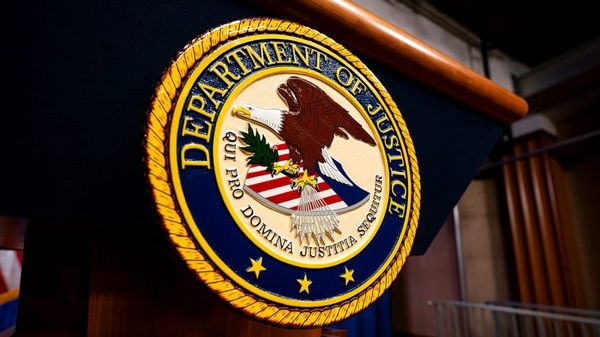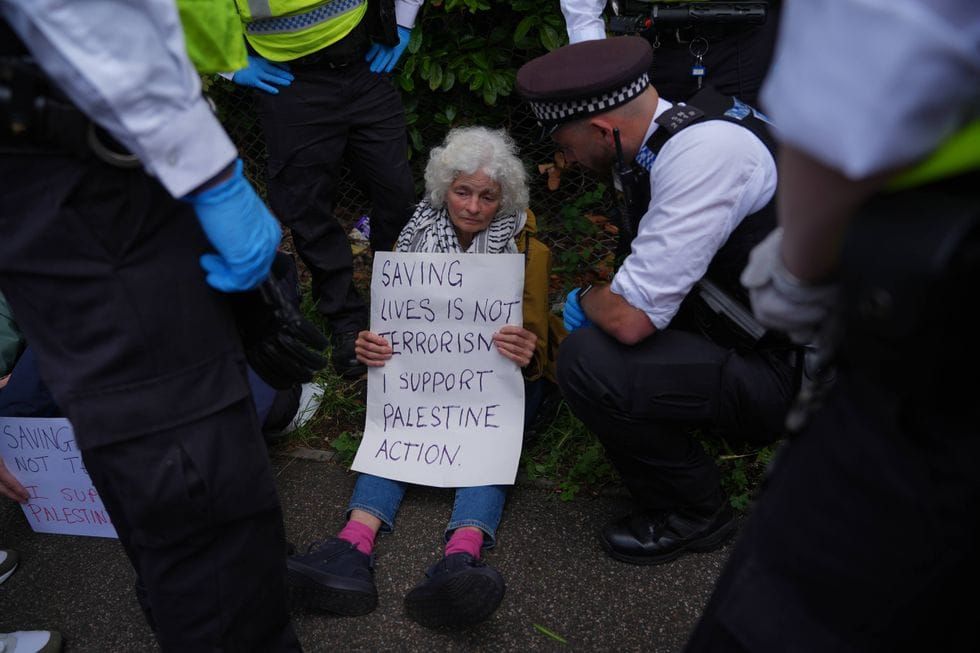
The Bush administration wrote Executive Order 13224 in the weeks after September 11, 2001, as a tool to freeze the financial networks of groups that commit or support terrorism. It has since been used to sanction al-Qaeda affiliates, ISIS financiers, and arms traffickers. On Wednesday, the Treasury Department used it against a British group whose members have glued themselves to factory floors and splashed red paint on weapons manufacturer facilities in protest of the Gaza war.
That is not a rhetorical equivalence. It is now the legal equivalence the United States government has formally asserted. Palestine Action — a nonviolent direct action organization founded in the United Kingdom to oppose arms sales to Israel — is now a Specially Designated Global Terrorist entity under U.S. law. Treasury Secretary Scott Bessent announced the designation alongside sanctions against Autistici Inventati, an Italy-based group that provides digital infrastructure to left-wing organizations, and Masar Badil, a Palestinian advocacy group. Common Dreams reported the sanctions after The Telegraph first reported the expected designation Wednesday.
This designation is not primarily about Palestine Action. It is about building a legal architecture that makes financial support for any dissenting group — domestic or foreign — a prosecutable offense. The choice of Executive Order 13224 is not incidental. It is the mechanism.
Chip Gibbons, policy director for Defending Rights and Dissent, was direct about what the designation actually does. His group, according to Common Dreams, warned of "broad speech implications" and said it was "especially disturbed that Palestine Action, a nonviolent, direct action organization, has been sanctioned under a Bush-era executive order issued in response to the September 11th attacks, essentially putting civil disobedience for Palestinian rights on equal footing with al-Qaeda."
Signed by President George W. Bush on September 23, 2001 — twelve days after the September 11 attacks — Executive Order 13224 authorizes the Treasury Department's Office of Foreign Assets Control (OFAC) to freeze the assets of and block transactions with any foreign person or group it designates as having committed, or posed a risk of committing, acts of terrorism. Americans who provide funds, goods, or services to designated entities face criminal liability. The order was designed to target the financial networks of al-Qaeda and its affiliates.
The practical consequences extend well beyond Palestine Action's bank accounts. Under the designation, Americans are now prohibited from doing business with the group, donating to it, or providing it with goods or services. British citizens who continue donating to Palestine Action — or who participate in protests supporting it — could face U.S. sanctions and visa bans, according to The Telegraph's reporting. The group's co-founders, Richard Barnard and Huda Ammori, face lifetime bans from entering the United States.
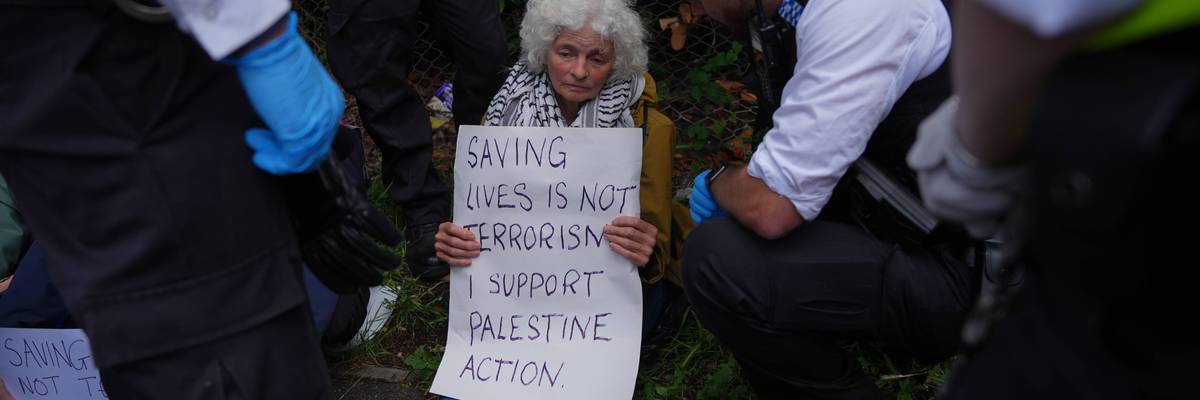
Follow the money and the framing. Bessent did not frame the designation as a response to specific violent acts. He framed it as ideological enforcement. "Far-left extremists, their fronts, and their enablers should be on notice," he said in a statement. "Political terrorism has no place in our society, and we will continue to cut the financial lifelines of these groups until they are eliminated." The phrase "political terrorism" is doing significant work here — it collapses the distinction between political opposition and violence, and it does so deliberately. A Treasury secretary announcing the elimination of groups holding "political views the Trump administration dislikes" — Gibbons' characterization — is not using the language of law enforcement. He is using the language of political suppression.
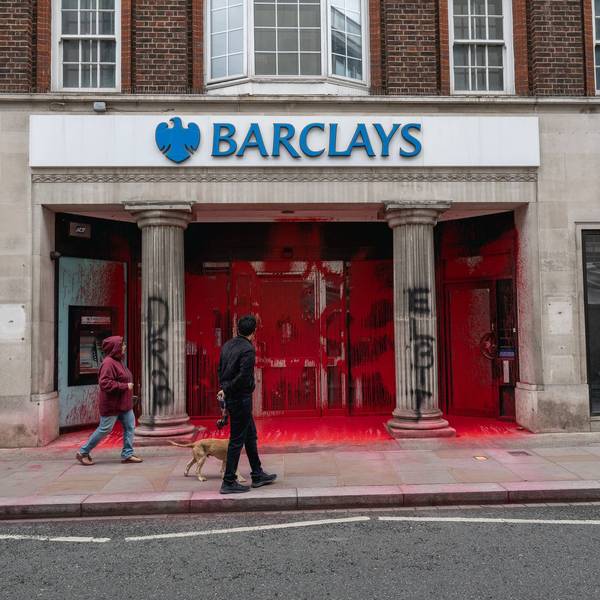
Palestine Action's tactics are not in dispute. Members have broken windows at weapons manufacturer facilities, poured paint, and been arrested in large numbers. The UK government proscribed the group last year after some of its members vandalized a Barclays bank branch, and thousands of people have been arrested in the UK for supporting it since that proscription. A U.S. official told The Telegraph that Palestine Action had "supported numerous acts of terrorism since July 2020, including acts that have physically injured UK law enforcement personnel, as well as acts intended to intimidate lawful commercial enterprise and coerce the British government." That claim is attributed as a claim — not a documented finding — and it is doing the work of justifying an extraordinary designation of a European civil society group as a terrorist organization.
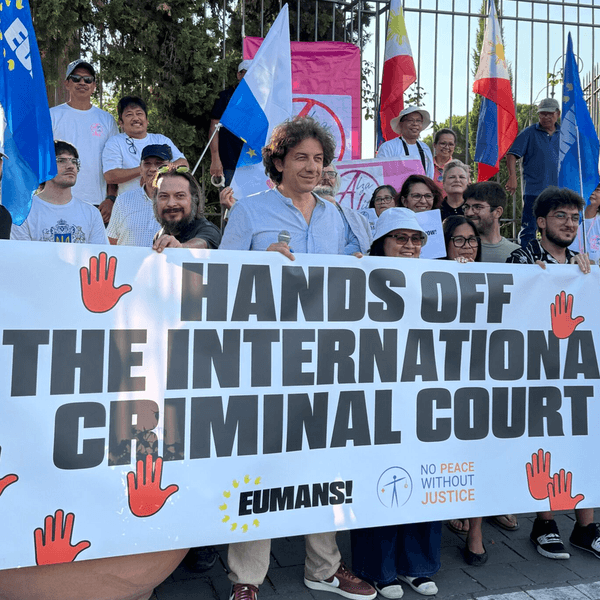
The pattern here is not subtle. This is the third major action in recent months in which the U.S. government has used counterterrorism or national security frameworks to sanction political dissent related to Palestine. As Tinsel News has previously reported, the administration sanctioned International Criminal Court officials investigating potential war crimes — using financial tools built for adversaries to protect an ally from legal accountability. The Palestine Action designation follows the same logic in reverse: tools built to fight terrorism are now pointed at people opposing the conduct the ICC was investigating.
The First Amendment dimension is specific and serious. Gibbons warned that the designation "severely curtails and criminalizes US citizens' ability to engage in otherwise lawful associations with these groups." Under U.S. law, providing "material support" to a designated terrorist organization is a federal crime. The Supreme Court's 2010 ruling in Holder v. Humanitarian Law Project held that even coordinating with designated groups on legal activities — human rights advocacy, peace negotiations — could constitute material support. The designation of Palestine Action means that an American civil liberties attorney who advises the group, an academic who speaks at its conference, or a journalist who accepts payment from a publication it funds could theoretically face criminal exposure. That exposure may be unlikely to be prosecuted in any given case. The chilling effect on association does not require prosecution to be real.
Consider what Palestine Action actually does, as distinct from what the Treasury Department claims it does. The group was founded specifically to oppose the arms trade between the UK and Israel, and its primary targets have been facilities operated by Elbit Systems, Israel's largest private defense contractor, which manufactures drones and other weapons systems used in Gaza. The group's direct actions — occupations, paint, property damage — are squarely within the tradition of nonviolent civil disobedience that British courts have historically treated as a matter of criminal law, not terrorism law. The UK's own proscription of the group was controversial precisely because it moved that line. The U.S. designation moves it further still, and applies it extraterritorially to the behavior of British citizens on British soil.
The inclusion of Autistici Inventati in the same sanctions package is a clarifying detail. That group provides digital services — encrypted communications, hosting, email — to left-wing organizations across Europe. It has no documented connection to violence of any kind. Sanctioning a digital infrastructure provider alongside a direct action group and a Palestinian advocacy organization is not a counterterrorism operation. It is an attempt to degrade the organizational capacity of a political tendency. The three designations together form a coherent strategy: cut the money, cut the communications, cut the ability to enter the country.
As Tinsel News has covered in the context of domestic surveillance of dissent, the current administration has shown consistent willingness to use the full apparatus of the national security state against political opposition. The Palestine Action designation extends that approach across the Atlantic — asserting U.S. jurisdiction over the political activities of British citizens, threatening them with visa bans for attending protests, and doing so under a legal framework that was designed for a different threat entirely.
The frame Bessent offered — "political terrorism" — is the tell. There is no legal category called political terrorism in U.S. law. There is terrorism, defined by statute with specific elements, and there is politics. Merging those categories in public statements while using counterterrorism law to act on that merger is not an accident. It is a description of what the administration believes the law should do. The question for courts, for Congress, and for the civil liberties organizations now watching this closely is whether the legal architecture of post-9/11 counterterrorism is elastic enough to hold that definition — and what is left of the right to political association if it is. Federal courts have already begun dealing defeats to efforts to silence Palestine solidarity speech, a line of rulings that now sits in direct tension with the Treasury Department's designation.
The designation of Palestine Action will not stop the protests in Britain. It will not change the trajectory of the Gaza war. What it does is establish a precedent: that the U.S. government can designate a foreign civil society organization a terrorist group based on property destruction and political opposition, impose financial and travel consequences on its supporters in allied countries, and use a post-9/11 emergency order as the legal vehicle. That precedent does not expire with any particular administration. It becomes available to every one that follows.