The Federal Communications Commission does not need to revoke a broadcast license to control what gets said on television. It only needs to make clear that revoking a license is possible.
That is the mechanism at work when the president of the United States threatens to refer NBC News anchor Kristen Welker to the FCC for regulatory scrutiny — not because she fabricated anything, not because she violated a broadcast standard, but because she reportedly noted on air that candidates Trump endorsed had received mixed results in midterm primary elections. Which is true. Which is documented. Which is, by any definition, news.
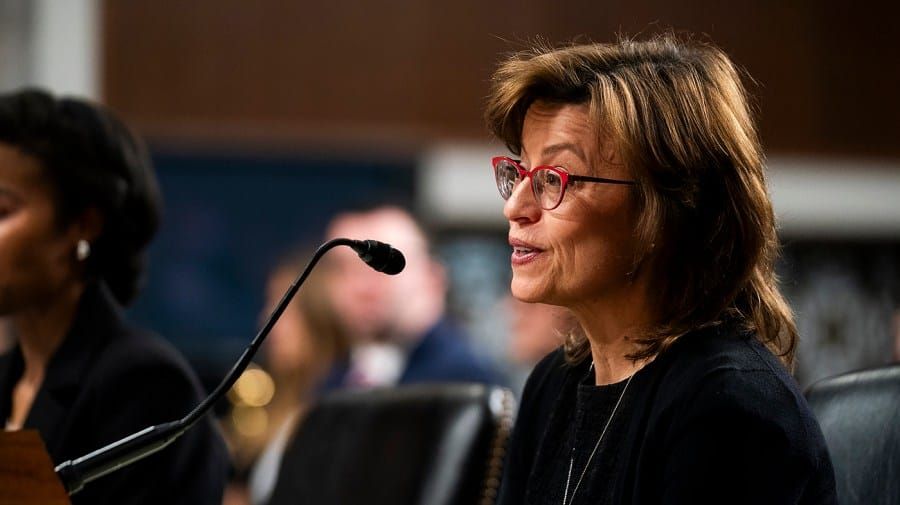
Anna Gomez, a Democratic commissioner on the FCC, called the threat "dangerous" in remarks to The Hill on Sunday. She is correct. But the more precise diagnosis is this: the threat is working exactly as designed, and the FCC's current structure makes it nearly impossible to stop.
Television and radio broadcasters in the United States operate under licenses granted by the FCC, which must be renewed periodically. The FCC can investigate complaints about licensees and, in theory, decline to renew or revoke licenses for violations of broadcast standards. No major network has had its license revoked in decades — but the threat of review, and the legal costs of fighting one, are sufficient to produce caution in most newsrooms.
The FCC has five commissioners. Republicans currently hold the majority. The chair, Brendan Carr, was appointed by Trump and has shown a consistent willingness to treat broadcast regulation as a tool of political pressure. Last year, Tinsel News documented how former FCC officials warned that the ABC license review set a precedent that could reach every broadcaster critical of the White House. That warning was not hypothetical. It has arrived.
This is not simply a story about a president hostile to the press; that has been documented exhaustively. The deeper problem is structural: the FCC was never designed with sufficient independence to resist a president determined to use it as a press-control mechanism. Its commissioners serve at the pleasure of the appointing president for staggered terms, but the chair's agenda-setting power is enormous and entirely within executive influence. What we are watching is not an aberration. It is the system functioning as its critics always warned it could.
Follow the incentive chain. A network executive watching the president threaten FCC scrutiny over accurate reporting does not need to receive a formal complaint to adjust behavior. The calculus is simpler: a license review costs millions in legal fees, consumes management bandwidth, creates advertiser anxiety, and generates the kind of sustained negative attention that boards of directors hate. The executive does not need to believe the review would succeed. She only needs to calculate whether the story was worth the cost. Over time, more stories fail that calculation. The coverage shifts — not through censorship, but through the slow gravitational pull of institutional self-preservation.
This is what regulatory capture of press oversight looks like in practice. It does not require jackboots. It requires a regulator whose majority answers to the same political authority that is threatening the regulated party, combined with a licensing structure that gives that regulator meaningful power over whether a broadcaster stays on the air. The rest is arithmetic.
Commissioner Gomez can call the threat dangerous, and she is right to do so. But the minority commissioner of a regulatory body has no mechanism to stop the majority from acting. She can dissent publicly. She can speak to reporters. She cannot block a license review that the majority decides to open. The structural imbalance is the point: placing a press-oversight regulator under executive influence and then using that regulator to threaten coverage produces a chilling effect that no individual commissioner's objection can undo.
Precision about what Welker actually said matters, because the gap between the alleged offense and the threatened punishment is itself the story. According to reporting by The Hill, Welker noted that candidates Trump endorsed had received mixed results in the midterm primary cycle. This is not spin. It is not opinion. It is a factual characterization of documented electoral outcomes. The threat of federal regulatory scrutiny for stating accurate election results on a Sunday news program is not a dispute about broadcast standards. It is an attempt to define the acceptable boundaries of political reporting through the threat of institutional punishment.
The broader pattern connects to a documented campaign against press freedom that has escalated throughout this administration. Tinsel News has covered how the Pentagon moved to direct editorial coverage of its own military newspaper, how the DOJ has subpoenaed journalists covering the Iran war, and how foreign press credentials have been systematically narrowed. The Welker threat fits this pattern not as an isolated outburst but as a consistent application of pressure across every institutional lever available to the executive branch.
What makes the FCC mechanism particularly effective is its structural legitimacy. The commission is a real regulatory body with real authority over real licenses. When the president signals that a journalist should face FCC scrutiny, he is not just venting — he is activating a bureaucratic apparatus that the targeted broadcaster must take seriously regardless of the legal merits. The threat is credible not because it would succeed in court but because the process itself is costly. That asymmetry between the cost of threatening and the cost of being threatened is the source of the power.
The FCC is also not the only vector. The same logic applies to antitrust scrutiny of parent companies, to federal contract relationships with corporate owners, to tax enforcement, to the regulatory status of streaming platforms that share corporate parents with broadcast networks. A president with the will to use every available institutional lever against unfavorable coverage has a remarkably well-stocked toolkit. The Welker threat is visible because it is explicit. The more consequential pressure is the kind that never becomes a news story — the editorial meeting where someone asks whether this particular angle is really worth it.
The question for the next Congress — and for the courts, if a formal FCC action materializes — is whether broadcast licensing authority can constitutionally be used as a mechanism to punish factually accurate political reporting. First Amendment jurisprudence offers some protection, but the licensing framework for broadcast has always existed in a different constitutional space than print or digital media, precisely because broadcasters use public spectrum. That distinction, designed in a different era for different reasons, has become a structural vulnerability. A regulator willing to exploit it does not need to win in court. It needs only to make the cost of resistance high enough that most broadcasters choose not to find out.
Gomez is right that the threat is dangerous. The more unsettling truth is that the FCC was always dangerous in this way — it just required a president willing to use it. The institution's design assumed a level of executive restraint that this moment has made obsolete. Until Congress restructures broadcast licensing to insulate it from political pressure, or until courts draw a clear line between legitimate regulatory oversight and punishment for editorial content, every network with a license to protect will be doing the same calculation: is this story worth the fight? In enough newsrooms, the answer will quietly become no.