
The pitch sounds reasonable. A private equity firm acquires a struggling hospital, infuses capital, cuts inefficiency, and exits in five to seven years. The facility is saved. The investors profit. Everyone wins.
The research tells a different story. According to a 2023 study published in The Review of Financial Studies — cited in a video posted to social media July 7 by investigative journalist Ronan Farrow and reported by Common Dreams — healthcare facilities acquired by private equity firms saw their interest payments more than triple after the deal closed. A separate 2025 study found that salaries for emergency room workers fell by an average of 18 percent at private equity-owned hospitals, while hospital-acquired infections and complications rose by 25 percent. And the landmark figure, the one that makes the model impossible to defend on humanitarian grounds: private equity ownership can increase patient mortality by up to 11 percent. Over the study period examined, that translated to more than 20,000 excess deaths.
Those numbers are not projections. They are not worst-case scenarios generated by advocates. They come from peer-reviewed academic research. And they describe a pattern so consistent that, as Farrow notes in his video, researchers can now count the harm in advance. The industry has not been regulated accordingly.
Here is the mechanism, because the mechanism matters. When a private equity firm acquires a hospital or nursing home, it typically borrows more than 70 percent of the purchase price. That debt does not sit on the firm's balance sheet. It gets placed on the acquired facility itself — meaning the hospital now carries the debt, and pays interest on it, out of operating revenue. The private equity firm keeps its own books clean. The hospital pays the bill.
The financial engineering does not stop there. The 2023 Review of Financial Studies research found that in many cases, private equity firms sold the facility's building shortly after acquiring it, returned the proceeds to investors, and then charged the facility rent on the property it used to own. The hospital went from owning its building to renting it — while simultaneously carrying acquisition debt and paying interest. The margin available for staffing, equipment, and patient care shrank accordingly. The 25 percent rise in hospital-acquired infections and the 18 percent drop in ER worker salaries are not mysterious. They are math.
A private equity firm acquires a hospital or nursing home, borrowing more than 70% of the purchase price. That debt is placed on the facility — not the firm. The firm then often sells the building and leases it back to the facility, extracting further capital. Staff hours are cut. The firm exits in five to seven years. The facility is left holding the debt, the rent, and reduced capacity to care for patients.
Firms named by Farrow as active acquirers in this space include The Carlyle Group, Cerberus, and Pinta. Together with others, they have acquired hundreds of hospitals and nursing homes over the past two decades. The scale is not incidental — it is the point. A single debt-financed buyout at one facility is a transaction. Hundreds of them, applying the same playbook, producing the same outcomes, is a system.

This is where the conventional framing of this story breaks down. Private equity's role in healthcare is usually covered as a financial sector story — deal volumes, return rates, fund performance. Occasionally it surfaces as a healthcare story, when a specific hospital closure generates local news. What it rarely gets treated as is what it actually is: a regulatory failure story. The harm being documented by researchers is not a market anomaly. It is a market outcome. It is the predictable result of letting a financial instrument built to extract value on a short timeline operate inside an industry where the cost of extraction is measured in patient deaths.
Farrow is careful to note that not every private equity acquisition produces these outcomes, and that some acquired facilities were already in distress. That caveat is worth taking seriously. But it does not change the aggregate finding. The research is not tracking individual bad actors. It is tracking a business model. When a model produces 20,000 excess deaths across a study period, the question is not whether every firm is malicious. The question is why the model is still legal in its current form.
New research published Monday by the Private Equity Stakeholder Project adds another layer. According to that report, private equity firms have increasingly moved into nonprofit joint ventures as a vehicle for expanding their reach into the healthcare system — a structure that allows them to, in the words of PESP executive director Jim Baker, "siphon profits from health systems and critical healthcare infrastructure" while benefiting from the regulatory and tax advantages associated with nonprofit status. "Private equity's healthcare playbook is evolving," Baker said. The nonprofit joint venture model represents an adaptation: same extraction logic, new legal wrapper.
The adaptation is significant. Much of the existing regulatory scrutiny of private equity in healthcare — limited as it is — has focused on for-profit acquisitions. If the industry is now routing the same financial relationships through nonprofit structures, existing oversight frameworks may not reach them. Regulators would need to look not just at ownership but at contractual relationships, management fees, and profit-sharing arrangements that can transfer value out of a nonprofit entity without technically violating its status. That kind of scrutiny requires resources, expertise, and political will that current enforcement agencies have not consistently demonstrated. Meanwhile, as Tinsel News has covered, millions of Americans are losing health coverage through parallel policy decisions, compressing the population that depends most on the facilities private equity is acquiring.
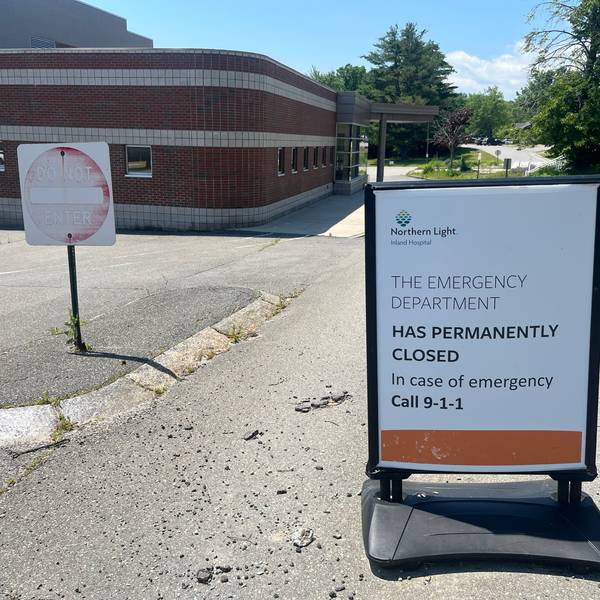
The political economy here is not complicated. Private equity is a significant source of campaign contributions across both parties. The industry has lobbied effectively against the kinds of disclosure requirements that would make its healthcare activities more visible to regulators and the public. The Private Equity Stakeholder Project's work on nonprofit joint ventures is, in part, an attempt to reconstruct visibility that the industry has successfully obscured. When Farrow says the industry has "moved faster than the rules," he is describing a regulatory environment that the industry has actively shaped — not one it merely outpaced.
The patients in these facilities — nursing home residents, emergency room patients, people in communities where a private equity-owned hospital is the only option — did not choose to participate in a debt-financed buyout. They did not agree to have their care rationed so that a fund could meet its return targets before exiting in year six. The 11 percent increase in mortality is not distributed evenly. Nursing homes disproportionately serve elderly patients on Medicaid. The hospitals most likely to be acquired are often those serving lower-income communities with fewer alternatives. The people bearing the cost of this financial model are, in the main, the people with the least power to avoid it. That is not incidental to the story. It is the story.
Farrow's video going viral is useful. Public attention creates political pressure, and political pressure occasionally produces regulatory action. But attention without structural change has a short half-life. The Private Equity Stakeholder Project's research on nonprofit joint ventures, combined with the existing mortality literature, gives regulators a specific and documented target: not just for-profit acquisitions, but the full architecture of how private equity extracts value from healthcare infrastructure, including the legal structures designed to make that extraction harder to see. Whether anyone with enforcement authority acts on it before the playbook evolves again will decide how many more excess deaths accumulate, and whether the broader pattern of financial industry opacity that enables this model finally gets treated as the systemic problem it is, rather than a series of isolated transactions that happen to keep producing the same body count.