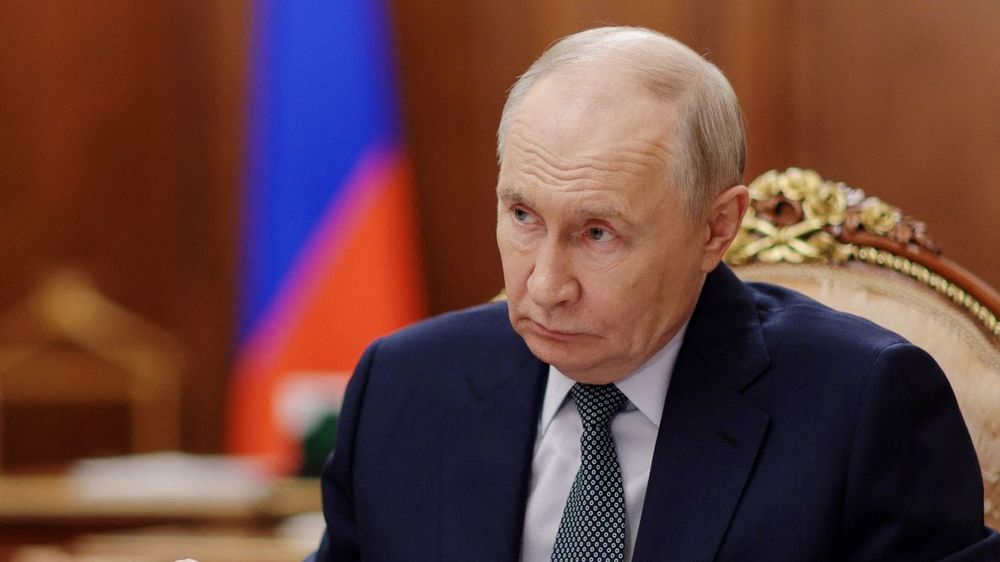
The gap between a diplomatic gesture and a diplomatic strategy is where wars continue. CIA Director John Ratcliffe flew covertly to Moscow on Tuesday, met with the heads of Russia's two principal intelligence services, and floated the idea of a three-way summit between Donald Trump, Vladimir Putin, and Volodymyr Zelensky. According to two sources briefed on the matter who spoke to Axios, it was the first time Ratcliffe had personally entered the diplomatic effort to end the war. The White House called it "standard business."
What the White House did not offer was a theory of how the summit would work, what concessions either side would bring to the table, or what the United States would do if Russia used the diplomatic opening to buy time for a military escalation it was already planning. Those are not minor details. They are the entire substance of diplomacy.
The structural problem with the Ratcliffe visit is not that it happened — back-channel intelligence contacts are a legitimate and often necessary tool of statecraft. The problem is what surrounds it: a negotiating process that has been paused since mid-February, envoys Steve Witkoff and Jared Kushner conducting separate talks with Russian and Ukrainian negotiators for months with, as Axios reported, little progress, and a Ukrainian government that received its briefing on Ratcliffe's Moscow trip on Friday and immediately told reporters that Putin has ordered his military to prepare several operational scenarios for an offensive in northern Ukraine, with Kyiv and Chernihiv identified as key targets.
U.S.-mediated talks between Russia and Ukraine were paused in mid-February 2026 after the war with Iran began. White House envoys Steve Witkoff and Jared Kushner have held separate talks with Russian and Ukrainian negotiators in the months since. Zelensky's chief of staff told local media on Thursday that talks could resume in September. Ratcliffe's covert Moscow visit on Tuesday was the first time the CIA director personally entered the diplomatic effort.
That intelligence came from Zelensky's deputy chief of staff, Pavlo Palisa, speaking to reporters on Friday — the same day Ukrainian officials were briefed on Ratcliffe's visit. The juxtaposition is not subtle. The United States is proposing summits. Ukraine is tracking troop movements toward its capital.
Ratcliffe's meeting was with SVR foreign intelligence chief Sergey Naryshkin and FSB director Alexander Bortnikov. According to reporting by Axios, Ratcliffe concluded that Bortnikov is a constructive player who could help restart diplomatic efforts. The New York Times reported that Ratcliffe gave Bortnikov a bleak assessment of the state of the war and urged Russia to cut a deal before its military situation worsens. Both accounts may be accurate. They are also both favorable framings of a meeting whose actual outcome — whether Russia moves toward negotiation or toward Kyiv — will be determined by Putin, not by Bortnikov's constructiveness.
This is the accountability question the summit framing obscures: who, in the Trump administration, is responsible for the outcome if this diplomatic opening is exploited rather than reciprocated? The CIA declined to comment. The White House offered no framework. Zelensky, for his part, thanked the U.S. on Friday for "the necessary tone of the conversation with Russia" and said the administration "is advancing a realistic vision." That is the language of a leader who needs the United States and cannot afford to say what his own intelligence services are telling him publicly.
The summit proposal itself has a history that clarifies its current standing. The Trump administration has raised the idea of a Trump-Putin-Zelensky meeting before. Zelensky has agreed to it. Putin has rejected it. Ratcliffe's visit was partly aimed at determining whether Russia's intelligence chiefs could convince Putin to move toward resuming negotiations — which means the central obstacle to the summit is unchanged from the last time the idea was floated. The visit did not resolve that obstacle. It probed whether intermediaries might help resolve it. That is a meaningful step down from the diplomatic momentum the coverage of the trip implied.
The deeper pattern here is one the Trump administration has repeated across its foreign policy engagements: high-visibility diplomatic gestures that substitute for strategic architecture. A covert trip to Moscow generates coverage. A trilateral summit proposal becomes a news cycle. Whether those gestures are connected to a coherent theory of what a durable ceasefire requires — verified withdrawal, security guarantees for Ukraine, accountability for Russian forces — is never addressed, because the administration has not addressed it.
For Ukrainians, this pattern has a specific and measurable cost. Negotiations that pause while Russia regroups are not neutral pauses — they are intervals in which Russian forces consolidate positions, replenish materiel, and, according to Kyiv's own intelligence, plan offensives. The Trump administration's Iran war, which paused U.S.-mediated Ukraine talks in February, did not pause the conflict in Ukraine. It paused American attention to it. Those are different things, and the people bearing the cost of that difference live in Kyiv and Chernihiv, not Washington.
There is a version of the Ratcliffe visit that is genuinely significant: a CIA director making direct contact with Russian intelligence to test whether a diplomatic off-ramp exists before a new offensive begins. That is a legitimate use of intelligence channels, and if it produces movement toward talks, it will have mattered. But that version requires something the current coverage has not demanded and the administration has not supplied — a public accounting of what the United States is actually prepared to offer, what it will not concede, and what it will do if Russia's answer is another column of armor moving toward a Ukrainian city. Recall as well that Russia cashes in as Trump's Iran war lifts oil prices and loosens the sanctions pressure that was supposed to be Washington's primary lever over Moscow.
Zelensky's chief of staff, Kyrylo Budanov, told local media Thursday that U.S.-mediated talks with Russia could resume in September. That is an optimistic timeline given that the same week produced Ukrainian intelligence of Russian offensive preparations. Whether September brings a summit or a new front will depend on decisions being made in Moscow — and on whether Washington has a strategy for either outcome, or only a proposal for one of them. The same question of strategic coherence has shadowed U.S. credibility arriving in Beijing badly damaged, where the Iran war has already reshaped what allies and adversaries believe Washington will actually do when its commitments are tested.
The countries that have the least say in that answer are the ones with the most at stake. Ukraine gets briefed after the fact. Its cities are named in Russian operational scenarios. Its president thanks Washington for its tone. The gap between what American diplomacy promises and what Ukrainian civilians will live through is not a communications problem. It is the accountability gap that no summit proposal, however earnestly floated in a Moscow meeting room, has yet closed.