The vote was 49 to 50. By the raw arithmetic of the Senate, it was a loss — the seventh consecutive failure of a war powers resolution aimed at curtailing U.S. military operations against Iran without congressional authorization. But the number that matters is not the final tally. It is the direction of travel.
Each of the seven votes has moved in the same direction: more Republican senators breaking with the administration, more institutional resistance accumulating around a war that no one in Congress formally authorized and no one in the executive branch has adequately explained. The Guardian US reported that the May 13 vote was the closest of the seven, with more Republican lawmakers voting in favor of the resolution than in any previous attempt.
The thesis the source material does not make — and the one that matters — is this: the war powers votes are not failing. They are building. Each incremental Republican defection is not a footnote. It is a structural crack in the political coalition sustaining an unauthorized war. Seven votes in, the question is no longer whether Congress can pass a war powers resolution. It is whether the administration can continue to govern a war that an expanding minority of its own party has decided it will not defend.
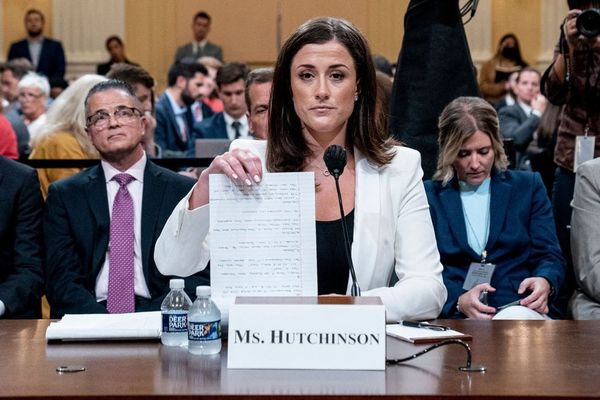
To understand what is actually happening in these votes, it helps to understand what they are not. They are not antiwar gestures from a Senate suddenly moved by the humanitarian cost of the conflict — though that cost, documented in detail by a UN Human Rights investigation into a school strike that killed 168 children, is real and severe. They are not symbolic protests from members who have already lost. They are procedural assertions of a constitutional principle: that Congress, not the executive, holds the power to authorize war. The War Powers Resolution of 1973 was passed precisely to prevent presidents from conducting open-ended military campaigns without legislative sanction. Every one of these seven votes is a Senate minority saying, in procedural form, that the law still applies.
The administration has taken the opposite position. As Tinsel News has reported, the White House has claimed it does not need congressional authorization to prosecute the Iran war — an assertion that stretches executive power beyond any precedent the post-9/11 AUMF era established. That claim, repeated across seven votes, has not been tested in court in a way that has produced binding limits. The war continues. The bombs continue. The votes continue to fail — and to get closer.
The accountability question is specific: which Republican senators voted for the resolution, and what are their stated reasons? The source material does not name them. But the pattern is legible even without the names. Republican defections on war powers votes follow a predictable logic — constituent economic pressure from gas prices that have climbed past five dollars in multiple states, military families asking questions without answers, and the absence of any coherent exit strategy from an administration that has not articulated one publicly. Senators from states where the economic pain is most acute are the most exposed. The defections are not ideological. They are electoral.
This is the power and money lens the vote totals obscure. The war has cost, by one congressional estimate, at least twelve billion dollars without a cent formally authorized by Congress. The Pentagon has drawn on discretionary funds, emergency authorities, and transfer mechanisms that were never designed to finance a sustained air campaign against a nation-state. The senators voting for the war powers resolution are not simply making a constitutional argument — they are also objecting to the financial architecture of a war being funded outside the normal appropriations process, which means outside their formal oversight role.
The War Powers Resolution of 1973 requires the president to notify Congress within 48 hours of committing U.S. forces to armed conflict and limits unauthorized deployments to 60 days. A concurrent resolution passed by both chambers — which cannot be vetoed — can require withdrawal. The Senate resolutions on Iran invoke this authority. They have failed seven times. No president since the law's passage has fully accepted its constitutionality, and no Congress has successfully enforced it against a sitting president conducting active military operations.
That structural evasion is the systemic pattern this vote belongs to. The War Powers Resolution has been tested, and found wanting, in Lebanon in 1982, in Kosovo in 1999, in Libya in 2011. Each time, the executive branch found procedural workarounds. Each time, Congress voted, fell short, and the war continued. The Iran war is not an aberration in this history — it is its culmination. The difference is scale and duration. At seven votes and counting, the Senate's repeated attempts represent the most sustained legislative resistance to an unauthorized war in the post-Vietnam era. That resistance keeps losing. It also keeps growing.
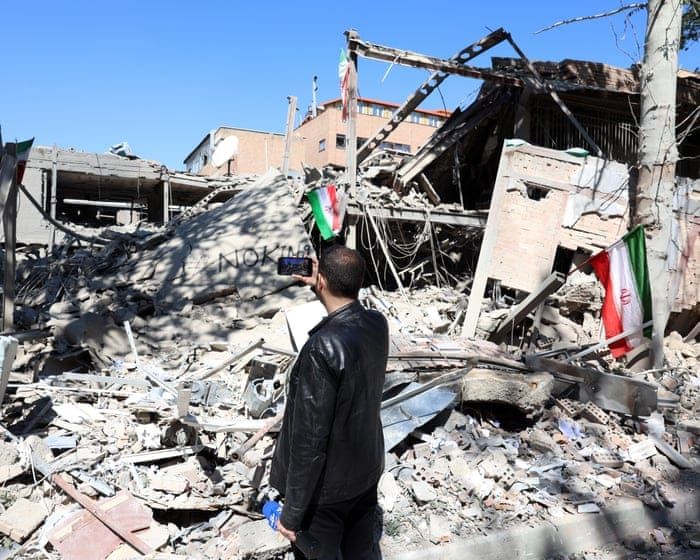
The human cost of the constitutional stalemate is not abstract. Iranian civilians are bearing the direct cost of a military campaign that their government did not invite and that the U.S. Congress never formally debated. Reporting from inside Iran documents economic devastation and civilian casualties accumulating in communities that have no voice in the Senate chamber where these votes are cast and lost. The war powers debate in Washington is, at its core, a procedural argument about institutional authority. But the people most affected by the outcome of that argument are not American senators. They are Iranian civilians whose suffering is not represented in a 49-to-50 vote count.
The global dimension of this vote also matters. While the Senate was failing, by one vote, to assert constitutional authority over the war, the president was touching down in Beijing for meetings with Chinese leadership — greeted by Vice President Han Zheng and U.S. Ambassador David Perdue, according to The Guardian US. The juxtaposition is not coincidental. An administration conducting an unauthorized war at home — unauthorized in the constitutional sense — is simultaneously conducting high-stakes diplomacy abroad. China has watched each of these seven votes. Beijing has studied the gap between American executive ambition and legislative capacity, and has drawn its own conclusions about the durability of U.S. commitments.
The accountability gap runs in both directions. The senators who continue to vote against the war powers resolution — the fifty who have held the line for the administration across seven votes — have not been asked, in any public forum with binding consequences, to explain why they believe the executive branch may conduct an open-ended war without congressional authorization. Their votes are recorded. Their reasoning is largely private. The constitutional theory they are implicitly endorsing — that the president may wage war indefinitely on executive authority alone — has no limiting principle. If it holds for Iran, it holds for the next conflict, and the one after that.
The war powers resolution will almost certainly come to a vote again. The margin will almost certainly narrow further. At some point — no one can say when — the arithmetic will flip. A one-vote majority is not a mandate. It is a warning.
Seven votes in, the Senate's war powers resolutions have not ended the war. They have done something more durable: they have established, in the public record, that a bipartisan coalition exists that believes this war is constitutionally illegitimate. That coalition is not yet a majority. But it is, vote by vote, becoming one. When it crosses the threshold, the administration will face a choice it has so far avoided: comply with a congressional directive to end the war, or openly defy it. That is the constitutional crisis these votes have been building toward. The next vote will be one closer to it.