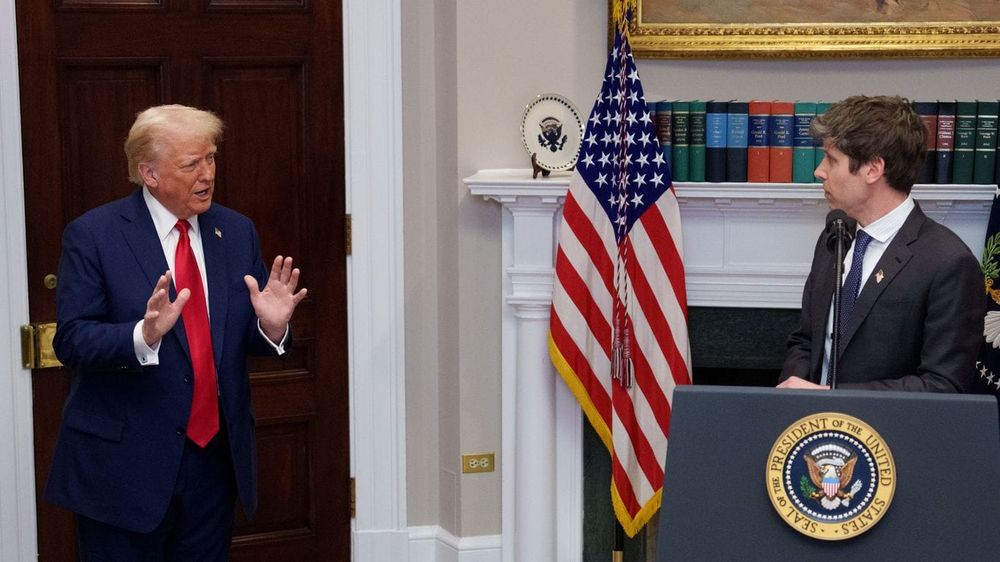
The White House is preparing to release an executive order on AI safety and cybersecurity that would require frontier AI developers to share their most powerful models with the federal government at least 90 days before public release — and also grant early access to certain critical infrastructure providers, sources familiar with the matter told Axios. The order is expected as soon as this week.
The framework is described as voluntary. That word is doing enormous work here.
A voluntary arrangement in which the country's most powerful AI systems flow directly to national security and civilian agencies — with no independent safety review, no external auditor, no civil society oversight — is not a safety policy. It is a procurement pipeline with a press release attached. The companies that build these systems would be sharing them not with the public, not with independent researchers, not with the international scientific community, but with the government agencies that are already their largest prospective customers.
The executive order has at least two sections: a cybersecurity component aimed at securing the Pentagon, national security agencies, hospitals, and banks; and a "covered frontier models" component that would establish a multi-layer government review process and a voluntary framework for AI labs to share models with the government 90 days before public release. It is not yet clear which agencies would have access or what they could do with early model access.
The administration's stated rationale is reactive: Anthropic's Mythos model and OpenAI's GPT-5.5-Cyber spooked government officials with their ability to find and exploit software vulnerabilities at what Axios describes as "unprecedented speed." That alarm is legitimate. Cyber-capable AI models that can autonomously discover and exploit software vulnerabilities represent a genuine national security threat — one that the previous administration's AI governance frameworks were not built to address.
But the response the White House has chosen is telling. The answer to AI systems that could be weaponized is not to put them in the hands of fewer, more powerful institutions under less scrutiny. It is to build the kind of independent, transparent evaluation infrastructure that most AI safety researchers have been asking for since before these models existed.
What the order describes is the opposite. It routes pre-release models through national security agencies and critical infrastructure providers — entities with every incentive to use these systems and no structural mandate to ask whether they should. The administration's own internal process, which Axios describes as "convoluted" and reflective of how "conflicted the administration is on the matter," has produced a framework that simultaneously claims to take AI risk seriously and strips out every mechanism that would make that claim credible.
The cybersecurity provisions in the order are, on their own terms, more defensible. Securing the Pentagon, shoring up hospital and banking infrastructure, encouraging threat-sharing between the AI industry and government — these are standard hardening measures that the Trump administration had, until recently, been actively dismantling. The administration significantly cut funding and staffing at the Cybersecurity and Infrastructure Security Agency, the primary federal body responsible for exactly the kind of critical infrastructure protection the order now claims to prioritize. A White House that gutted its own cybersecurity apparatus is now asking the public to trust that it will responsibly manage early access to the most capable AI systems ever built.
The structural problem runs deeper than inconsistency. When AI companies share pre-release models with government agencies under a voluntary framework, several things happen simultaneously. The companies gain a privileged relationship with the agencies most likely to become their customers — and, as Tinsel News has previously reported, the White House's interest in Anthropic's Mythos model has already blurred the line between safety evaluation and weapons procurement. The agencies gain early access to commercial capabilities they can integrate into national security operations before public or congressional scrutiny. And the safety evaluation process — if it exists at all — happens inside the government, behind classification walls, without the independent researchers, civil society groups, or international experts who might actually catch the problems.
This is not a hypothetical concern. The DOJ's recent intervention against state-level AI regulation — siding with Elon Musk's xAI against Colorado's oversight law — established a clear pattern: the federal government is actively working to preempt state and local AI governance while building a federal framework that routes control through executive agencies rather than independent bodies. The executive order, as described, fits that pattern exactly. It does not create a safety architecture. It creates a federal chokepoint through which the most powerful AI systems in existence will flow directly to the agencies with the most interest in deploying them.
The voluntary nature of the framework is its most consequential feature, and the least scrutinized. Voluntary frameworks in technology governance have a consistent track record: they provide regulatory cover without regulatory constraint. Companies that participate can point to their cooperation as evidence of good faith. Companies that do not participate face no consequence. The government gets early access to models from cooperative labs while having no visibility into models developed by labs that opt out — which, in a competitive market, creates a perverse incentive to develop the most dangerous capabilities outside the framework entirely.
The administration's internal conflict over the order — which Axios describes as the product of genuine disagreement between factions pushing for harder restrictions and those resisting any friction on AI development — has produced a document that satisfies neither position. Hardline voices who wanted mandatory evaluation requirements did not get them. Industry voices who wanted no interference got a voluntary framework that still routes their pre-release models through government hands. The result is an order that gestures at safety while structurally serving the interests of the agencies and companies with the most to gain from unmediated access to frontier AI.
The people most affected by this arrangement are not in Washington. Frontier AI systems capable of autonomously exploiting software vulnerabilities do not respect national borders. The critical infrastructure that these models could compromise — power grids, financial systems, hospital networks — is global. The decision to evaluate these systems inside U.S. national security agencies, rather than through international bodies or independent researchers with global accountability, means the rest of the world has no seat at the table for decisions that could affect their infrastructure and their lives. The AI regulation tracker maintained by Tinsel News shows that the EU, UK, and several Asian governments have moved toward mandatory third-party evaluation requirements — frameworks this executive order implicitly rejects in favor of government self-review.
A White House official told Axios: "Any policy announcement will come directly from the President. Discussion about potential executive orders is speculation." That is a non-answer designed to preserve deniability while the order is finalized. What is not speculative is the framework's architecture, as described by multiple sources: government agencies first, independent review never, voluntary compliance for the companies that build the systems, and no external accountability mechanism for what happens once those systems are inside the national security apparatus.
The 90-day window before public release is framed as a safety measure. It functions more precisely as a head start — for the agencies that will deploy these systems, for the contractors that will integrate them, and for a procurement relationship between the federal government and the AI industry that is being built, piece by piece, outside the view of the public that will ultimately live with the consequences.