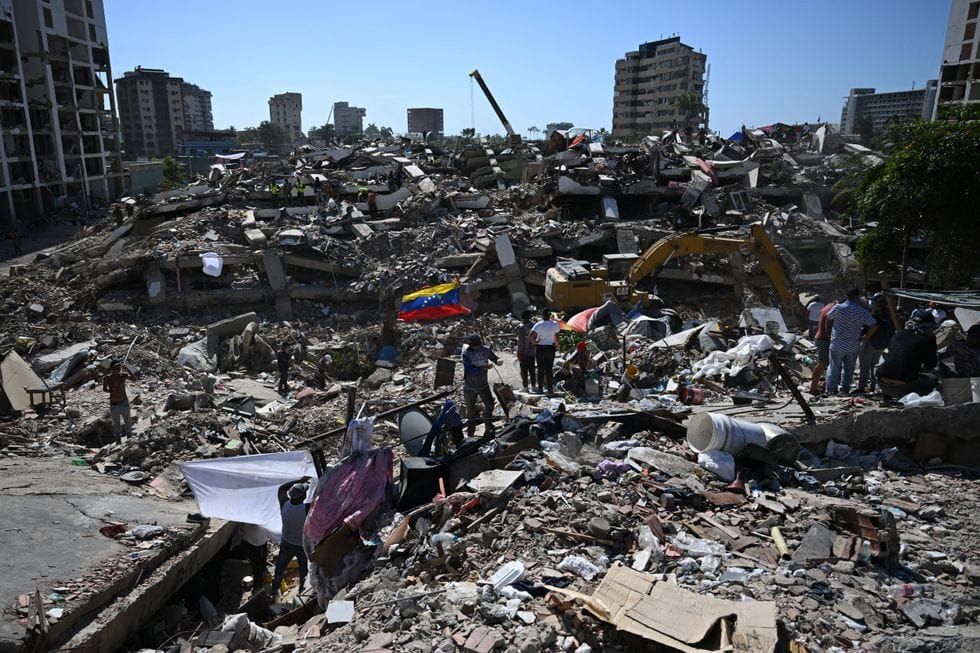
The United States has seized at least $8 billion in Venezuelan oil wealth this year, according to reporting by The New York Times cited in Common Dreams. Earlier this year, the Trump administration sent troops into Venezuela to abduct President Nicolás Maduro, then took operational control of the country's nationalized oil industry. Now, after twin earthquakes killed 3,535 people, injured 16,740 more, and left tens of thousands missing, the same administration has pledged $300 million in relief aid — roughly 3.75 cents for every dollar it extracted.
That arithmetic is the story. Not the pledge. Not the waiver. The arithmetic.
On July 8, more than 100 economists and scholars — including Jeffrey Sachs, James Galbraith, Jayati Ghosh, Jason Hickel, Ann Pettifor, Robert Wade, and Isabella Weber — issued a joint letter, shared with Common Dreams by the Center for Economic and Policy Research, calling for "immediate action to unfetter Venezuela's humanitarian response and reconstruction from ongoing economic and financial sanctions, asset freezes, and onerous debt burdens." The letter followed a similar demand sent to President Donald Trump and Secretary of State Marco Rubio the previous week by CEPR, Just Foreign Policy, the Latin America Working Group, Peace Action, the Quincy Institute for Responsible Statecraft, and a dozen other organizations.
The two earthquakes — both 7.2 and 7.5 magnitude, centered in the state of Yaracuy — struck on June 24. The UN estimates total losses at $37 billion, or 32 percent of Venezuela's gross domestic product. A country that cannot access its own oil revenues, cannot borrow internationally, and cannot import reconstruction materials without triggering secondary sanctions is being asked to absorb losses equal to nearly a third of its entire economy. The $300 million U.S. pledge, paired with a limited sanctions waiver for earthquake relief activities, does not change that calculus in any meaningful way.
George Lopez, professor emeritus of peace studies at the University of Notre Dame, and Francisco Rodríguez, a Venezuelan economist and senior research fellow at CEPR, wrote in a July 7 piece for Just Security that the U.S. measures are "far from enough." Their argument is precise: the United States pledged $300 million to relief agencies while the UN pegs the reconstruction need at $37 billion — a gap of more than 99 percent. Lopez and Rodríguez called on Washington to "spearhead a major reconstruction effort and lift all remaining sanctions on the Venezuelan economy."
The economists' letter makes a point that tends to get lost in coverage focused on Venezuela's government: whatever one's position on Nicolás Maduro, sanctions do not fall on governments. They fall on people. The signatories argued that the current set of coercive economic measures is "an indiscriminate instrument" — one that damaged Venezuela's infrastructure and economy for years before the first tremor hit on June 24. The earthquakes did not create a humanitarian crisis from scratch. They dropped onto one already in progress.
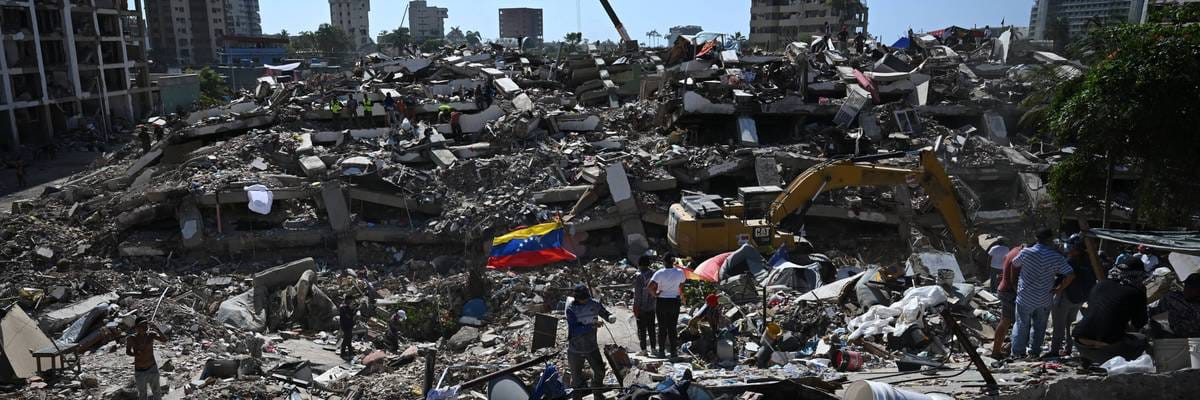
Venezuela has faced U.S. sanctions for decades, with significant escalation under both Trump administrations. In 2026, the U.S. sent troops to Venezuela, moved to abduct President Maduro, and took control of the country's nationalized oil industry. The New York Times reported the U.S. has seized at least $8 billion in Venezuelan oil revenues this year alone — before the earthquakes struck in June.
This is the structural argument that 100 economists are making, and it is one the source coverage does not fully develop: the sanctions regime has functionally pre-damaged Venezuela's capacity to respond to any disaster. Roads, hospitals, water systems, and emergency services require sustained public investment. Sustained public investment requires fiscal space. Fiscal space requires access to the country's own revenues. The United States has spent years ensuring Venezuela lacks that access — and then responded to the resulting catastrophe with $300 million and a temporary waiver.
The power and money dimension here is not incidental. Washington moved aggressively on Venezuelan oil this year — troops deployed, an elected government's industry seized, billions extracted — and then positioned itself as a humanitarian actor when the disaster arrived. The $300 million pledge is not generosity. It is a fraction of what was taken, offered in circumstances that the taking helped create. That framing does not appear in State Department press releases, and it rarely appears in wire coverage of the relief effort.
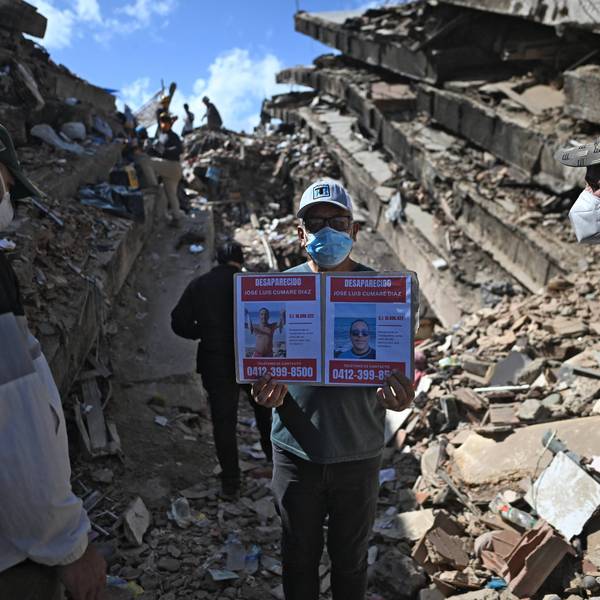
Consider what the limited sanctions waiver actually does. It permits certain relief activities to proceed without triggering U.S. secondary sanctions. It does not release frozen Venezuelan assets. It does not restore access to international capital markets. It does not permit the Venezuelan government to spend its own oil revenues on reconstruction. It creates a narrow channel for NGOs and international agencies to operate — while leaving in place the financial architecture that prevents Venezuela from mounting an independent reconstruction effort at any meaningful scale.
The economists and scholars who signed the letter represent a serious cross-section of heterodox and mainstream economic thought. Sachs and Galbraith are not marginal voices. Their argument — that coercive economic measures must be suspended for humanitarian reconstruction to succeed — has a documented evidentiary basis in prior disaster contexts. Sanctions regimes that persist through reconstruction phases consistently slow recovery, disproportionately harm civilian populations, and concentrate economic damage in the communities least responsible for the political conditions that triggered the sanctions in the first place.
American readers following this story through domestic political coverage will likely encounter it framed primarily as a question about the Maduro government: should the U.S. help a government it considers illegitimate? That framing is analytically backwards. The 3,535 dead in Yaracuy did not vote for or against Nicolás Maduro. The 16,740 injured did not design Venezuela's political system. The tens of thousands still missing were not consulted about asset freezes. The question is not whether Washington approves of Caracas. The question is whether a policy designed to punish a government is permitted to compound a natural disaster's death toll without consequence or accountability.
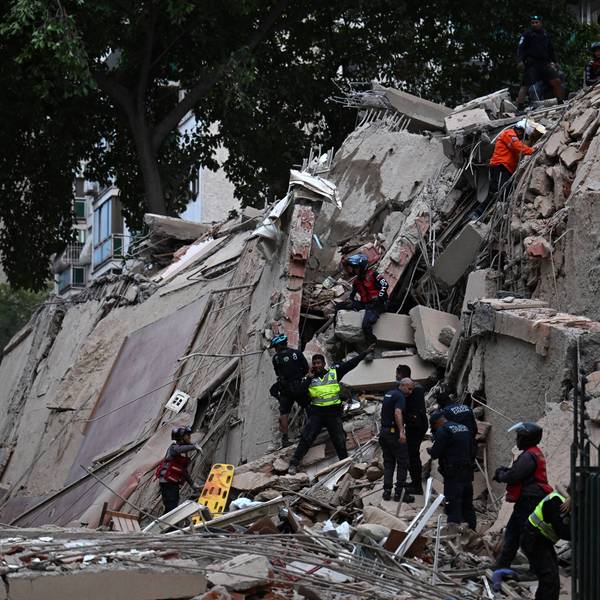
This is also a story about precedent. As Tinsel News has documented in coverage of Cuba's fuel crisis, and in analysis of the Iran war's civilian costs, the pattern of U.S. coercive economic policy in Latin America and the Middle East is consistent: sanctions are designed to be painful to civilian populations on the theory that civilian pain produces political change. The theory has a poor empirical record. The pain is real.
Lopez and Rodríguez's piece for Just Security frames the reconstruction argument as a strategic opportunity as much as a humanitarian obligation — a framing designed to reach an administration that responds to interests more than to rights claims. But the underlying moral architecture of the economists' letter is simpler: a country whose oil wealth has been seized, whose access to international finance has been cut, and whose infrastructure was already degraded by years of sanctions cannot rebuild after losing 32 percent of its GDP to two earthquakes in a single day. The United States has both the responsibility and the capacity to change that. The $300 million pledge, under current conditions, is not a humanitarian response. It is an accounting entry.
The reconstruction window for disaster zones is narrow. Decisions made in the first months after an earthquake — about temporary housing, water infrastructure, hospital capacity, supply chains — shape recovery trajectories for years. Every week the sanctions architecture remains intact is a week Venezuela cannot access the financial resources it needs to make those decisions. By the time a more comprehensive policy response materializes, if it does, the compounding damage will already have been done. That is not a projection. It is how disaster recovery works.