There is a template for how corporate money captures a political party. A well-funded industry identifies its regulatory threat — in this case, the Democratic wing most likely to impose meaningful AI oversight — and builds a financial infrastructure to neutralize it. The money flows not as bribes but as campaign support, bundled donations, and super PAC expenditures. It arrives before a candidate has said a word about the policy in question. By the time the vote comes, the legislator is already shaped.
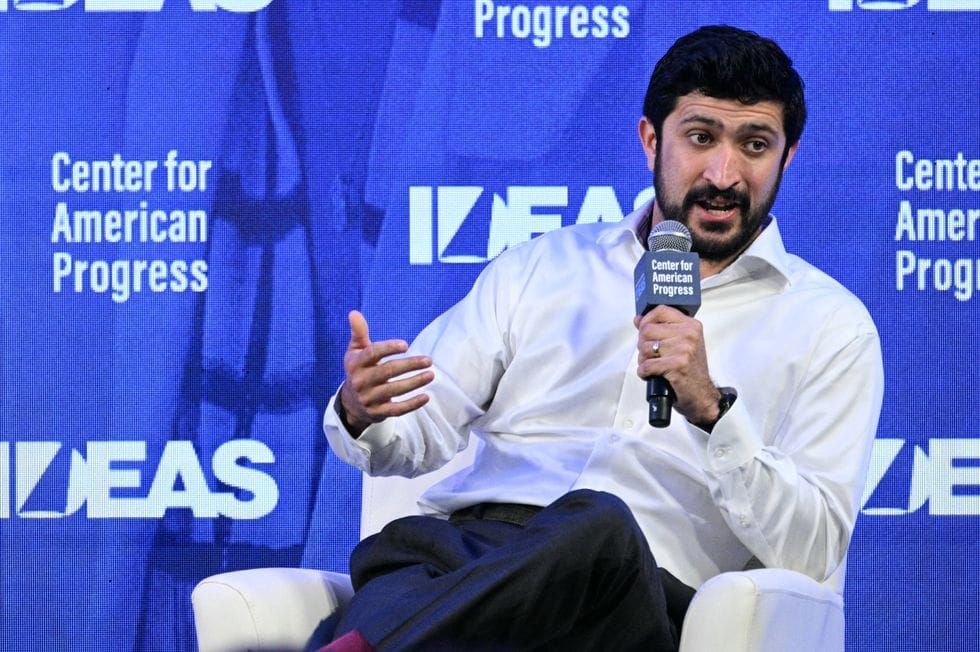
Congressional Progressive Caucus Chair Greg Casar thinks Democrats are watching this happen in real time — and he wants his party to say so out loud. In a Thursday interview cited by Common Dreams, the Texas congressman named Leading the Future (LTF), a pro-industry super PAC, as the vehicle for what he called an attempted purchase of Democratic silence on AI regulation. He drew a direct comparison to the American Israel Public Affairs Committee — the foreign policy lobby whose super PAC has spent tens of millions targeting Democratic candidates critical of Israel's conduct in Gaza. Casar predicted LTF and its affiliated donors would become "as toxic as AIPAC is today."
That comparison is doing a lot of work. AIPAC's intervention in Democratic primaries has become a defining fault line in the party — a test of whether a candidate's positions on foreign policy can be effectively overridden by outside money before voters weigh in. Casar is arguing that AI industry money is building the same infrastructure, with the same logic: identify the candidates who threaten your interests, fund their opponents, and call it political participation.
Leading the Future (LTF) is a pro-AI-industry super PAC that, according to AI Money Watch — a project launched in June by the progressive advocacy group Demand Progress — entered 2026 with $70 million cash on hand. It operates through affiliated super PACs (Think Big PAC in New York, American Mission PAC in Texas) and a dark-money 501(c)(4) arm called Build American AI. Its spending crosses party lines: top recipients include both Democrats and at least one Georgia Republican.
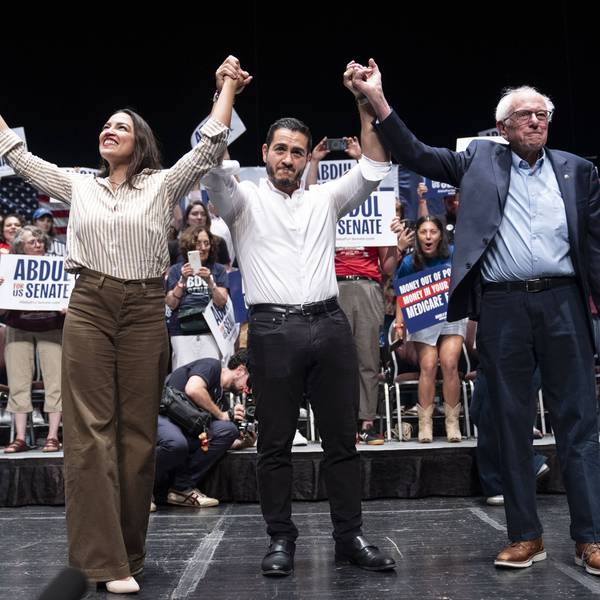
The spending record makes Casar's concern concrete. According to AI Money Watch, LTF poured over $1 million each into supporting Jesse Jackson Jr. in Illinois's 2nd District — who lost his primary — and AIPAC-backed Melissa Bean, who defeated a progressive in the state's 8th District. The group spent over $1 million each on Ben McAdams, a former Democratic congressman running in Utah's 1st District, and Congressman Ritchie Torres of New York, who carries a formal LTF endorsement. Rounding out the top five is James Kingston, a Georgia Republican who won his primary, with nearly $960,000 in LTF support.
The pattern in those spending choices is not subtle. LTF is not investing in candidates who have called for stronger AI accountability. It is not funding the members of Congress who have raised concerns about mass surveillance, algorithmic hiring discrimination, or the displacement of workers. Its money flows toward candidates who are, at minimum, unlikely to make the industry's life difficult — and in some cases toward candidates running explicitly against the progressive wing of the party that would.
This is where the AIPAC analogy holds — and also where it gets complicated. AIPAC's power in Democratic primaries rests on a specific mechanism: the gap between what Democratic voters believe and what Democratic donors reward. Candidates who publicly distance themselves from AIPAC's positions still take money from its network, because the financial infrastructure is too large to ignore. Casar's argument is that AI industry money is building the same gap — between a Democratic electorate that overwhelmingly wants AI regulated and a donor class that does not.
The public opinion data is not ambiguous. A Gallup survey from September 2024 found that 80 percent of U.S. adults support prioritizing AI safety and data security rules even if it means slower AI development. A March poll found that 76 percent of respondents expressed concern about AI enabling unprecedented government surveillance. A June 2025 poll conducted by Justice Research Group for Working Families Power found that 73 percent of working-class voters worry AI will lead to job losses, 62 percent fear the economic disruption it could cause, and 85 percent support large-scale retraining and apprenticeship programs for displaced workers.
Those numbers describe a political opportunity, not a liability. Casar made exactly this argument to MS NOW: "If Democrats clearly stand with the 75% plus of Americans that want sensible AI regulations to prevent mass unemployment, mass surveillance, or mass national security risks, I think we should win over the voters... Even if it means we don't win over all the money."
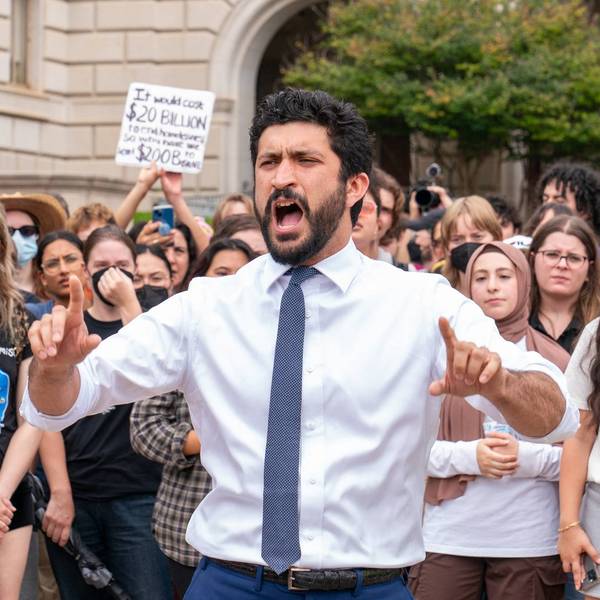
The "even if" clause is the honest part. Taking that position costs something. LTF has $70 million to spend. That money will not go to candidates who vote to regulate the industry funding it. The question Casar is really asking his party is whether it wants to be the party of working-class voters worried about AI-driven job displacement — or the party of the AI billionaires who need those workers not to organize against them.
What makes this moment distinct from earlier cycles of tech-money-in-politics is the scale and the specificity. Tech industry money has flowed into politics for decades. But LTF is not funding general pro-innovation candidates. It is funding candidates in specific primaries, against specific opponents, in a way that tracks closely with the regulatory debate. Silicon Valley spent tens of millions to block California regulation through similar mechanisms earlier this cycle. The strategy is consistent: spend early, spend in primaries, and make the regulatory threat expensive to pursue before it ever reaches a floor vote.
Casar's bill to protect workers from AI-related unemployment — unveiled alongside his public call to reject LTF money — adds a second dimension to what he is doing. He is not just naming the corrupting influence; he is trying to give his party something to stand for instead. The politics of AI regulation are not inherently complicated. They are made complicated by the money that makes complication useful.
The AIPAC comparison will generate pushback, as it always does. But the structural argument Casar is making does not depend on the analogy holding in every detail. It depends on a simpler observation: when a single well-funded PAC can spend $70 million in congressional primaries to shape which Democrats reach Congress, the candidates who arrive are not a random sample of Democratic opinion. They are a filtered sample. And what gets filtered out, consistently, is the part of the party that the industry writing the checks finds inconvenient. The same dynamic has played out with crypto industry money — another sector where donor dependency and regulatory inaction have moved in lockstep.
If Democrats accept LTF support at scale and lose the ability to credibly campaign on AI worker protections or surveillance accountability, they will have traded a winning political argument for a losing one — and paid for the privilege. The working-class voters most worried about AI job displacement are not going to be won back with messaging. They will notice, as they have noticed before, when the party that claims to represent them takes money from the industry that is replacing them.