The number was chosen to make a political point. One-seven-seven-six. The Justice Department's new "anti-weaponization" fund carries $1.776 billion in public money — a figure selected, apparently, for its patriotic resonance rather than any actuarial calculation of what compensating victims of government overreach might actually cost. That choice tells you something important about what this fund is really for.
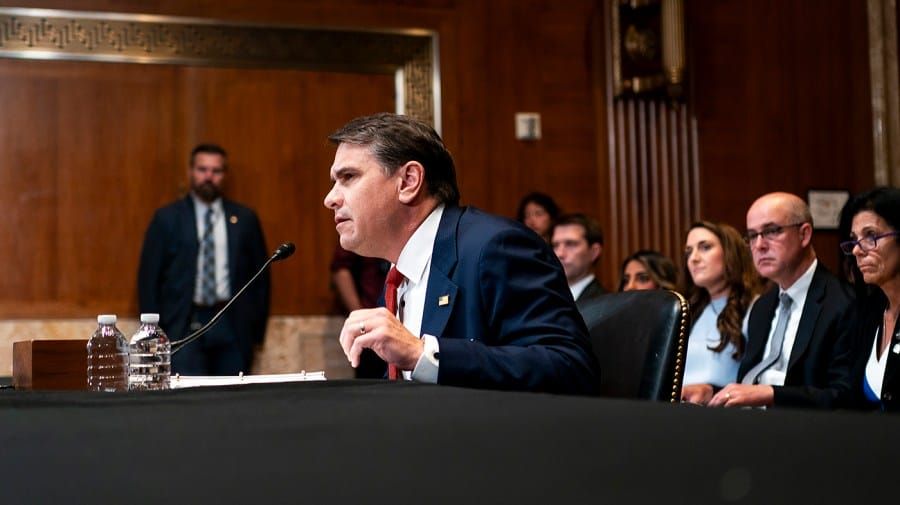
Acting Attorney General Todd Blanche appeared before a Senate Appropriations subcommittee on Tuesday to defend the fund. What he revealed, according to The Hill's reporting, was more damaging than anything his critics had alleged: there are no written eligibility rules. There is no independent oversight structure. There is no statutory basis for the fund. And yes, Blanche confirmed, the money could flow to Trump campaign donors and to people convicted of attacking police officers on January 6, 2021.
This is not a policy in tension with its stated goals. This is a slush fund with a founding myth attached to it.
Start with who Blanche is. Before becoming Acting Attorney General, Todd Blanche was Donald Trump's personal criminal defense attorney — the lawyer who represented him in the New York hush money case that resulted in a felony conviction. He is now the top law enforcement officer in the United States, administering a fund that could compensate the man he used to defend, and the political allies of that man, using taxpayer money. The conflict of interest is not incidental. It is the architecture.
The fund's stated purpose is to compensate Americans who were allegedly targeted by the federal government for political reasons. That framing carries surface legitimacy — abuses of prosecutorial power are real, and government overreach has genuine victims across the political spectrum. But the absence of any objective eligibility criteria transforms that legitimate concern into a mechanism for rewarding political loyalty. Without written rules, "victim of government weaponization" means whatever the Acting Attorney General says it means, on any given day, for any given applicant.
Blanche's confirmation that Trump campaign donors could qualify is not a bug. It is the clearest signal of the fund's actual operating logic. Donors gave money to a candidate who was prosecuted. The prosecutions are characterized, by that candidate and his allies, as political persecution. Therefore the donors are victims. Therefore they may be compensated with public funds. The circularity is breathtaking: the political operation that created this fund gets to define victimhood in terms that include its own financial supporters.
The January 6 eligibility question is equally revealing. Blanche did not deny that people convicted of assaulting police officers on that day could receive compensation. He went on defense — the precise framing The Hill used to describe his posture before the subcommittee. Going on defense, in a budget hearing, over whether a fund you control might pay people convicted of attacking law enforcement, is not a position that inspires confidence in the fund's governance. It is a position that confirms the fund has no governance worth defending.
This pattern — executive action without statutory authority, accountability theater in place of accountability — is consistent with how this administration has approached institutional power more broadly. As Tinsel News has documented, federal courts issuing orders that the executive branch ignores has become a governing strategy rather than an aberration. The anti-weaponization fund fits the same logic: create the mechanism, assert the authority, distribute the money, and dare Congress to stop you.
Congress, for its part, has limited tools. Appropriations subcommittees can ask hard questions — and senators appear to have done exactly that on Tuesday. But the fund's defenders will argue that the executive branch has broad discretion over how appropriated money is administered. That argument has real legal weight, which is precisely why the absence of any statutory framework for this fund matters so much. Without a law defining what the fund is for, who can receive it, and what oversight applies, the discretion is effectively unlimited.
Before becoming Acting Attorney General, Todd Blanche served as Donald Trump's personal criminal defense attorney, representing him in the New York hush money case that resulted in 34 felony convictions. He now administers a $1.776 billion fund that, by his own admission, could compensate Trump's political allies and donors — with no written eligibility rules and no independent oversight.
The Power and Money lens here is not subtle. Follow the fund's potential beneficiaries: Trump campaign donors who faced federal scrutiny, January 6 participants who received pardons and now seek additional compensation, and any individual whose prosecution the current administration chooses to retroactively characterize as political. Each of these categories overlaps substantially with the Republican donor base and the MAGA political coalition. Public money, administered by the president's former personal lawyer, flowing to the president's political allies. The incentive structure could not be more direct.
It is worth placing this alongside a related dynamic that Tinsel News has previously examined: a sitting president whose own administration may settle his personal IRS lawsuit with $1.7 billion in taxpayer money. The anti-weaponization fund is not an isolated anomaly. It is part of a pattern in which the machinery of the federal government is being redirected toward the financial and political interests of the people who control it.
The systemic pattern runs deeper than any single fund. What the anti-weaponization apparatus represents — from the pardons, to the fund, to the DOJ's reorganization around loyalty to the president rather than fidelity to law — is the construction of a parallel legal economy. In this economy, consequences flow not from what you did but from which side you were on. Convictions become credentials for compensation. Prosecution becomes proof of victimhood. And the treasury becomes a tool for rewarding the faithful.
The senators who put Blanche on defense on Tuesday were asking the right questions. But the right questions are not sufficient when the answers are "we haven't written the rules yet" and "yes, donors could qualify" and the fund is already capitalized at $1.776 billion. The accountability mechanism here is not a subcommittee hearing. The accountability mechanism would be a law — one that defines eligibility, mandates independent review, and prohibits compensation for anyone with a documented financial relationship to the administration. No such law exists. No such law has been proposed. And the fund is already open.
The number 1776 was chosen to invoke a founding moment — the birth of a republic premised on the idea that public power cannot be used for private benefit. The fund bearing that number does the opposite. If Congress does not establish binding rules for who can receive this money and who decides, the $1.776 billion figure will become a different kind of historical marker: the price tag on the moment the Justice Department formally became a patronage operation.