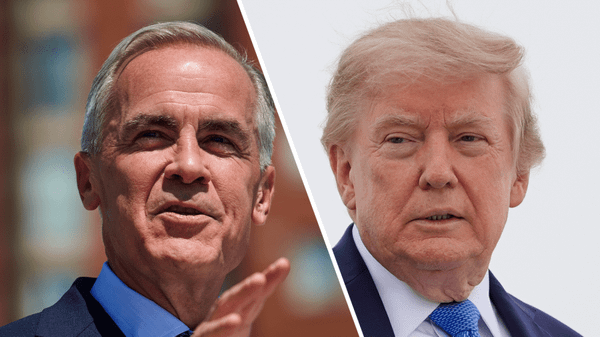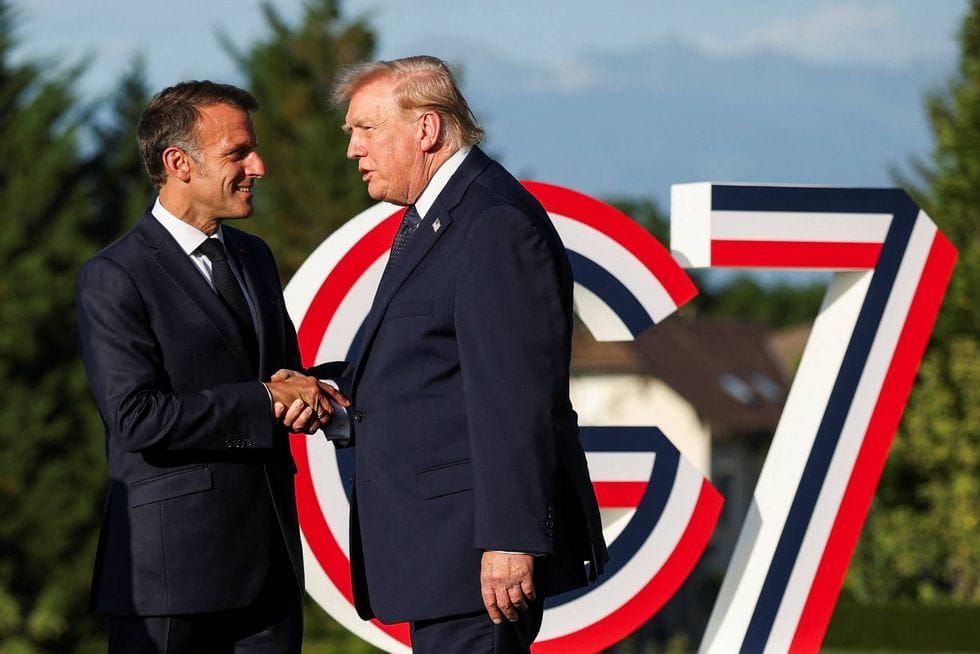
Between March 1 and May 18, 41 energy billionaires in G7 countries collectively grew their wealth by $23.5 billion. That is $300 million per day, according to an Oxfam International analysis of Forbes' Real-Time Billionaire List released Monday, as G7 leaders convened in France. During the same period, a United Nations Development Program projection found that the war would push an additional 32 million people into poverty by year's end.
Those two numbers belong in the same sentence. They are not coincidental. They are the same transaction, denominated differently.
The standard framing of wartime energy profits treats them as unfortunate side effects — markets responding to disruption, price mechanisms doing what price mechanisms do. That framing is incomplete in a way that matters. The oil shock resulting from the US-Israeli war against Iran did not randomly redistribute wealth. It redistributed wealth upward, from fuel buyers to fuel sellers, from workers and governments in import-dependent economies to shareholders of Chevron, Shell, BP, ConocoPhillips, Exxon, and TotalEnergies. The direction of that transfer is not accidental. It is the predictable output of a system designed to ensure that the people who own energy infrastructure profit when energy becomes scarce.
The Big Six oil companies — Chevron, Shell, BP, ConocoPhillips, Exxon, and TotalEnergies — are projected to grow their profits this year by 80 percent above the pre-war forecast, according to Oxfam. The average large G7 company in the same sample is projected to see 8 percent growth. That gap — 80 percent versus 8 percent — is the financial signature of a war that disrupted global oil supply. Energy billionaires grew their wealth by 9 percent between March and mid-May; those in oil and gas specifically became nearly 11 percent richer. The global billionaire average over the same period was 0.42 percent. These are not the returns of a diversified market. They are the returns of owning the one commodity that a war made indispensable overnight.
"Conflict devastates countries and costs countless lives, yet for some it is extraordinarily profitable," said Oxfam International's executive director Amitabh Behar in the report. "This is a brutal system that redistributes wealth upwards — from workers to shareholders, from the poorest to the richest, from those with the least power to those who already have far too much of it. While families are skipping meals and governments slash life-saving aid, we are witnessing a grotesque billionaire bonanza."
Oxfam is careful to note that billionaire wealth gains cannot be attributed solely to the war. Market conditions, existing contracts, and pre-war positioning all play roles. But the differential — the gap between energy sector returns and the rest of the economy — is war-specific. It is the premium that conflict commands when the commodity you own becomes a chokepoint.
Oxfam International released its report on June 15, 2026, as G7 leaders met in France. The analysis tracked wealth changes for billionaire owners of major energy companies in Canada, France, Germany, Italy, Japan, the US, and the UK using Forbes' Real-Time Billionaire List from March 1 through May 18. The Big Six oil companies named are Chevron, Shell, BP, ConocoPhillips, Exxon, and TotalEnergies.
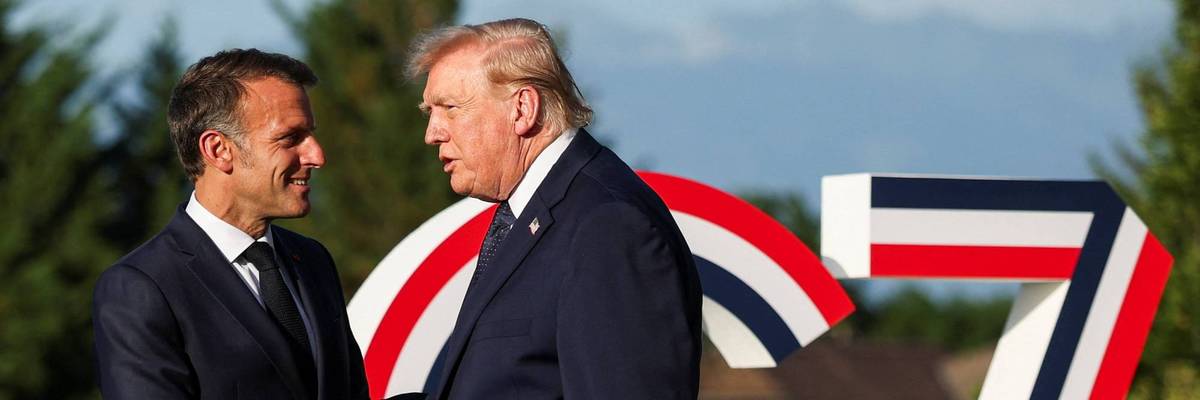
The argument that war profits are simply markets functioning normally obscures a more specific question: who decided this war would be fought, and what were their relationships to the industries that stood to benefit? That question does not have a clean answer in the public record. What it does have is a pattern. The same G7 governments whose energy billionaires gained $23.5 billion in 78 days have, per Oxfam, reduced aid to the poorest nations by $48 billion since 2020 — led by the United States under President Trump. Billionaire wealth globally has surged by nearly $10 trillion since 2020. The two trends are not unrelated. The fiscal space that might have funded global aid was occupied by the tax and deregulatory policies that inflated billionaire portfolios. The war accelerated an existing trajectory.
This is the argument the Oxfam report makes and the one that deserves to be pressed further: the Iran war did not create the conditions for this wealth transfer. It amplified them. The infrastructure for extracting profit from conflict — the ownership of energy assets, the financialization of commodity markets, the political relationships that insulate fossil fuel companies from accountability — was already in place. The war was the accelerant, not the source. As Tinsel News has previously reported, the blockade of the Strait of Hormuz functions as a market intervention that directly benefits energy exporters outside the conflict zone, and Russia has materially benefited from the oil price surge while facing reduced sanctions pressure.
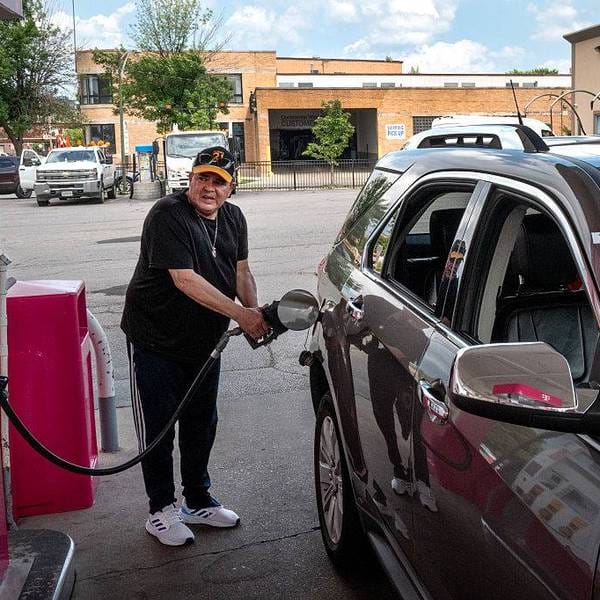
The human impact of the oil shock is not evenly distributed across the globe. Fuel price spikes ripple through food systems — transportation costs, fertilizer inputs, cold chain logistics — in ways that fall hardest on low-income households in import-dependent economies. The 32 million people the UNDP projects will be pushed into poverty are not abstract casualties. They are concentrated in countries that had no vote on whether this war would be fought, no seat at the G7 summit where it is being discussed, and no ownership stake in the energy companies collecting the premium their suffering generates. The war was launched in the name of American and Israeli security interests. The bill is being paid in Nairobi, Karachi, Lagos, and Dhaka.
There is a structural argument embedded in these numbers that goes beyond any single conflict. Wars that disrupt energy supply have reliably transferred wealth to energy owners throughout the modern era. That predictability is not incidental — it is part of why energy infrastructure is so valuable to own, and why the political systems of fossil-fuel-producing nations have such durable incentives to remain entangled with military policy. When conflict is reliably profitable for a specific class of asset holders, the question of who benefits from war and who decides to wage it cannot be treated as separate inquiries. Banks poured a record $906 billion into fossil fuel financing last year even as net-zero pledges collapsed — capital allocation decisions made by institutions that also hold the debt of the governments prosecuting this war.
None of this is to say that the decision to go to war was made because Chevron shareholders would benefit. The causal chain is murkier and more diffuse than that. What is documentable is the outcome: 41 people got $23.5 billion richer. Thirty-two million people got poorer. The 41 people own energy infrastructure in the world's wealthiest countries. The 32 million people live primarily in the world's poorest ones. And the governments of those wealthy countries just met in France to discuss the global economy without, as far as the public record shows, putting either of those numbers on the agenda together.
A ceasefire, if it holds, will close the war premium on oil. Billionaire energy wealth will stop growing at 11 percent and revert toward the 0.42 percent mean. The 32 million people pushed into poverty will not revert. Poverty is not a price spike. It compounds. Children pulled from school to contribute household income do not return when the fuel price drops. Families that sold assets to cover food costs during an inflation shock do not recover those assets when the shock passes. The asymmetry between how quickly wealth accumulates at the top of a conflict-driven oil shock and how slowly its damage heals at the bottom is not a market inefficiency. It is the market working exactly as designed — for the people who designed it.
The G7 summit in France is the right place to ask which of those two numbers its member governments consider their responsibility. Their energy billionaires already know the answer. The question is whether anyone in the room will say it out loud — and whether, with a ceasefire potentially closing this particular window of extraction, the political will to change the underlying architecture will outlast the immediate outrage. History, and the decade-long trend in billionaire wealth accumulation, suggests it will not.