For decades, foreign journalists working in the United States operated under a visa system that matched the reality of their work: reporting doesn't run on a fixed schedule, sources take months to cultivate, and investigations don't conclude on government timelines. The "duration of status" framework acknowledged this. It let credentialed journalists stay as long as their assignment required. The Trump administration has now abolished it.
According to The Hill, the Department of Homeland Security announced Thursday that it is replacing the longstanding system with fixed-term visa stays of 240 days for most foreign journalists, and an even shorter window for reporters from China. The stated rationale is national security. The actual mechanism is bureaucratic pressure applied selectively to reporters whose governments Washington considers adversaries.
The policy restricts press freedom, but that is the obvious part. What matters is the structure of the rule. Its tiered treatment of journalists by national origin converts the visa system into an editorial enforcement tool. It does not ban coverage. It does not censor stories. It does something more durable: it makes sustained, independent journalism operationally impossible for a targeted class of reporters, while giving the government plausible deniability about why any individual journalist's visa was or wasn't renewed.
Under the previous "duration of status" framework, foreign journalists on I visa classifications could remain in the United States for the length of their assignment without fixed expiration dates. The system was designed to accommodate the unpredictable timelines of journalism. The new DHS rule replaces this with a hard cap of 240 days for most journalists, and imposes a shorter, separate limit on reporters from China specifically.
Consider what 240 days actually means for a working journalist. It is less than a full news cycle on a major investigation. It is not long enough to build the source networks that produce accountability reporting. It is barely enough time to cover a congressional session, let alone track how legislation translates into policy outcomes. A journalist who arrives in Washington in January and whose visa expires in late August will spend the last two months of that stay managing paperwork, not reporting. The chilling effect is not theoretical. It is baked into the math.
The tiered treatment of Chinese journalists is the policy's most explicit tell. By imposing a separate, stricter limit on reporters from a specific country, DHS is not applying a press freedom standard. It is applying a geopolitical one. The rule does not distinguish between state-controlled Chinese outlets and independent Chinese-language journalists. It does not distinguish between reporters covering trade policy and reporters covering technology or immigration. It treats national origin as the operative variable, which means it is not really a journalism policy at all. It is a foreign policy tool dressed in bureaucratic language.
This matters beyond the immediate effect on Chinese reporters. Once the principle is established that visa duration can be calibrated by the political relationship between Washington and a journalist's home government, the list of countries subject to shortened stays can expand without new legislation. Russia, Iran, Venezuela, Cuba: any government that the administration designates as adversarial becomes a potential trigger for the same treatment. The rule creates an infrastructure of press restriction that future administrations will inherit and that can be tightened administratively, without a single congressional vote.
The accountability question the administration is not being asked: who benefits from a press corps that turns over every eight months? Not the American public. Not the foreign publics whose journalists cover U.S. policy. The beneficiary of a rotating, perpetually unsettled foreign press corps is the government being covered. Reporters who are new to Washington, new to their beats, new to their sources, and anxious about whether their visa will be renewed are not reporters who are well-positioned to pursue long-term investigations into U.S. policy failures. They are reporters who are well-positioned to cover press conferences.
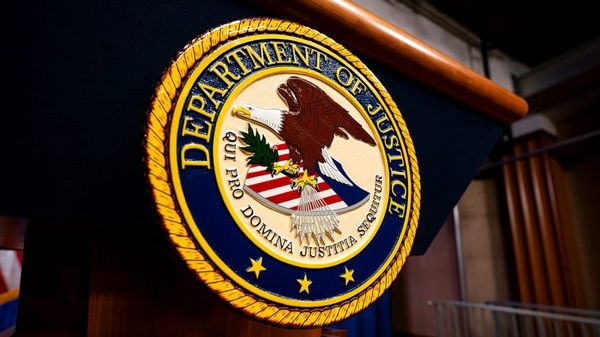
The individual policy decision fits a broader pattern. This administration has moved against press freedom through a series of mechanisms that do not, individually, constitute a formal censorship regime but collectively function as one. The DOJ has subpoenaed journalists covering the Iran war. The FCC chair has threatened broadcast licenses over Iran coverage. A federal judge was required to block a Pentagon policy that demanded media outlets pledge loyalty before covering the Defense Department. The foreign journalist visa rule is the newest component of this architecture, and unlike some of the others, it has not yet been challenged in court.
The human impact is specific. Foreign journalists based in Washington do not cover Washington for American audiences primarily. They cover Washington for the world, explaining U.S. policy to the populations most affected by it, often in languages and from perspectives that American outlets do not provide. A Brazilian journalist covering U.S. agricultural trade policy, a Nigerian journalist covering U.S. Africa Command, a German journalist covering U.S. financial regulation: these reporters serve a function that no American outlet replicates. Reducing their ability to maintain long-term Washington presences does not just harm them. It harms the global public's ability to understand what the U.S. government is doing in their name and on their territory.
The administration's framing, national security, is worth examining on its own terms. DHS has not specified what national security threat is posed by a Chinese journalist covering, say, the Federal Reserve or the Department of Agriculture. It has not identified a documented case in which the "duration of status" system created a security vulnerability. The national security rationale is asserted, not demonstrated. An asserted government rationale is a claim, not a fact. The claim is that short-term visas protect national security. The evidence that long-term visas endangered it has not been provided.
What the evidence does show is a pattern. The administration has consistently used bureaucratic and regulatory mechanisms to constrain the press in ways that are difficult to litigate quickly and that generate less public attention than an outright ban would. The visa rule fits this pattern precisely. It will not produce a single dramatic moment of censorship. It will produce hundreds of quiet departures, dozens of investigations that stall mid-reporting, and a Washington press corps of foreign journalists that is perpetually in its first year on the job, less embedded, less sourced, less able to hold power to account.
The countries whose journalists will be most affected are not consulted in the making of this rule. Their press freedom organizations are not named in the DHS announcement. Their reporters' professional associations have no standing in the regulatory process that produced it. The rule was made about them, without them, which is itself an illustration of the worldview that produced it.
Congress has the authority to set visa policy and the authority to define press freedom protections. It has not acted. Press freedom organizations can challenge the rule administratively and in court, but administrative challenges take time, time during which journalists are already operating under shortened stays, already calculating whether a Washington assignment is worth the bureaucratic risk. The rule is already functioning as designed before a single legal challenge has been resolved. By the time courts weigh in, the chilling effect will have been running for months.