The last time Washington announced a coalition to protect the Strait of Hormuz, it named countries that had not agreed to participate. Some publicly denied involvement. Others joined briefly and then withdrew. The coalition that was supposed to guarantee freedom of navigation in the Persian Gulf never materialized in any meaningful military sense. The diplomatic damage from overstating allied support lingered for years. That history is the necessary context for understanding what Axios reported Thursday: the U.S. and U.K. are planning a high-level conference in London next week to assemble a new international maritime coalition around the Strait of Hormuz.
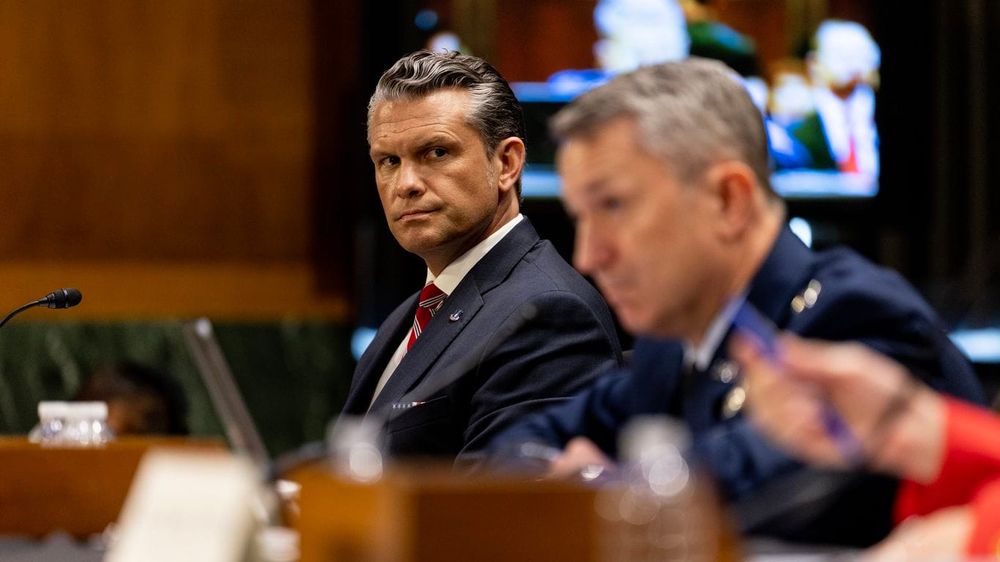
The conference, confirmed to Axios by two European diplomats and two other sources with direct knowledge, would potentially bring together defense ministers and senior military commanders from Western nations and regional partners. Defense Secretary Pete Hegseth and Joint Chiefs Chairman Gen. Dan Caine are described as potential attendees. The White House and Pentagon did not respond to requests for comment. The British embassy in Washington declined to comment. The itinerary and date have not been finalized. These are not minor details. They are the central fact about this conference. It does not yet exist as an operational plan, and the countries whose participation would make it meaningful have not committed to anything.
The phrase "regional partners" is doing significant work in this framing. The Gulf states — Saudi Arabia, the UAE, Qatar, Bahrain, Kuwait — are the countries whose ports, airspace, and political cover would determine whether any Hormuz coalition has real teeth. Qatar is simultaneously hosting U.S. military assets and serving as a mediator in U.S.-Iran talks. The UAE has been directly threatened by Iran with strikes on Dubai and Abu Dhabi if the conflict expands. None of these governments have publicly endorsed a Western-led military coalition, and several have strong incentives not to. Their economies depend on regional stability. Their populations are not American. Their governments have been navigating the gap between Washington's demands and their own survival calculations for years, and they are not about to stop now.
The Strait of Hormuz is 21 miles wide at its narrowest point and carries roughly 20% of the world's oil supply. Iran's ability to threaten shipping there does not depend solely on surface military assets — it includes mines, fast boats, shore-based missiles, and proxy networks throughout the region. U.S. strikes have, according to some Pentagon officials, degraded Iran's immediate capability around the strait. Other officials say Iran remains capable of attacking ships. A diplomatic conference in London does not resolve that disagreement.
The diplomatic picture on the ground is, if anything, moving in a different direction than a Western coalition conference would suggest. An Omani delegation arrived in Tehran on Friday to resume talks on a mechanism for reopening the strait: bilateral regional diplomacy, not a Western-led security architecture. Iranian Foreign Minister Abbas Araghchi said Friday he discussed "various initiatives and proposals" with his Pakistani counterpart, who has been serving as a mediator in U.S.-Iran talks. "The problem between us and the U.S. is not the lack of a mediator," Araghchi said, according to the Axios report. "The problem is America's approach." That framing, which positions the U.S. as the obstacle rather than the solution, is precisely what makes Gulf states reluctant to be seen standing next to Washington in a military formation.
The military situation in the strait has also not resolved in the way the conference framing implies. According to Axios, Iran has not attacked commercial ships in the past four days. Some U.S. defense officials attribute this to American strikes having "all but eliminated" Iranian military capability in the area. Others say Iran retains the capability and is choosing not to use it. That is not a distinction without consequence. If Iran is pausing strategically rather than being militarily suppressed, a coalition conference in London does not change the calculus. It may, in fact, harden it. On Wednesday, President Trump threatened to bomb bridges and power plants, including in Tehran, if Iran attacks more ships. Iran responded by threatening infrastructure in Gulf countries allied with the U.S. It was a response directed squarely at the countries the London conference would need to recruit.
The accountability question here is not complicated: Trump has already claimed a coalition will patrol the strait without naming who is in it. The London conference appears to be an attempt to construct the reality that the claim implied. That sequence, announce the coalition and then build it, is a pattern with a documented record of failure in this administration's foreign policy. It also places enormous pressure on allied governments to ratify decisions they had no role in making, in a war Congress never authorized and whose costs are already being borne by energy markets worldwide.
For the Gulf states, the calculation is brutally concrete. Joining a formal U.S.-led military coalition against Iran means accepting Iranian retaliation as a near-certainty. It means choosing a side in a conflict that, from their vantage point, Washington started and may not be able to finish. It means absorbing the domestic political costs of being seen as American proxies in a war that has already killed civilians on Iranian soil and sent gas prices past $5.80 a gallon in the United States. Their own populations are paying that price too. The London conference, if it happens, will be judged not by who attends but by who commits to what. The gap between those two things has swallowed every previous attempt at a Hormuz coalition, and there is no evidence it has narrowed.
Oman is talking to Tehran. Pakistan is mediating. The Gulf states are watching. Washington is planning a conference. If the coalition that emerges from London cannot name its members, specify their commitments, or explain why those members will not face the same defection pressures that collapsed the last attempt, the conference will be a press release dressed as a security architecture. The strait will remain exactly as closed as Iran decides it should be.