Thirty-seven percent of Americans now list financial or political corruption among their top three concerns — a decade high, and ten points above where it stood just a year ago, according to Ipsos polling cited by Axios. That number has climbed every quarter since a sitting president began building a cryptocurrency empire from inside the White House. The climb tells you something. What it does not tell you is what happens next.
Public disgust with presidential self-dealing is not, by itself, a check on presidential self-dealing. Polls do not open investigations. Majorities do not trigger audits. The democratic theory here — that documented corruption, widely recognized, produces accountability — has not been tested in an era when the institutions responsible for that accountability have been systematically brought to heel. That is the gap at the center of this story, and it is the gap that Democratic anti-corruption messaging does not yet have an answer for.
The numbers themselves are striking. A four-day Reuters-Ipsos poll found that 63% of Americans believe the president and his family have inappropriately profited from cryptocurrency — a sector from which, Axios reports, he drew upward of $1 billion last year alone. Nearly seven in ten Americans believe his private business interests are shaping his presidential decisions. That includes 48% of Republicans — a number that suggests even the president's own coalition has absorbed the evidence, even if it has not yet translated into political defection.
A separate Economist-YouGov poll of 1,611 Americans found 65% disapprove of the president and his family doing business with foreign countries while in office. Only 8% strongly approved. Majorities also disapproved of presidents accepting valuable gifts from foreign governments (61%) and of the president's personal cryptocurrency investment specifically (64%). These are not close questions. They are not partisan edge cases. On the core factual question — is the president using the office to make money? — the American public has reached something close to consensus.
Democrats have noticed. Senator Jon Ossoff, facing reelection in Georgia, has framed his campaign around anti-corruption themes, calling the current administration "the most corrupt of all time." House Democrats launched an Anti-Corruption and Democracy Reform Task Force in April, drawing both progressive and centrist members into a coalition that has rarely found common cause. In May, Representatives Jason Crow, Mike Levin, and Alexandria Ocasio-Cortez launched the End Corruption Caucus and introduced a resolution condemning corruption across the board. Senate Minority Leader Chuck Schumer has published what he calls a report on "the cost of corruption," connecting the president's financial gains to the pocketbook pain ordinary Americans are experiencing, according to Punchbowl News reporting cited by Axios.
The political logic is understandable. The "threats to democracy" frame that Democrats leaned on in 2024 did not move enough voters. Abstract constitutional arguments have a ceiling. But corruption that maps onto kitchen-table economics — a president getting rich while your grocery bill climbs — has a different emotional register. It is tangible. It is personal. It connects institutional failure to material harm in a way that resonates beyond politically engaged voters.
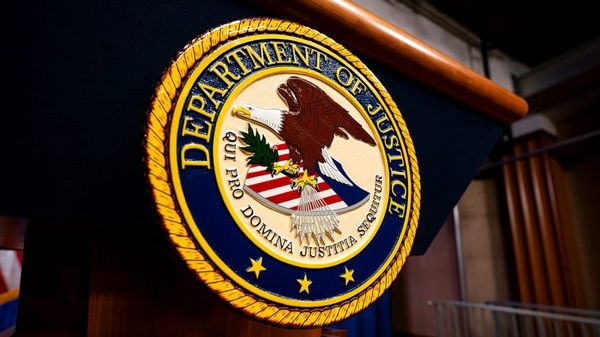
Polling does not enforce the law. The agencies that would normally investigate presidential financial misconduct — the Department of Justice, the IRS, the SEC — operate under the executive branch. Congressional oversight committees can subpoena records and hold hearings. They cannot indict. Democrats are promising audits if they win the midterms. The question is what happens in the two years before that opportunity arrives — and whether the oversight architecture will be intact when they get there.
But the messaging strategy has a structural problem that the polling does not resolve: the enforcement mechanisms that would normally convert documented corruption into legal consequence are largely controlled by the executive branch being accused of that corruption. The Department of Justice answers to the president. The IRS, which would conduct the audits Democrats are promising, has lost a significant share of its experienced workforce. As Tinsel News has documented, Congress has spent years failing to pass meaningful stock-trading and conflict-of-interest reform even for its own members — a pattern that suggests the legislative appetite for genuine financial accountability has limits.
The cryptocurrency dimension makes this more specific, and more troubling. The president entered office with financial interests in a sector that is simultaneously unregulated, politically influential, and extraordinarily profitable. Legislation governing crypto markets — its structure, its oversight, its consumer protections — is being written while the person who signs it into law holds a direct financial stake in the outcome. That is not a hypothetical conflict of interest. It is a documented one, acknowledged by majorities of Americans across party lines. As Tinsel News has previously reported, moderate Democrats have struggled to pass meaningful crypto oversight legislation in part because of their own donor relationships with the industry — which means the political opposition to presidential self-dealing is itself entangled with the sector it claims to want to regulate.
This is the systemic pattern beneath the polling: the absence of enforcement is not accidental. It is the product of decades of decisions — about agency independence, about congressional oversight capacity, about what counts as an impeachable offense — that have left the United States without a credible mechanism for holding a sitting president financially accountable in real time. The emoluments clauses of the Constitution were written precisely for this situation. They have not been tested in court in any conclusive way. The institutions that might have tested them have been weakened, defunded, or brought under political control.
Democrats are betting that the gap between what Americans know and what Americans can do about it will produce midterm energy. That bet is not unreasonable. But it carries a risk: that running on corruption accountability without a credible enforcement theory trains voters to expect accountability that never arrives. The "threats to democracy" message failed in part because it named a problem without offering a solution that felt achievable. An anti-corruption message that peaks at "we'll audit him if we win" faces a version of the same ceiling.
What the polling actually documents is a public that has processed the evidence and reached a verdict — without a court to deliver it to. Sixty-three percent of Americans believe the president profited inappropriately from cryptocurrency. Nearly half of his own party believes his business interests are shaping his decisions. That is not a country that lacks information. It is a country that lacks a functioning accountability mechanism, and has been asked to substitute an election for one.
Democrats who win in November have pledged to open audits of the Trump administration's financial record. Whether those audits produce consequences depends on what oversight architecture remains, which agencies are still functioning, and whether the legal frameworks for prosecuting financial misconduct by former presidents have survived the intervening years intact. As the question of presidential self-dealing has made clear before, the gap between what the law says and what the law does is where power lives. The polls have spoken. The institution that enforces what they're saying has not yet been built.