Venezuela's oil belongs to Venezuela. That is not a political position — it is the stated legal premise of the executive order the Trump administration used to justify taking it. The order, signed in January, describes proceeds from Venezuelan oil sales as nominally belonging to the Venezuelan government. It then places those proceeds in accounts controlled by the U.S. Treasury Department and prohibits Venezuela from withdrawing a dollar without written approval from Secretary of State Marco Rubio. The administration has now collected more than $13 billion under this arrangement. A single transfer of $300 million — documented on a Venezuelan government tracking website in March — is the only confirmed disbursement. The Financial Times, whose reporting Common Dreams cited in a detailed account published this week, found little evidence that the State Department's claim that "billions of dollars have been disbursed to the Venezuelan economy" reflects reality.
This is not a story about a policy dispute over how best to help Venezuela. It is a story about a government seizing the sovereign wealth of another nation, placing it beyond that nation's reach, and then being unable — or unwilling — to account for where it went. The accountability failure is not incidental. It is the mechanism.
Common Dreams and the Financial Times document a transparency gap. That gap represents something more structurally significant: the Trump administration has constructed a financial instrument that functions as a coercion machine, backed by sovereign wealth it controls unilaterally, accountable to no legislative body, and governed by no public legal standard. The money is not missing because of administrative chaos. The money is unaccountable by design.
Consider the architecture. The executive order creates a fund nominally owned by Venezuela but operationally controlled by the United States. Venezuela cannot access the money without Rubio's approval. Rubio's boss has publicly stated the funds are a tool for extracting Venezuelan policy compliance — Vice President JD Vance said in January that oil sales would continue as long as Venezuelan policies "serve America's national interest." A senior State Department official acknowledged at a congressional hearing this week that the arrangement amounts to: "it's their money, but they have to get our permission." This is not development assistance. It is not sanctions relief. It is a ransom structure backed by the revenues of a sovereign nation's primary export.
Congress, which has not authorized this arrangement and was not consulted on its design, is now trying to find out what happened to the money. They are not having much success. The administration has given, according to the Financial Times, "vague and contradictory answers" about who controls the revenues and where they have gone. A senior U.S. official told The New Yorker that approximately $6 billion has been authorized for disbursement to Venezuela's interim government under Delcy Rodríguez — but with no indication the transfer had actually been made or the funds spent. Economist Francisco Rodríguez of the Center for Economic and Policy Research, whose analysis is central to understanding the gap, put it plainly: even if that $6 billion figure is accurate, "it leaves an obvious question: where are the remaining $7 billion?"
The Trump administration's January executive order describes Venezuelan oil revenues as belonging to Venezuela, but places them in U.S. Treasury accounts requiring Secretary of State Marco Rubio's personal approval for any withdrawal. No congressional authorization exists for this arrangement. No independent oversight body has been named. The State Department has claimed financial monitoring is "under way" but has provided no public documentation of disbursements beyond what Venezuela's own government tracking site shows.
The economic data from Venezuela makes the human cost of this arrangement concrete. Francisco Rodríguez found that in the first quarter of this year, Venezuela recorded just 2.5% GDP growth — its worst performance in five years. This happened while Venezuelan oil exports grew by 25% over the same period. The reason those two numbers point in opposite directions is straightforward: Venezuela's oil is being sold, but the revenues are not reaching the Venezuelan government or economy in any documented way. The country is exporting more and receiving less. The gap between what Venezuela produces and what it gets back is held in accounts the United States controls.
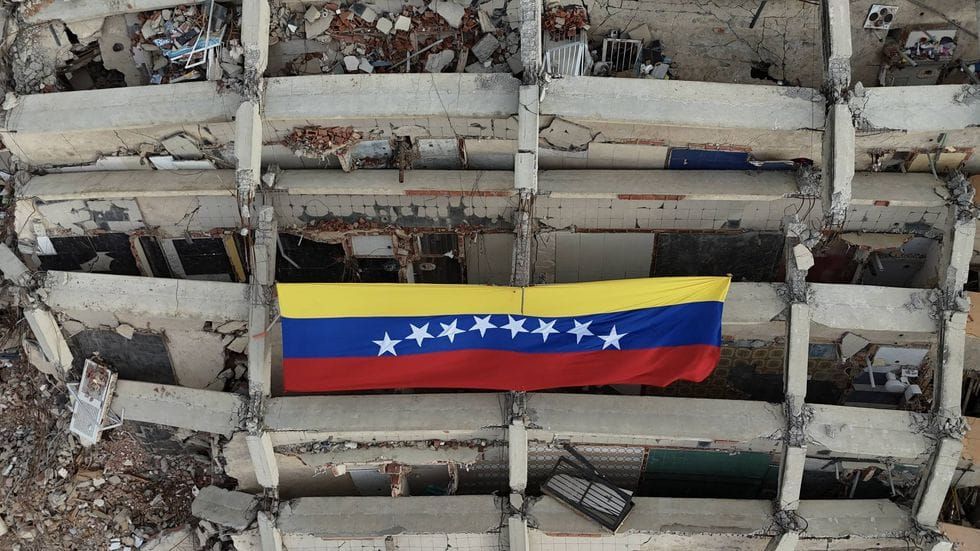
For Venezuelan families, this is not an abstraction. Venezuela's economy has spent years in crisis — hyperinflation, shortages of food and medicine, mass emigration. The oil sector represents the primary mechanism by which a recovery might be financed. The Trump administration took control of that mechanism in January, promised it would benefit the Venezuelan people, and has now produced documentation of a single $300 million disbursement against a $13 billion pool. The State Department's claim that "billions" have flowed to the Venezuelan economy is not supported by the Venezuelan government's own tracking data, by the Financial Times's reporting, or by the economic growth figures Francisco Rodríguez analyzed.
The administration's public statements about Venezuela are worth examining alongside the data. At a rally this week, the president boasted that the U.S. "won in Venezuela" and had paid for the operation "many many times over" by "taking tremendous amounts of oil." He added that "Venezuela is doing better than they've ever done before." The GDP figures say otherwise. The single documented disbursement says otherwise. The congressional hearing, in which a State Department official acknowledged that Venezuela must ask American permission to access its own revenues, says otherwise. The administration's framing — that this is development assistance for the Venezuelan people — and its actual conduct are not the same thing. This is not a minor discrepancy. It is the story.
The parallel to other accountability failures in this administration is not coincidental. As Tinsel News has documented, the pattern of public funds controlled without oversight or eligibility rules runs across multiple agencies and programs. What connects these cases is not incompetence but a consistent structural choice: create financial instruments with broad executive discretion, no independent audit mechanism, and no congressional reporting requirement. Venezuela's oil fund is that pattern applied to foreign sovereign wealth rather than domestic appropriations.
The geopolitical logic is also worth naming directly. The administration has been explicit that Venezuelan oil revenues are a policy instrument — that Venezuela's access to its own money depends on its government's behavior meeting American standards. This is coercion, not aid. The U.S. is not holding Venezuela's oil revenues in trust pending a democratic transition. It is holding them as collateral for compliance with American foreign policy preferences. The people bearing the cost of that arrangement — the ones living through Venezuela's worst economic quarter in five years despite record oil export growth — are not party to the negotiation. They are its subject.
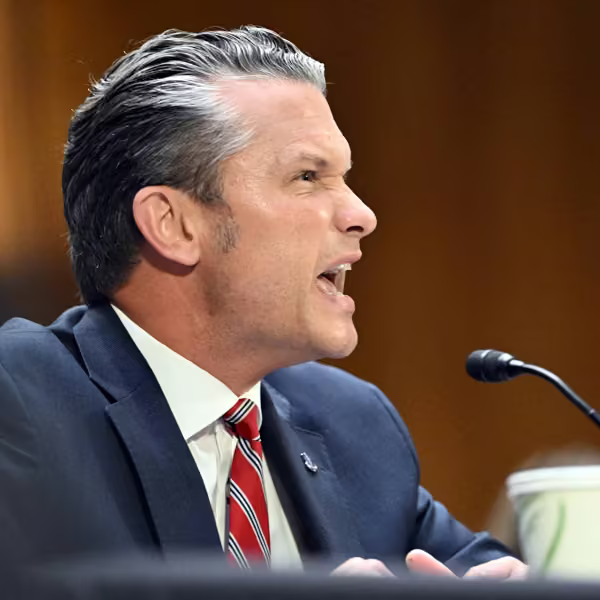
The congressional oversight problem compounds everything. Without legislative authorization for the fund's creation, without reporting requirements built into the executive order, and without an independent body charged with auditing disbursements, Congress has no formal mechanism to compel transparency. The administration can continue providing "vague and contradictory answers" because there is no legal instrument forcing it to do otherwise. The hearing this week, in which Michael Kozak of the State Department acknowledged the basic structure of the arrangement, produced no new accountability. It produced a quote.
The question Francisco Rodríguez asked — where is the remaining $7 billion, even under the most generous reading of the administration's own figures — does not have a public answer. The State Department says monitoring is under way. The Financial Times found no evidence to support that claim. The Venezuelan government's tracking site shows one transfer. Congress is, in the words of the reporting, "in the dark."
What is being constructed here, through the Venezuela oil arrangement, is a template: sovereign wealth seized under a legal framework that preserves nominal ownership while eliminating practical control, held in accounts requiring the personal approval of a cabinet official to access, with no independent oversight and no mandatory transparency. If that template holds — if the administration faces no legal or legislative consequence for running $13 billion through a fund Congress cannot audit — it will be available for use again. The next country whose primary export the United States decides to "control" will have Venezuela's experience as the precedent. The people who will pay for that precedent are not in Washington. They rarely are.
As Tinsel News has previously reported, the gap between the U.S. seizure of Venezuelan oil revenues and the aid flowing back to Venezuela was already a documented concern before this week's congressional hearing. The Financial Times reporting makes the scale of that gap undeniable. The administration's stated rationale — that this benefits the Venezuelan people — and the documented reality — 2.5% GDP growth, a single $300 million disbursement, $7 billion unaccounted for even by the administration's own numbers — are not in tension. One is a claim. The other is evidence. And the oversight mechanisms that would normally force a reckoning between the two are, by design, absent. Congress now faces a choice: build those mechanisms retroactively, or let the absence of accountability become the policy.
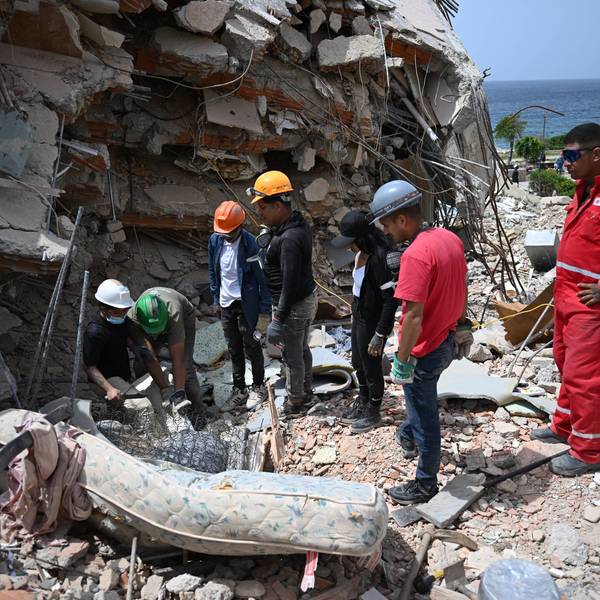
There is one more detail worth sitting with. The U.S. Embassy recently raised its flag in Caracas, a quiet normalization of the Maduro government Washington once called illegitimate. The administration is simultaneously holding Venezuela's oil revenues hostage to policy compliance and moving toward diplomatic normalization with the government it claims to be pressuring. The financial pressure and the normalization are happening at the same time, with the same money, and with no public accounting of how either serves the Venezuelan people whose wealth is financing both.