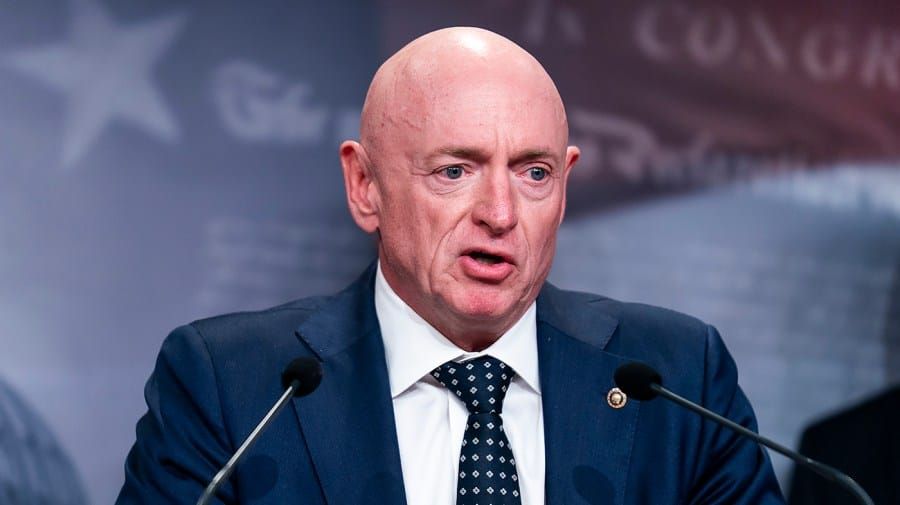
Sixty-plus days into a war with Iran, a sitting U.S. senator went on television and asked the question that Congress was supposed to answer before the first bomb fell. "What are the American people getting out of this?" Sen. Mark Kelly (D-Ariz.) said Sunday, according to The Hill. "We're going to be in a worse posture than we otherwise would be in if this war in Iran didn't happen."
That Kelly's remarks register as notable — rather than routine — tells you something about the state of congressional oversight two months into an unauthorized conflict that has drained the U.S. missile stockpile, closed the Strait of Hormuz, and sent energy prices surging across the global economy. The Democratic Party, which spent years positioning itself as the institutional check on executive overreach, has largely watched this war begin, expand, and calcify without mounting a coherent challenge to its legal basis, its strategic logic, or its human cost.
The Iran war has proceeded without a formal Authorization for Use of Military Force (AUMF). Congress has not passed a war budget. No administration official has publicly defined what conditions would constitute an end to hostilities. For a deeper breakdown of the legal questions, see Tinsel News's explainer on the AUMF and War Powers debate.
Kelly's critique is pointed and specific. He questioned whether the United States would be capable of defending its allies and interests in other theaters — a reference to the documented depletion of long-range precision munitions that the Pentagon has not publicly quantified. He is not calling for immediate withdrawal. He is not introducing legislation. He is asking, on a Sunday news program, whether the war makes strategic sense. By the standards of the current Democratic caucus, that qualifies as dissent.
The original thesis this moment demands is not about Kelly. It is about the institution he serves. The U.S. Congress has now allowed two months of active warfare against a sovereign nation to proceed without a single binding vote on its authorization, its funding, or its objectives. The question Kelly posed on Sunday — what are the American people getting out of this? — is not a new question. It is the question the Constitution assigns to the legislative branch. Congress did not ask it before the war started. It has not answered it since.
This is the systemic pattern Kelly's question fits into, whether he intends it to or not. Since the original 2001 AUMF — passed three days after the September 11 attacks to authorize force against the perpetrators — successive administrations have used elastic legal interpretations to conduct military operations across at least seven countries without returning to Congress for explicit authorization. The Iran war is the largest and most direct of these conflicts, but it follows the same institutional logic: the executive acts, Congress reacts or doesn't, and the war becomes a fact on the ground before the legislature can build the political will to challenge it. As Tinsel News has reported, a war that could cost trillions has no congressional authorization, no budget, and no exit plan.
Kelly is a former Navy combat pilot and astronaut. His skepticism carries a particular weight in Democratic messaging because it cannot be dismissed as naive pacifism or reflexive anti-militarism. When he says the United States will be in a worse strategic posture because of this war, he is speaking from a professional framework that the administration's defenders cannot easily wave away. That is presumably why his remarks drew attention. But the attention itself is the problem: the question of whether a war serves the national interest should not depend on the biography of the person asking it.
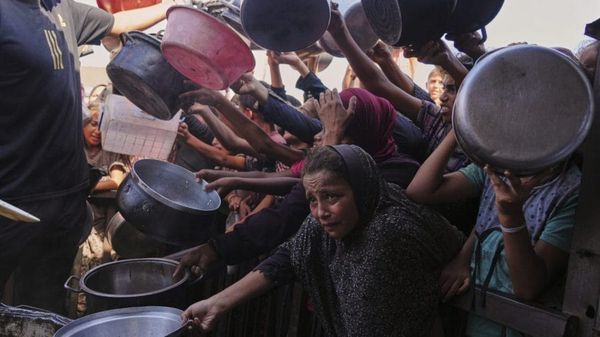
There is also the question of who is not being asked. Kelly's framing — "what are the American people getting out of this?" — is a legitimate domestic political question. It is not the only question. Iranian civilians living through a two-month bombing campaign that has targeted infrastructure across the country are also entitled to an accounting. The people of Iraq, whose territory and airspace have been drawn into the conflict's logistics and whose government has demanded an end to U.S. operations on its soil, are asking their own version of that question. The Iranians affected by this conflict have no senator to go on television for them. The congressional silence Kelly is now punctuating is silence not just about American strategic interests — it is silence about the human cost being borne by people outside the United States who have no vote in the matter. Tinsel News has documented that cost in detail: Iranian civilians are paying the price as military stalemate locks in authoritarian rule and economic devastation.
The accountability gap runs deeper than party politics. House Republicans have begun defecting on war powers resolutions, and the administration has offered no coherent definition of victory. Kelly's question — what are we getting out of this? — has not been answered by the White House, the Pentagon, or the Secretary of State in any public forum. When Sen. Kelly asked it, he was not breaking news. He was performing, in public, the oversight function that the Senate Armed Services Committee should have been performing in classified session two months ago, before the first strike package was authorized.
The Defense Production Act has already been invoked to lock in energy infrastructure decisions that will outlast the conflict itself, as Tinsel News has reported — decisions made without congressional input, justified by the emergency the war created. The war's economic consequences are now structuring domestic energy policy for a generation. Congress has not voted on that either.
Kelly's remarks will likely be framed in the coming days as a political story about Democratic positioning ahead of the 2026 midterms, about whether his dissent reflects broader caucus sentiment, about whether it helps or hurts the party's electoral prospects. Those are real questions. They are also the wrong frame. The right frame is institutional: a coequal branch of government has allowed the executive to start, fund, and conduct a major war for more than two months without a single binding vote. One senator asking "what are we getting out of this?" on a Sunday program is not oversight. It is the sound of oversight failing.
The war will not end because Mark Kelly questioned its strategic logic on television. But his question has now entered the public record in a way that makes the silence of his colleagues harder to sustain. Every member of Congress who has not asked the same question — on the record, with a vote attached — owns a share of whatever comes next. The Constitution did not make that their option. It made it their job.