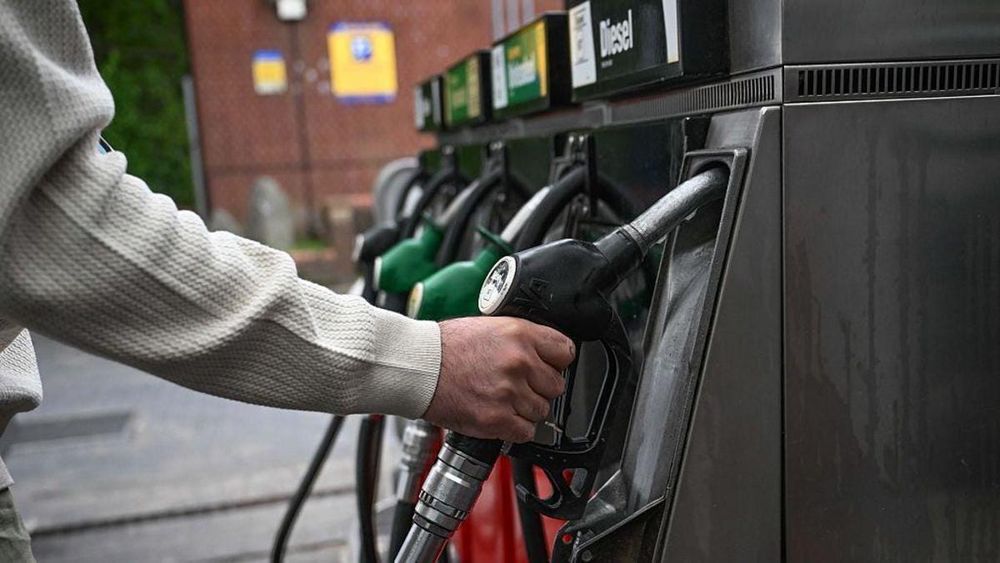
The United Kingdom has granted a sanctions waiver allowing the import of Russian oil, citing fuel supply disruptions caused by the effective blockade of the Strait of Hormuz, BBC News reported this week. The decision is being framed in London as a practical response to an energy emergency. That framing is accurate as far as it goes — and it stops well short of describing what is actually happening.
What is actually happening: a war the United States launched without a congressional vote, without a coalition mandate, and without an exit strategy has now forced Washington's closest ally to funnel money into the Russian economy at the precise moment Europe is trying to starve it of revenue. The sanctions architecture that Western governments spent three years constructing after the invasion of Ukraine — an architecture the UK helped design and enforce — is being dismantled not by Russian pressure, not by Chinese defection, but by the downstream consequences of American military action in the Persian Gulf.
The logic is not complicated. The Strait of Hormuz, the 21-mile chokepoint through which roughly 20 percent of the world's traded oil passes, has been functionally closed since the U.S.-Iran conflict escalated. That closure created an acute shortage of specific refined fuel grades that British suppliers normally source from Gulf producers. With Gulf supply disrupted, the UK faces a choice between accepting price-driven shortages or accessing alternative supplies. Russia, which has been selling discounted oil to anyone willing to buy it since Western sanctions pushed its traditional customers toward alternatives, is the available alternative.
Following Russia's February 2022 invasion of Ukraine, the UK, EU, and U.S. coordinated an oil sanctions regime designed to cap Russian export revenues and limit Moscow's ability to fund its war. The UK banned Russian oil imports outright in 2022. This week's waiver is the first formal rollback of that ban, granted under emergency supply provisions.
Moscow did not lobby for this outcome. Moscow did not need to. The White House, by closing the Strait of Hormuz to normal commercial traffic without a plan to reopen it, created the supply conditions that made Russian oil the path of least resistance. The Kremlin is a beneficiary of a policy it had no hand in making — which is, in some ways, more damaging to Western strategic coherence than if Russia had manufactured the crisis itself.
This is the systemic story the UK waiver makes visible. Western sanctions on Russia were always premised on allied unity — the idea that enough coordinated economic pressure, sustained long enough, would constrain Moscow's capacity to wage war in Ukraine. That premise required stable energy markets. Stable energy markets required a functional Gulf. A functional Gulf required the United States not to launch an open-ended military campaign that has no clear mechanism for restoring commercial transit. Each link in that chain held until the last one broke.
The accountability question is not whether the UK made a reasonable emergency decision — it probably did, given the constraints it faces. The accountability question is who created those constraints, and whether the costs were ever calculated before the bombs dropped. A war with no congressional authorization and no published budget is also, it turns out, a war with no published analysis of what it does to the sanctions regime against Russia. That analysis, if it existed, was not shared with allies. If it did not exist, that is a different kind of answer.
The power and money dimension of this story runs in a direction that should make any Western government uncomfortable. Every barrel of Russian oil the UK now purchases under its emergency waiver generates revenue that flows into the Russian federal budget, a meaningful portion of which funds military operations in Ukraine. The UK has separately pledged continued support for Ukraine's defense. It is now, simultaneously, a customer of the economy financing the army Ukraine is fighting. That is not hypocrisy in the ordinary political sense — it is a structural contradiction produced by an energy crisis the UK did not choose and cannot resolve on its own timeline.
Russia understands this perfectly. Moscow has spent two years watching Western unity on sanctions hold despite enormous economic pressure on European consumers. What Russian diplomacy and energy coercion could not achieve — a crack in the sanctions wall — American military strategy has delivered as a side effect. Russia is cashing in on the Iran war's oil price surge even before factoring in the sanctions relief now arriving through the UK's emergency waiver. The combination — higher global prices plus loosened import restrictions in key Western markets — is a windfall Moscow's war planners could not have engineered themselves.
It is worth being precise about what the UK waiver does and does not mean. It is a targeted measure, covering specific fuel grades facing acute shortage. It is not a wholesale abandonment of the Russia sanctions regime. British officials would correctly note that the waiver is limited in scope and duration. All of that is true, and none of it changes the strategic signal the waiver sends: that when energy security conflicts with Russia sanctions, energy security wins. Every government in Europe is watching that signal. Every government in Europe is running the same calculation about its own exposure.
The broader pattern this event belongs to is one Tinsel News has tracked since the Hormuz closure began: the war's economic consequences are not incidental to its conduct — they are central to understanding who bears its costs. American consumers are paying elevated gas prices. Asian economies are returning to coal as LNG markets collapse. And now European governments are buying Russian oil. The United States, whose military action precipitated all three outcomes, has not published a comprehensive accounting of any of them.
The UK government stated that the waiver reflects supply concerns tied to the Hormuz blockade. That is the official position. The fuller version is this: a sanctions regime built to isolate an authoritarian government waging a war of aggression in Europe is now being partially dismantled to compensate for the energy disruption caused by another war — one that was launched by the country that designed the sanctions regime in the first place. The architects of Western pressure on Moscow have become, through the logic of their own military decisions, one of its most significant relief valves. Ukraine is still fighting. Russia is still selling. And the bill for that contradiction is being paid in London.